 Whalesbook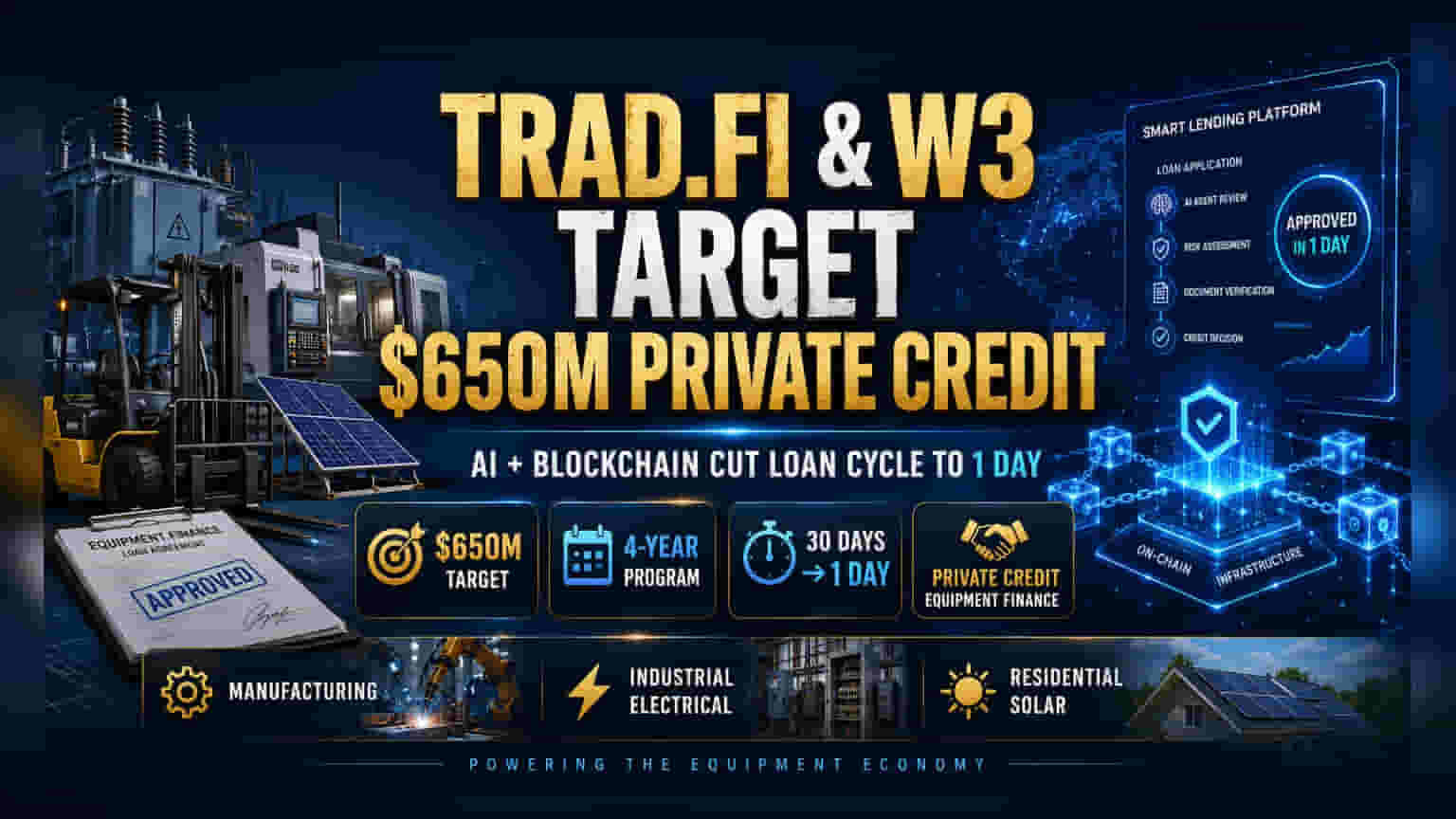


Kya hua?
Trad.Fi, jo heavy equipment kharidne ke liye loan deti hai, ne W3, jo AI-agent banati hai, ke saath partnership ki hai. Yeh dono companies agle chaar saal mein $650 million ka private credit dene ka target rakhti hain. Yeh program khas taur par US ke equipment distribution sector ke liye hai, jaise manufacturing systems, industrial electrical infrastructure, aur residential solar installations.
Artificial intelligence aur blockchain infrastructure ko combine karke, yeh initiative traditional financing process ko speed up karna chahta hai. Normal tareeke mein jahan paperwork aur manual review mein lagbhag ek mahina lag jata hai, wahan ab sirf ek din lagega.
Investors ke liye yeh kyun important hai?
Yeh ek practical example hai ki kaise traditional finance (TradFi) digital asset infrastructure ke saath jud raha hai. Pehle, private credit market mein sab manual, slow processes the jisme human credit analysts, document verification, aur bank transfers mein bahut time lagta tha. Ab Avalanche blockchain par yeh workflows migrate karke, yeh partnership lending business ke "plumbing" ko automate karne ki koshish kar rahi hai.
Investors ke liye sawal ye hai ki kya yeh technology, administrative costs aur operational delays ko kam karke profit margins ko sach mein badha payegi, jo equipment financing mein badi problems hain.
AI aur Blockchain ka Role
Is project ke centre mein AI ka use hai, jo lending business ke front-end ko manage karegi. Yeh technology borrower risk evaluate karne, due diligence karne, aur loan pricing decide karne mein madad karegi. Traditional tareeke mein yeh kaam bahut mehnat wala hota hai. Agar AI credit assessment mein accurate rehti hai, toh lender kam manual hours mein zyada loans handle kar payega.
Blockchain ka component settlement aur capital deployment ke liye hai. Credit evaluate aur approve hone ke baad, funds blockchain ke through deploy kiye jayenge. Isse ek transparent treasury banegi jahan capital seedha assets tak pahunchega, aur beech ke intermediaries kam honge jo traditional corporate lending ko slow karte hain.
Bada Trend: Real-World Assets (RWA)
Yeh partnership Real-World Assets (RWA) ke tokenization ke badhte trend ka hissa hai. Is process mein digital tokens banaye jate hain jo physical assets jaise equipment, real estate, ya corporate debt mein ownership ya stake represent karte hain. Haalanki onchain private credit ka total volume badha hai, industry abhi bhi transition phase mein hai.
Bahut se institutional investors dekh rahe hain ki kya tokenized assets unhe traditional holdings jaisa liquidity aur stability de sakte hain. Is $650 million target ka aim ye prove karna hai ki blockchain infrastructure institutional-grade volume handle kar sakta hai aur US business lending ke liye zaroori data aur compliance standards ko meet kar sakta hai.
Risks aur Monitorables
Jahan faster lending ka promise dikh raha hai, wahan kuch practical challenges bhi hain. Sabse pehla, credit risk sabse bada concern hai; technology borrower ke default karne ki possibility ko khatam nahi kar sakti. Investors track kar sakte hain ki kya AI-based risk assessment model traditional human underwriting jitna robust hai.
Dusra, tokenized debt ke liye legal aur regulatory frameworks abhi develop ho rahe hain. Tokenized credit instruments ki final legality aur default hone par claims enforce karne mein kitni aasani hogi, yeh critical hai.
Finally, program ki success businesses ki actual adoption par depend karti hai – unhe ek aise lending process se judna hoga jo blockchain rails ke saath integrated ho. Trad.Fi ki ability consistent speed se capital deploy karne ki, high-quality credit standards maintain karte hue, project ki long-term sustainability ka key indicator hogi.