

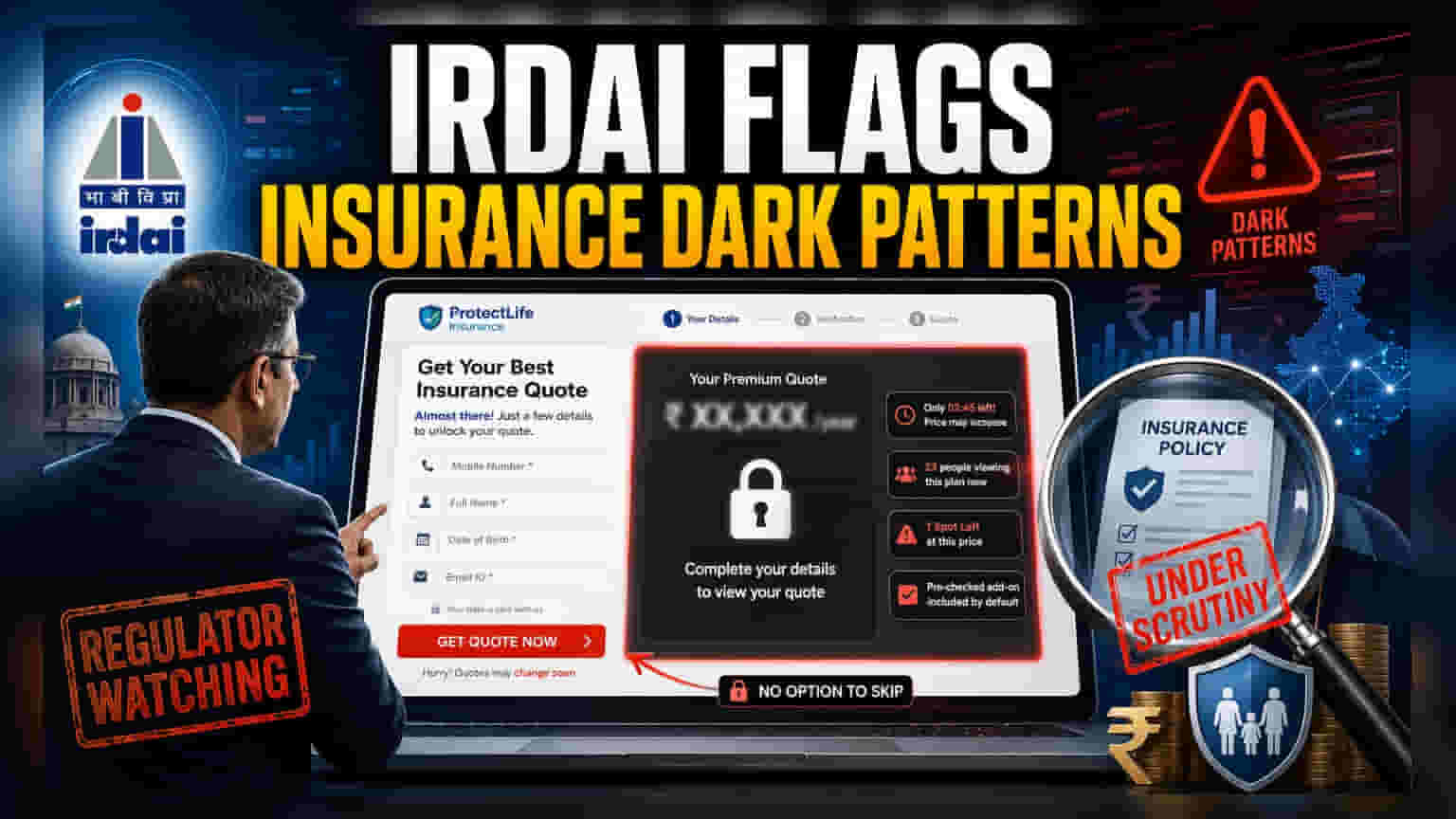
IRDAI, yani ki insurance regulator, aajkal insurers ki class le raha hai. Yeh companies 'dark patterns' istemaal kar rahi hain jisse customers se unki personal details maangi jaati hain policy quotes dikhane se pehle. Isko pakadne ke liye **9 mahine** ka ek study chal raha hai. Ye ek bada change ho sakta hai insurance companies ke online customer pakadne ke tareeke mein.
Kya Hua?
IRDAI ne insurance companies dwara use kiye ja rahe 'dark patterns' ko pakda hai. Ye aise online tricks hain jisse customers ko manipulate karke unse personal details, jaise ki mobile number, maanga jaata hai, policy rates batane ke bahane. Regulator ke Chairman Ajay Seth ne kaha ki yeh sab 'informed decision-making' mein road block hai. Is problem ko solve karne ke liye, regulator ne Institute of Public Policy ko 9 mahine ki study ke liye engage kiya hai taaki ye tricks pehchani ja saken aur pata lag sake ki kaun si companies yeh kar rahi hain.
Investors ke liye yeh kyun important hai?
Insurance companies ke liye online platforms naye customers pakadne ka sabse bada zariya hain. Kai insurers 'gated content' use karte hain, jisme user ko apna contact detail dena padta hai tabhi woh pricing ya product info dekh paate hain. Agar regulator ne yeh rule bana diya ki yeh info bina detail maange freely available honi chahiye, toh companies ko apne digital strategies change karni padengi. Isse website redesign aur compliance ke liye operational costs badh sakte hain. Yeh consumer trust ke liye achha hai, par current lead generation mein dikkat aa sakti hai, aur online traffic ko paying customers mein badalna mushkil ya mehenga ho sakta hai.
Regulatory Priorities Mein Badlav
Data collection ke alawa, regulator ka recent commentary consumer protection aur sustainable business practices par focus dikha raha hai. Chairman Ajay Seth ne point out kiya ki insurance penetration ko number of individuals covered se measure karna chahiye na ki premium-to-GDP ratio se, jo high-value policies se affect ho sakta hai. Unhone boorhon ko life insurance bechne par bhi chinta jatayi, aur kaha ki insurance products ko estate planning ke tools ke taur par market nahi karna chahiye. Regulator ne yeh bhi stressed kiya ki jo companies public mein jaana chahti hain, unhe asli capital requirements ke basis par karna chahiye, sirf image banane ya transparency ke liye nahi.
Regulatory Compliance Ka Risk
'Dark patterns' par yeh investigation, India mein regulators dwara digital compliance ko tight karne ke bade efforts ka hissa hai. Jaise dusre financial sectors mein ho raha hai, waise hi jo companies aggressive online sales funnels par depend karti hain, unko ab zyada scrutiny ka saamna karna pad sakta hai. Agar upcoming study se strict guidelines aayi, toh insurers ko apne digital interfaces ko simple karna padega. Investors ke liye, yeh ek regulatory risk hai jahan data-heavy lead generation par nirbhar business models ko stricter transparency norms ke saath adapt karna padega. Is adaptation ka cost generally kam hota hai, par customer acquisition efficiency mein potential shift ek factor hai consider karne ke liye.
Investors Ko Kya Track Karna Chahiye?
Investors ko company updates par nazar rakhni chahiye jo digital compliance se related hon, aur IRDAI dwara 9 mahine ki study ke baad aane wale policy changes par bhi. Main areas hain ki kya insurers voluntary apne data collection forms ko adjust karte hain, digital customer acquisition strategies ke baare mein management commentary mein updates, aur koi bhi official regulatory circulars jo website structures mein changes mandate kar sakte hain. Final impact is baat par depend karega ki companies kitni jaldi aur effectively transparent customer engagement ko apne lead generation goals ke saath balance kar paati hain.