 Whalesbook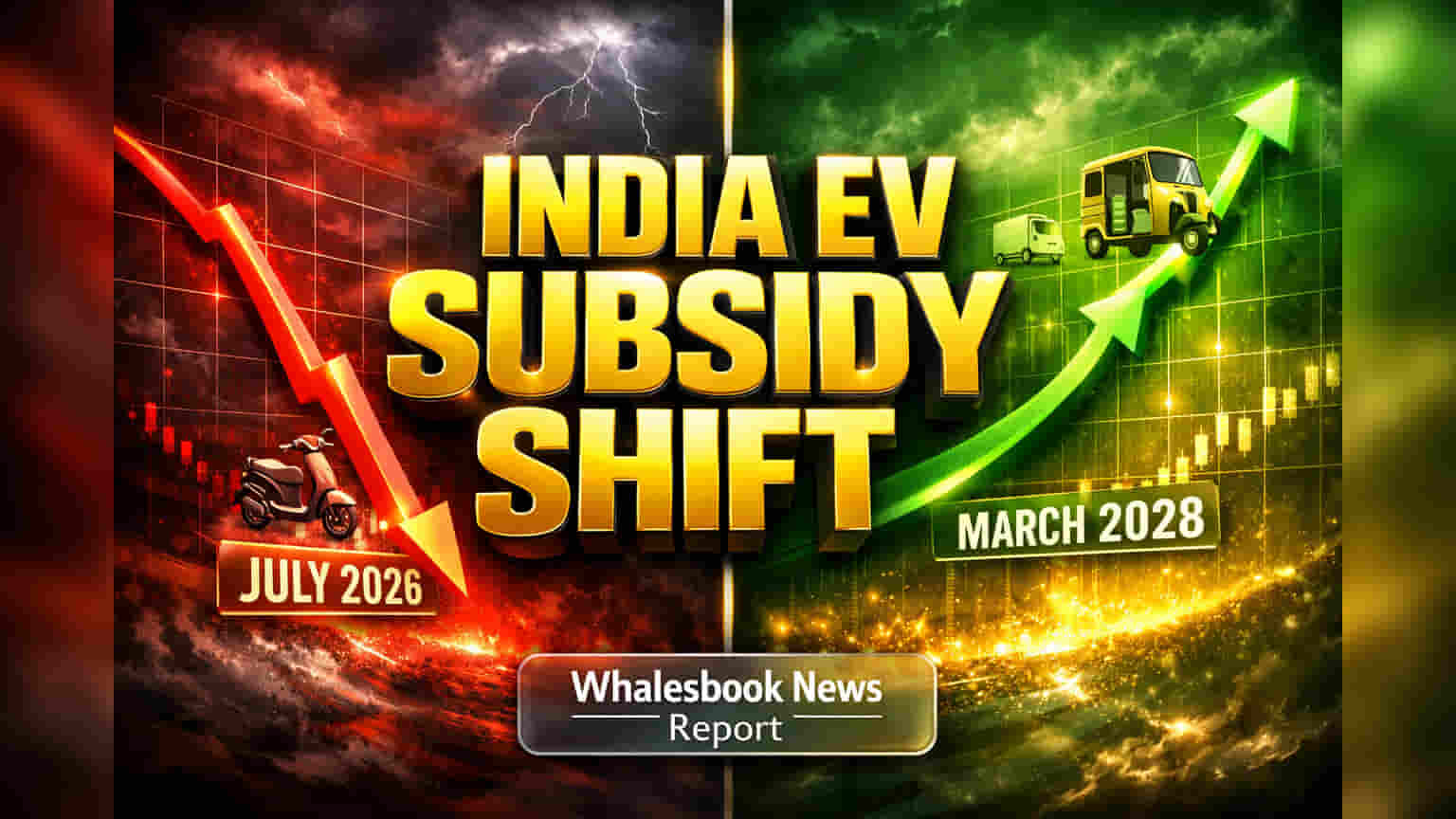
EV Subsidy Policy: Ab 2-Wheelers vs 3-Wheelers!
Government ne PM E-DRIVE scheme ko March 2028 tak badha toh diya hai, par ab electric two-wheelers (e2W) aur electric three-wheelers (e3W) ke liye support alag-alag hoga. Yeh change un segments ko support karne ke liye hai jo zyada practical aur cost-effective hain. Simple language mein, ab focus commercial aur fleet use par zyada hoga.
Two-Wheelers ka Incentive 2026 mein khatam!
Electric two-wheelers ke liye incentives sirf 31 July, 2026 tak registered gaadiyon par hi milenge. Iska matlab hai ki buyers ke paas time kam hai incentive ka fayda uthane ke liye. Ye subsidy ₹2,500 per kWh hai, jo maximum ₹5,000 per vehicle tak hai. Isse Ola Electric aur Ather Energy jaise companies par pressure aayega. TVS Motor Company (market cap ₹1.64 trillion, PE 56.82) aur Bajaj Auto (market cap ₹2.49 trillion, PE 27.99) jaise listed players ko bhi apne pricing, production aur sourcing plans ko jaldi se adjust karna hoga.
Three-Wheelers ko 2028 tak Full Support!
Udhar, electric three-wheelers, jaise e-rickshaws aur e-carts, ko 31 March, 2028 tak ya jab tak allocated funds khatam nahi ho jaate, tab tak government ki subsidy milti rahegi. Ye dikhata hai ki government local delivery aur public transport ko electrify karne par zyada zor de rahi hai. Omega Seiki Mobility ke Uday Narang jaise industry leaders isse kaafi khush hain, kyunki fleet owners ke liye vehicle ka overall ownership cost bahut important hota hai.
Consumer Subsidy se Commercial Use ki taraf Shift
Yeh policy change isliye kiya gaya hai kyunki March 2026 mein e2W ki demand kaafi badh gayi thi, jab incentive khatam hone ki expectations thi. Tab companies ne bade "pre-buy" offers aur discounts diye the. Ab government ka plan hai ki consumer-centric subsidies se hat kar commercial aur fleet electric vehicles par focus karein, jahan vehicle ka usage zyada hota hai aur financial returns bhi acche milte hain. Future mein e2W growth production volume badhane, cost kam karne aur technology improve karne se aayega, na ki direct subsidy se. India ka aim hai 2030 tak 30% EV adoption achieve karna, jisme two-wheelers ka bada role hoga.
Policy Hurdles aur Market ki Challenges
Yeh split policy thodi mushkil khadi kar sakti hai. E2W ke liye jo "registration cliff" aa raha hai, usse market mein utaar-chadhav aur inventory issues ho sakte hain. Long term EV success ke liye price parity aur achha charging infrastructure zaruri hai, jisme India abhi bhi peeche hai. Other countries jaise EU aur US ne zyada consistent EV support policies rakhi hain. China ne EV sector mein $231 billion invest kiye hain, jabki India ke FAME schemes par lagbhag ₹11,000 crore kharch hue hain. TVS aur Bajaj jaise companies ko future mein innovation aur cost cutting par zyada depend karna padega.
Commercial Use aur Lower Costs par Focus
Aage dekha jaaye toh, India ki EV strategy commercial use, especially transport aur logistics par zyada focus kar rahi hai. E3Ws, e-trucks, aur e-buses ko support karna isi direction mein hai. E2W segment ke liye, manufacturers ko ab cost kam karni hogi taaki yeh petrol gaadiyon ke barabar affordable ho sakein. Market ab subsidies se hat kar overall vehicle cost aur efficiency par rely karega.