 Whalesbook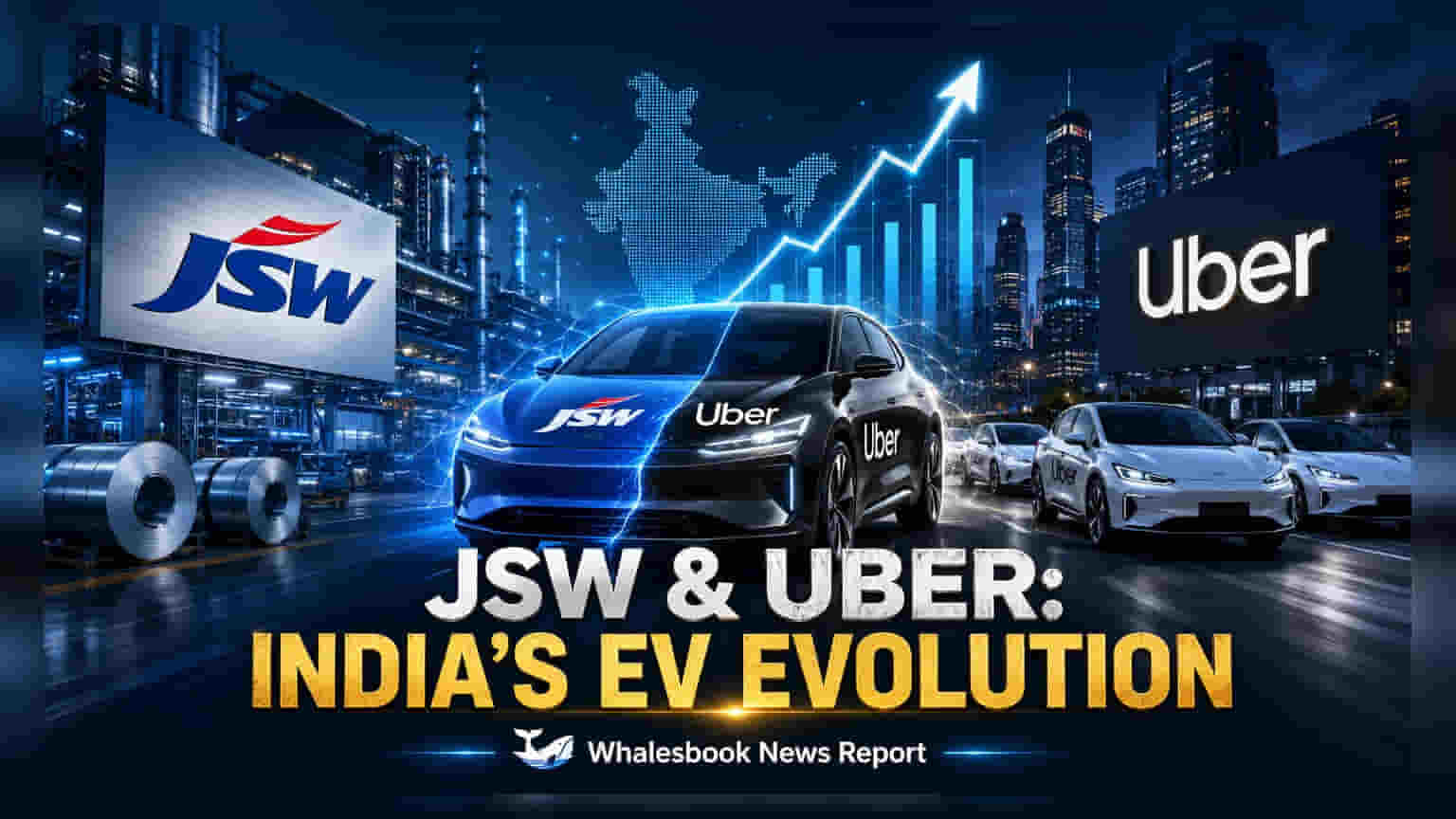


JSW Group aur Uber ne EV mein kiya alliance, India ki Green Mobility ko milega boost!
JSW Group aur Uber ne ek strategic partnership sign kiya hai, JSW Green Mobility ke through, jiska goal hai India mein electric vehicles (EVs) ka use badhana. Yeh alliance JSW ki zabardast manufacturing aur infrastructure capabilities ko Uber ke established ride-hailing platform aur tech skills ke saath jodega.
Is initiative ka main aim hai ki EVs drivers aur riders dono ke liye easily available ho sakein. India mein sustainable transportation par jo focus badh raha hai aur govt. ke jo incentives mil rahe hain, uska fayda uthane ki koshish ki ja rahi hai. Parth Jindal, jo JSW Cement aur JSW Paints ke MD hain, unhone kaha, "Uber ke platform scale aur mobility insights ko JSW ke badhte automotive aur clean mobility goals ke saath jod kar, hum India ke EV ecosystem mein ek achha yogdan de sakte hain."
Policy ke saath EV Adoption ko Speed
Yeh partnership aise time par ho rahi hai jab electric mobility ke liye India mein kaafi policy support mil raha hai. Sarkaar alag-alag schemes aur financial incentives ke through EV ko promote kar rahi hai, especially ride-hailing services ke high-utilization model ko EV deployment ke liye ek important factor maante hue. Uber ka bada network electric vehicles ke liye ek immediate market provide karta hai, jo fleet utilization ko optimize karke drivers ke liye upfront cost kam kar sakta hai.
JSW Group ke liye, yeh collaboration green mobility sector mein unke commitment ko aur mazboot karta hai, jo unke overall clean mobility goals se match karta hai. Manufacturing strength aur ek mature ride-hailing network ka milna EVs aur charging infrastructure ki supply chain ko streamline kar sakta hai, jo widespread adoption ke liye bahut zaroori hai. EV manufacturing mein competitors, jaise Tata Motors, ne bhi apne electric models ke wajah se acchi growth dekhi hai, jo consumer aur commercial demand ko show karta hai. Lekin, iss partnership ki success JSW ki production capacity ko Uber ke demand generation aur operational efficiency ke saath seamlessly integrate karne par depend karegi.
Alliance ke liye Potential Challenges
Jabki yeh partnership India ke EV push se fayda uthane ke liye ready hai, kuch risks bhi hain jin par dhyan dena hoga. Kai Indian cities mein charging infrastructure abhi bhi ek bada challenge hai, jo EV fleets ki viability aur driveron ki earning ko affect kar sakta hai. Battery costs mein fluctuations aur important raw materials ki availability JSW ki manufacturing efficiency aur pricing strategies ko bhi affect kar sakti hai.
Iske alawa, ride-hailing services ka competitive landscape kaafi intense hai, jahan drivers hamesha earning aur vehicle reliability ko priority dete hain. Agar operational costs ya range anxiety zyada lagi, toh yeh unke EV adoption ko influence kar sakta hai. Regulatory changes, jo abhi supportive hain, future mein badal sakti hain, jo ride-sharing segment mein EV deployment ke long-term economics ko affect karengi. Government incentives par nirbhar rehna bhi ek uncertainty ka factor hai agar policy priorities change hoti hain.
India ke Green Mobility Future ka Outlook
JSW Group aur Uber ke beech yeh collaboration India ke electric mobility ki taraf transition ko ek bada boost dega. Supply-side (manufacturing, infrastructure) aur demand-side (ride-hailing network) dono challenges ko address karke, yeh partnership ek zyada robust aur accessible EV ecosystem banane ka aim rakhti hai. EVs ke liye continuous government support aur consumers mein environmental benefits ko lekar badhti awareness se is sector mein aur growth hogi, aur yeh alliance India ke sustainable transportation future mein ek important player ban sakti hai.