 Whalesbook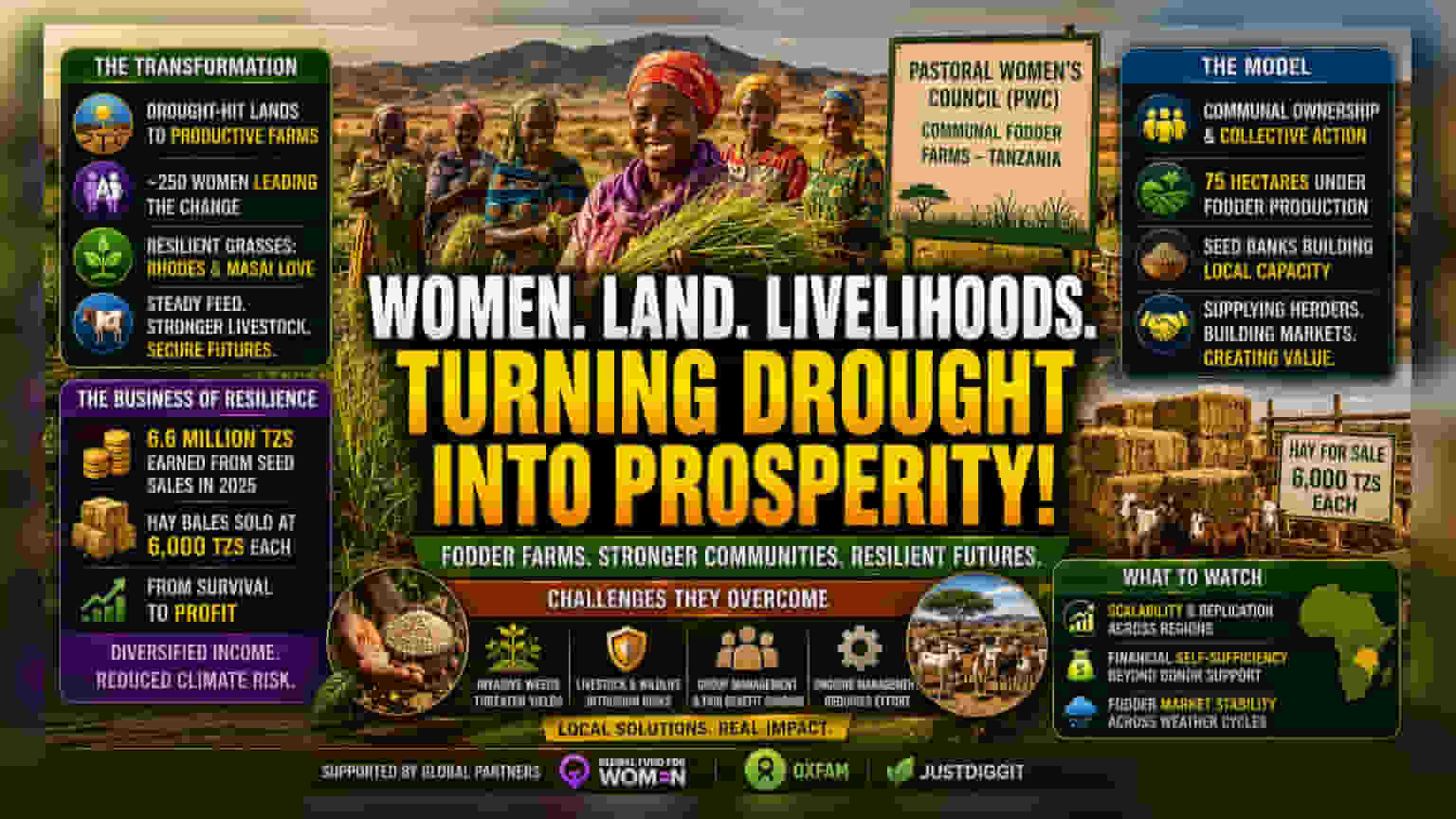


Tanzania mein Maasai auratein ab sukhe se प्रभावित zameen ko commercial fodder farms mein badal rahi hain. Pastoral Women's Council (PWC) ke support se, yeh climate-resilient farming ek naya income source bana rahi hai, jo climate-vulnerable regions ke liye ek kamaal ka model hai.
Kya hua?
Tanzania ke North mein, pastoral communities apni zameen aur economy ko manage karne ka tareeka badal rahi hain. Pastoral Women's Council (PWC) ek project chala rahi hai jo drought-affected areas ko productive fodder farms mein badal raha hai. Yeh mahilayen ab Rhodes grass aur Masai love grass jaise resilient ghass uga rahi hain. Is initiative ka goal hai animal feed ki steady supply banana, taki baarish kam hone par bhi herders apne livestock ko sambhal saken. Is project mein lagbhag 250 mahilayen hain jo yeh farms manage kar rahi hain. Ab yeh sirf survival mode se nikal kar ek commercial model ban gaya hai jisse seed sales aur hay distribution se income ho rahi hai.
Investors ke liye yeh kyon important hai?
Yeh initiative social nature ka hone ke bawajood, ek example hai ki kaise climate-adaptation models rural economies ko stable bana sakte hain. Agricultural trends ko follow karne walon ke liye, fodder production ka commercialization kaafi important hai. PWC ne 2025 mein seed sales se lagbhag 6.6 million Tanzanian shillings kamaye hain, aur hay bales se bhi income hui hai jinki price 6,000 shillings prati bale hai. Fodder ko monetize karke, yeh communities sirf traditional herding par depend nahi kar rahi hain, jo historically weather-related losses ke liye vulnerable thi. Income ko diversify karne ka yeh shift, extreme climate pressures wale regions mein economic resilience ka ek critical indicator hai.
Climate Resilience ka Business
Yeh model communal ownership aur systematically drought-resistant crops ki cultivation par depend karta hai. 75 hectares zameen ko production ke liye dedicate karke aur seed banks manage karke, PWC local livestock sector ko support karne wala ek infrastructure bana rahi hai. Yeh setup region ke ek major systemic risk ko address karta hai: drought cycles ke dauran animals ka mass loss. Doosre herders ko fodder bechne ki strategy ek secondary market create karti hai jo direct climate impact se independent ho sakti hai, agar fodder crop viable rahe. Yeh dikhata hai ki kaise localized agri-business macro-environmental risks ke against ek buffer provide kar sakta hai.
Operational Risks Aur Challenges
Kisi bhi agricultural venture ki tarah, is model ko bhi operational hurdles ka saamna karna padta hai. Invasive weeds fodder crops ki yield ke liye constant threat hain, jiske liye ongoing management chahiye. Iske alawa, farms ki physical security bhi ek issue hai; livestock ya wild animals dwara accidental intrusion se cultivated plots damage ho sakte hain, jo potential harvest ko seedha affect karta hai. Internally, project group management ki complexities ko bhi deal karta hai, kyunki alag-alag stakeholders ke beech responsibilities aur income ka distribution clear governance mangta hai. Yeh factors farms ki efficiency aur profit margins ki sustainability determine karte hain.
Investors ko kya track karna chahiye?
Emerging market agriculture mein aise developments ko dekhne walon ke liye, sabse important hai is model ki scalability ko monitor karna. Project ko currently international organizations jaise Global Fund for Women, Oxfam, aur Justdiggit ka support mil raha hai. Future updates mein dekha jayega ki kya yeh model financial self-sufficiency maintain kar sakta hai jab external funding kam ho jaye. Iske alawa, yeh dekhna bhi zaroori hoga ki yeh fodder markets kaise mature hote hain—kya pricing stabilize hoti hai aur demand alag-alag weather cycles mein consistent rehti hai—yeh sab pastoral enterprises ki long-term viability ko samajhne ke liye essential hoga.