 Whalesbook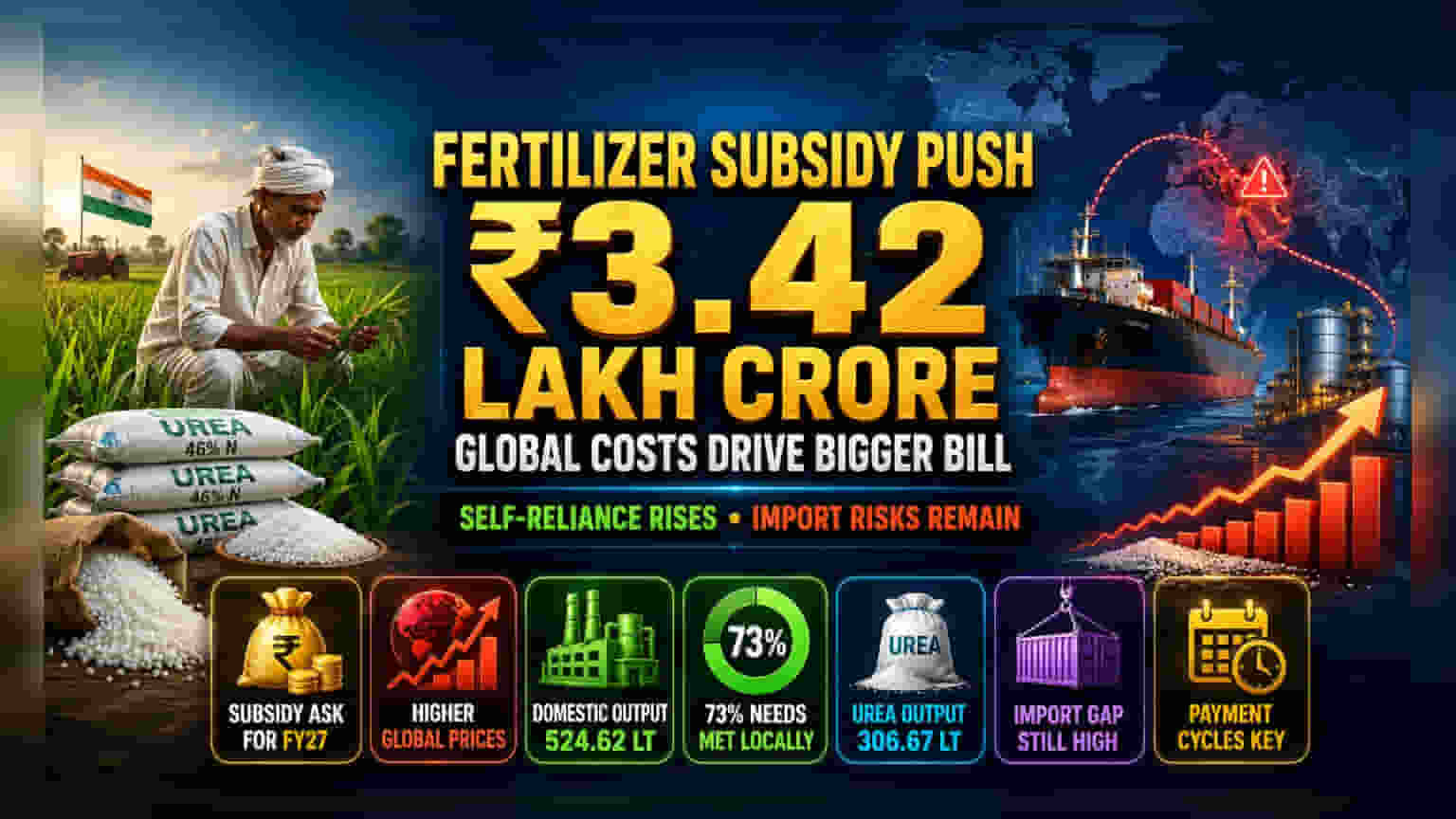


Kya Hua?
Fertilizers Department ne FY 2026-27 ke liye fertilizer subsidy ka amount kaafi badhaane ka proposal diya hai, jisme ₹3.42 lakh crore maange gaye hain. Iske peeche ka main reason hai global prices ka badhna aur import costs ka zyada hona, jo West Asia mein geopolitical tensions ki wajah se aur badh gaye hain. Strait of Hormuz jaise key shipping routes par problems ki wajah se raw materials aur finished fertilizers ko buy karna India ke liye mehnga aur mushkil ho gaya hai. Ministry ka target hai ki farmers par yeh badhti hui costs ka bojh na pade, taaki food security aur agriculture ki productivity bani rahe.
Investors ke liye Kyun Important Hai?
Mukammal economy ke liye, itne bade amount ki subsidy ka request ek major fiscal point hai. Government yeh subsidy manufacturers ko directly deti hai taaki farmers ke liye prices kam rahen. Isliye, funds ka timing aur amount bohot crucial hai. Indian fertilizer companies ke shareholders ke liye, yeh subsidy budget hi unka main revenue source hai. Agar government ne sufficient funds diye, toh manufacturers ko time par payment milta rahega. Agar funds kam ya late hue, toh companies ko working capital ki pressure face karni padti hai, jo unke balance sheets aur cash flows ko affect kar sakta hai.
Self-Reliance ki taraf kadam
India mehngi imports par apni dependency kam karne ki koshish kar raha hai. Domestic production 2021 mein 433.29 lakh tonnes se badhkar 2025 mein 524.62 lakh tonnes ho gaya hai. 2025 tak, desh ki lagbhag 73% fertilizer needs local manufacturing se poori ho rahi thi. Khaas kar urea production mein kaafi izafa hua hai, jo FY15 mein 225 lakh tonnes tha aur FY25 mein 306.67 lakh tonnes ho gaya. Yeh self-reliance ki taraf badhna industry ke liye structural positive hai, lekin India phir bhi gap ko bharne ke liye saalana 100 lakh tonnes se zyada urea import karta hai. Iska matlab hai ki yeh sector global commodity prices aur currency fluctuations ke liye abhi bhi sensitive hai.
Sector ke Risks
India mein fertilizer sector ek highly regulated environment mein kaam karta hai. Manufacturers government par apni product price aur subsidy payments ke timing ke liye depend karte hain. Investors ke liye ek bada risk raw material costs mein volatility hai, jaise urea ke liye natural gas ya complex fertilizers ke liye phosphoric acid aur potash. Jab global prices badhti hain, toh domestic manufacturers ko subsidy mechanism se protection milti hai, lekin government ka fiscal burden badh jaata hai. Agar government ki fiscal situation tight hui, toh budget allocation mein priorities badal sakti hain, jisse companies ke liye payment cycles lambe ho sakte hain. Iske alawa, supply chain disruptions, jaisa ki ministry ne bataya hai, sirf costs hi nahi balki manufacturing ke liye zaroori materials ki timely availability ko bhi khatra pohanch sakte hain.
Investors ko Kya Track Karna Chahiye?
Aage chal kar, investors ke liye sabse important hoga ki government budget mein subsidy allocation par kya final decision leti hai. Poori tarah se funded subsidy ko generally industry ke working capital health ke liye positive mana jata hai. Iske saath hi, investors ko yeh bhi dekhna chahiye ki domestic manufacturers apni capacity utilization ko kaise manage kar rahe hain aur kya woh import gap ko bridge karne ke liye production badha sakte hain. Company management se payment receipt cycles aur global raw material prices ke trends par comments bhi sector ki operational stability ke baare mein insights denge.