

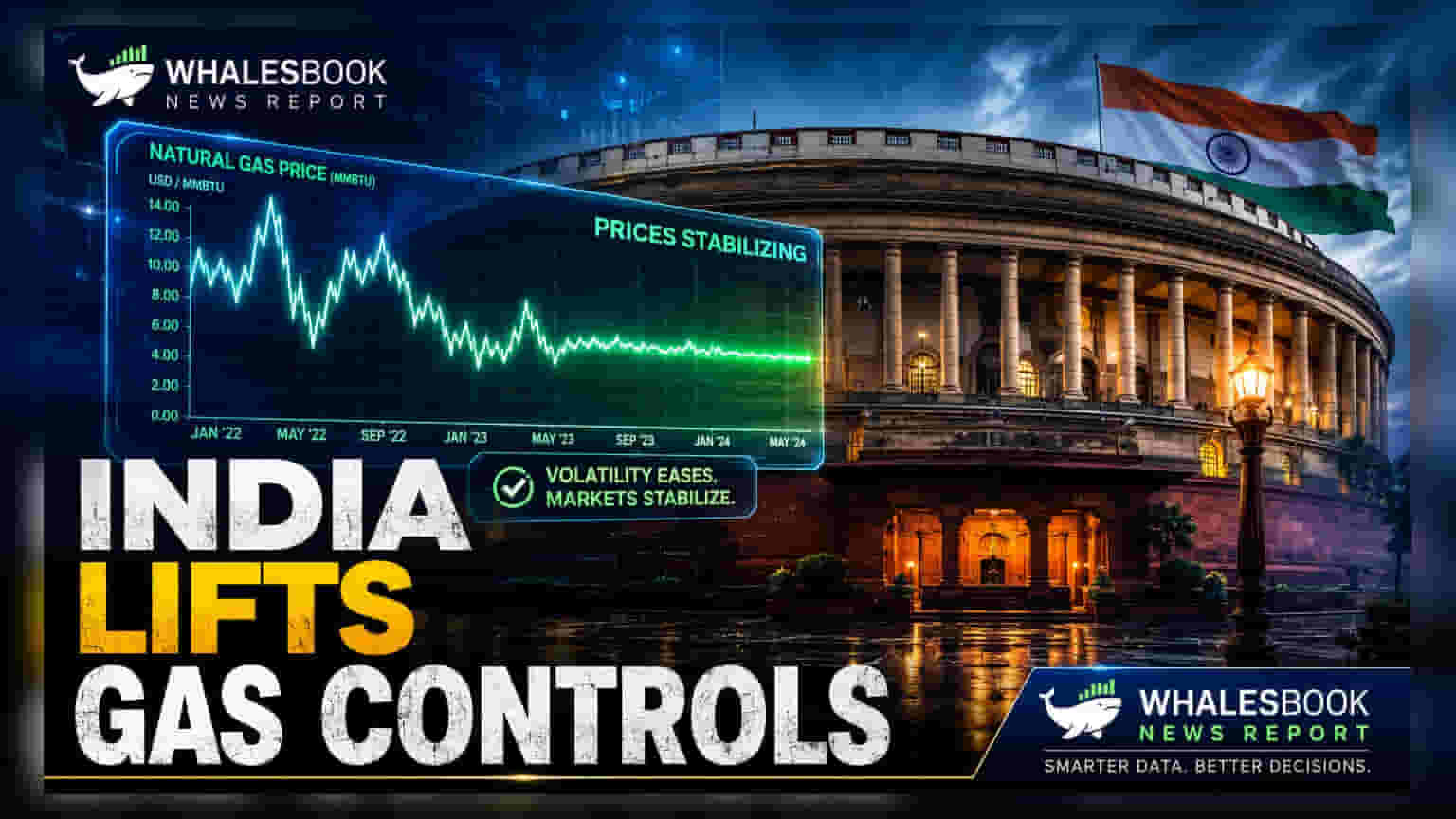
The Indian government has revoked emergency regulations on natural gas supplies that were imposed earlier this year due to Middle East logistics disruptions. With shipping routes through the Strait of Hormuz now operational, the removal of these controls aims to restore standard market operations for energy distribution.
What Happened
On July 4, 2026, the Indian government officially withdrew the emergency natural gas supply regulations that had been in effect since March 9, 2026. These controls were originally introduced to manage the supply of liquefied natural gas (LNG) following significant disruptions in global shipping lanes caused by the conflict in the Middle East. With the recent ceasefire and the resumption of maritime traffic through the critical Strait of Hormuz, the government has determined that emergency oversight is no longer required and has published an amendment order in the Official Gazette to formalize the return to normal operations.
Why This Matters For Investors
The lifting of these regulations is a significant move for sectors heavily dependent on natural gas, such as power generation, fertilizers, and city gas distribution. During the period of emergency controls, suppliers had invoked force majeure clauses—a legal provision that allows parties to exit contracts due to unforeseen circumstances—which led to supply uncertainty and potential cost volatility for downstream users. The restoration of normal supply dynamics should provide greater clarity to companies regarding fuel availability and pricing mechanisms.
Impact On Energy And Industrial Players
Companies that rely on imported LNG as a primary feedstock, such as fertilizer manufacturers and city gas distributors like Indraprastha Gas or Mahanagar Gas, may benefit from more predictable supply chains. During the period of restriction, some companies faced pressure on their profit margins due to either high spot-market prices for gas or the need to source fuel from alternative, more expensive providers. The normalization of trade routes allows these firms to return to their standard procurement strategies, potentially easing cost pressures that had built up earlier this year.
Risks And Market Considerations
While the resumption of shipping is a positive signal, investors should remain aware that the energy sector remains sensitive to global geopolitical tensions. The reliance on imported LNG means that any future flare-up in regional conflicts could again impact supply costs. Furthermore, the volatility in global gas prices continues to be a factor that influences the operating margins of Indian energy companies. Investors should watch whether the removal of these regulations leads to a stabilization in gas procurement costs in the upcoming quarterly results of major energy and industrial companies.
What Investors Should Track
The key monitorables now include the stabilization of raw material costs for gas-dependent industries and any further management commentary regarding the normalization of supply contracts. Investors may also track whether companies that were forced to switch to costlier alternatives during the crisis can now revert to more efficient supply arrangements. Additionally, updates on global LNG price trends will remain essential, as these prices continue to dictate the cost structure for many Indian industrial participants.