

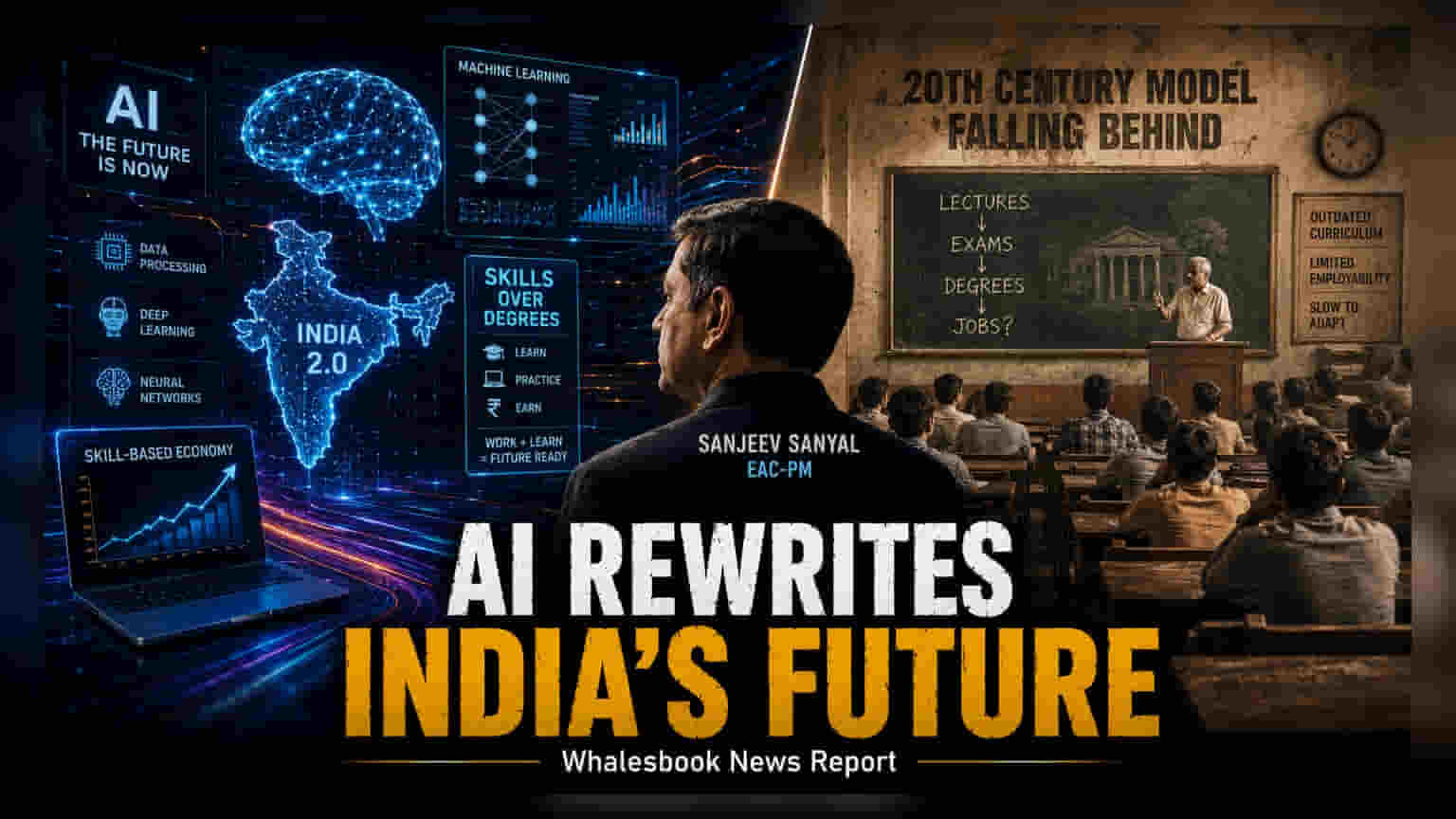
PM Economic Advisor Sanjeev Sanyal has stated that traditional university models are becoming obsolete due to the rise of AI. He emphasized a shift toward practical skilling and lifelong learning to improve workforce employability. For investors, this signals potential long-term changes in corporate recruitment, educational spending, and the growth of skill-based training platforms.
Sanjeev Sanyal, a member of the Economic Advisory Council to the Prime Minister (EAC-PM), has advocated for a fundamental transformation in India's education and workforce training strategies. He argues that traditional, lecture-based university models are essentially 20th-century constructs that are failing to keep pace with an AI-driven global economy. For the Indian market, this perspective highlights a push toward integrating early work experience with education, a move that could reshape how the private sector approaches recruitment and training.
Shifting Focus to Skill-Based Hiring
Sanyal’s commentary suggests that the future labor market will value practical application over traditional degrees. He encourages young people to consider working at 18 while pursuing education simultaneously, as the industry increasingly demands 'employability' rather than just academic qualifications. For businesses, this implies that Human Resources (HR) departments may need to adapt. Companies are likely to play a more direct role in skilling employees, potentially shifting demand away from rigid, legacy education providers toward agile EdTech platforms and internal corporate training programs that focus on rapid reskilling.
There is no direct stock market impact from these policy views, as they represent a long-term economic outlook rather than a specific corporate announcement. However, sectors focused on vocational training, professional upskilling, and enterprise-led education could see long-term interest if policies align with this shift toward practical, continuous learning. Investors in the education sector may monitor whether traditional universities can modernize their curricula or if they will lose market share to more specialized, skill-focused institutions.
Economic and Monetary Policy Outlook
Beyond education, Sanyal also addressed broader economic indicators, offering insight into how the government views current macro pressures. He noted that the Monetary Policy Committee remains within its mandate and would be justified in tightening monetary conditions if consumer price inflation moves toward 6%. For investors, this serves as a reminder that the cost of capital remains sensitive to inflation trends. He also dismissed concerns regarding 'jobless growth,' suggesting that economic expansion in India continues to create necessary employment opportunities, though the nature of these jobs is evolving alongside technology.
Monitoring Future Policy and Corporate Spending
While Sanyal’s statements reflect his role as an economic advisor, they provide a window into the government's thinking on workforce challenges. The demographic reality of a declining fertility rate and an aging population, as mentioned by Sanyal, will require long-term policy adjustments. For the market, the key monitorable will be how corporate India adapts to these changes. Investors should watch for trends in corporate spending on employee training, the growth of skill-certification partnerships between industry and academia, and any government policy incentives aimed at bridging the gap between traditional education and industry-specific skill requirements.