

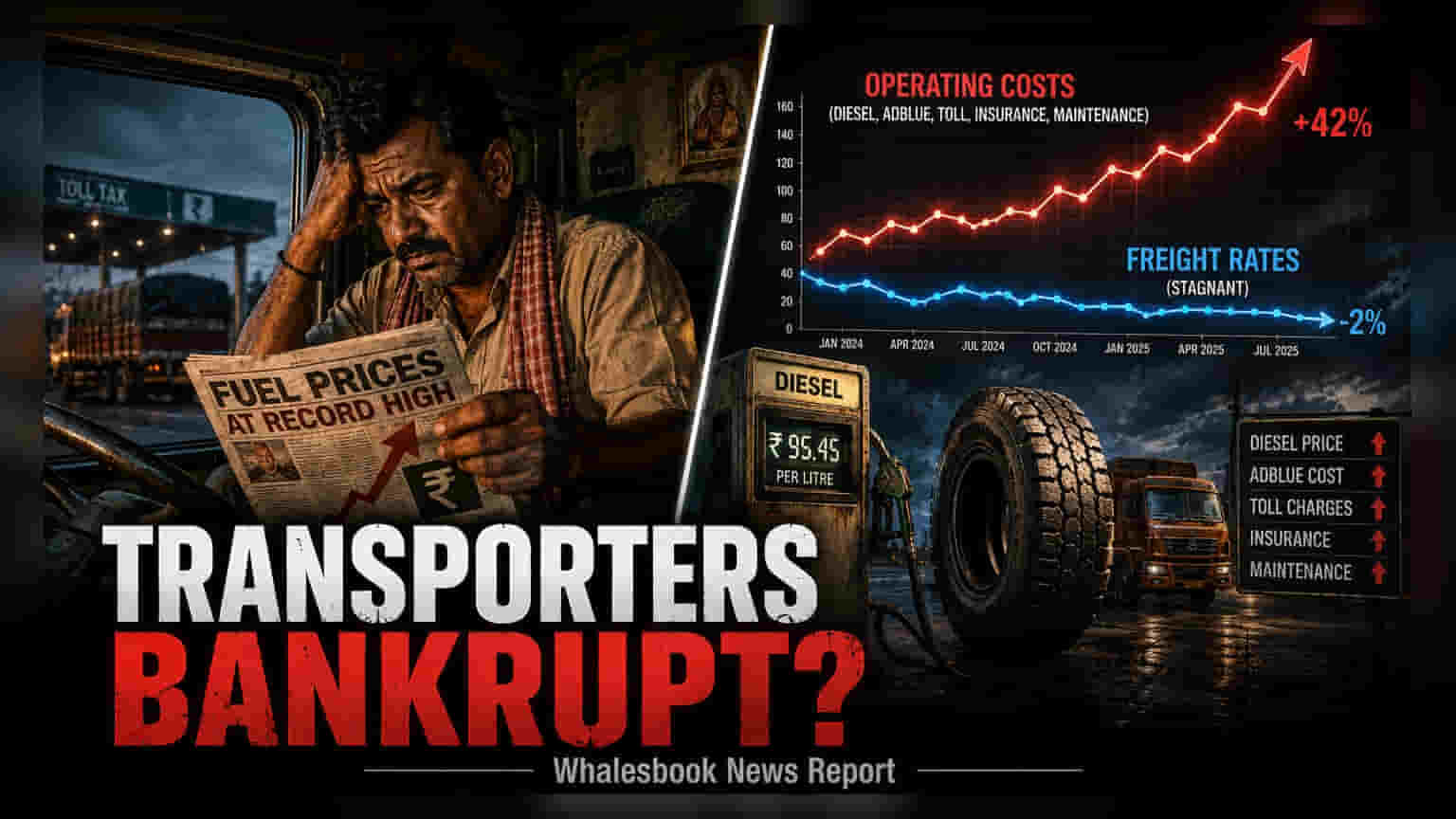
India's small trucking operators are struggling with soaring costs for fuel, toll, and maintenance, coupled with stagnant freight rates. As these small businesses handle nearly 70% of India’s freight, their financial distress poses a risk to supply chain stability and creates potential cost pressures for sectors dependent on logistics.
A financial crisis is brewing among India’s small road transport operators and self-driving truck owners, who form the backbone of the country’s logistics sector. Industry data suggests that these small-scale operators manage approximately 70% of India’s freight. However, the combination of rising operational costs and stagnant freight rates has made many of these businesses unsustainable, creating ripple effects for the broader economy.
Mounting Operational Pressures
The fundamental challenge for these operators is a squeeze on profit margins. Diesel prices continue to be the largest expense, accounting for roughly 60% of running costs. Beyond fuel, operators are burdened by the rising costs of AdBlue, a mandatory fluid required for BS-VI compliant trucks to meet emission standards. When combined with increasing toll charges, insurance premiums, and vehicle maintenance costs, the thin margins of small fleet owners are being eroded. Unlike large logistics firms, these small operators often lack the bargaining power to pass these rising costs on to customers, forcing many to operate at a loss just to maintain business relationships.
Technology and Regulatory Compliance
Beyond basic running expenses, small transporters are facing significant non-financial burdens linked to digitalization and regulation. Mandates like the installation of Vehicle Location Tracking Devices (VLTD) and the integration of fleet data with the government’s Vahan portal have created operational hurdles. Industry reports indicate that technical glitches with these digital systems frequently cause trucks to be stranded for days or weeks. For an owner-operator, this downtime represents a direct loss of income. Additionally, operators have raised concerns about the alleged misuse of the electronic challan (e-challan) system, which they claim leads to unnecessary penalties and adds to the administrative and financial strain.
Investor Angle: Impact on the Supply Chain
For investors, the crisis in the unorganized transport sector is a monitorable risk for several industries. Companies in consumer goods, manufacturing, and e-commerce depend heavily on these small transporters to move products from factories to markets. If financial stress leads to a consolidation in the sector or operational disruption, it could trigger logistics inflation, impacting the profit margins of companies that rely on third-party transport.
Furthermore, the reliance of large corporate logistics players on these smaller, unorganized vendors means that any widespread insolvency or strike action could disrupt the movement of essential goods, including medicines and food. Investors may track whether upcoming policy discussions lead to a rationalization of toll structures or adjustments in freight rate calculations, as these would be necessary steps to stabilize the sector. The ability of logistics companies to manage vendor relationships amidst this volatility will remain an important factor for long-term operational health.