 Whalesbook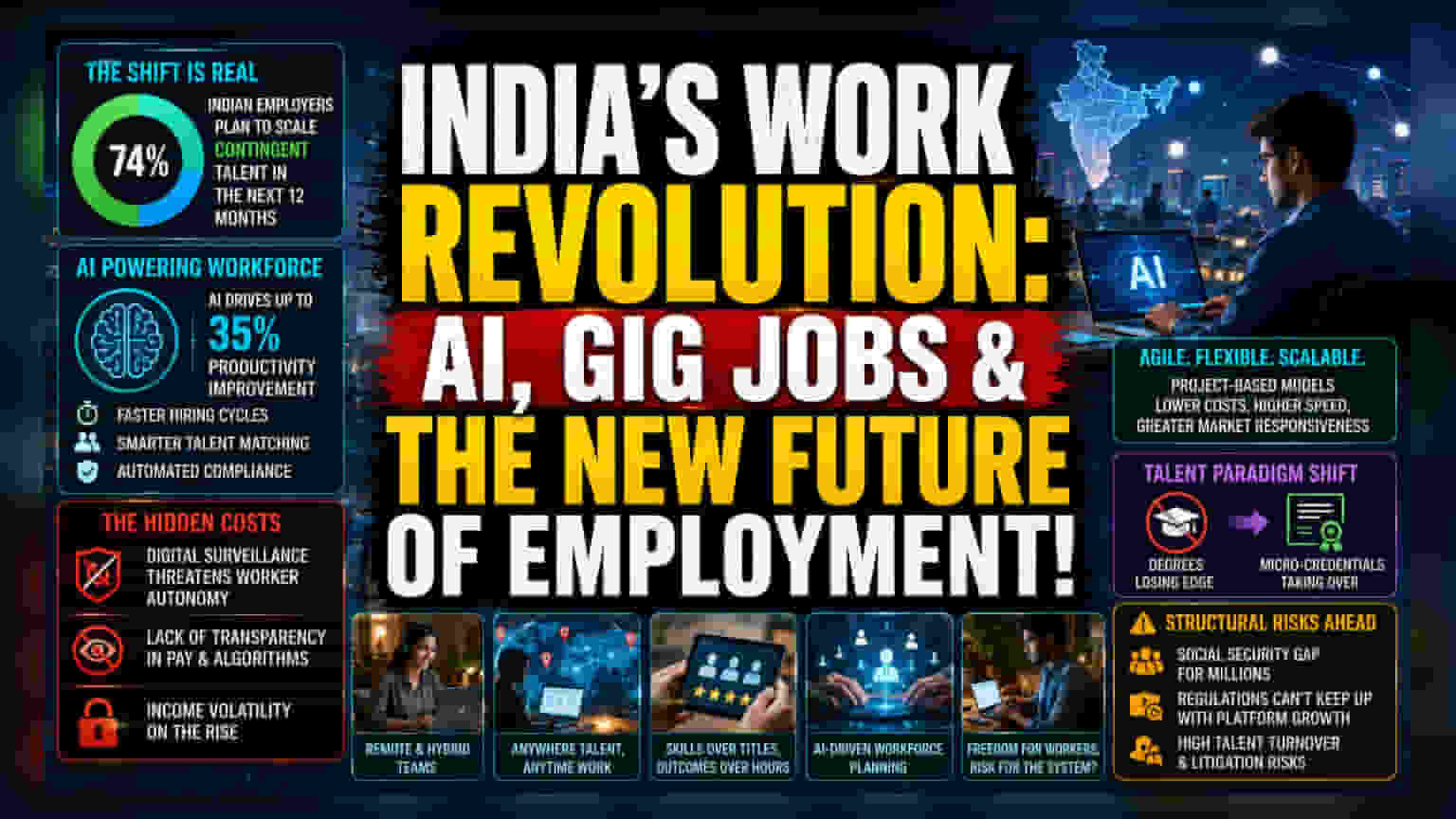


Agile Hiring તરફ ભારતીય ઉદ્યોગોનો ઝોક
ભારતીય કંપનીઓ પરંપરાગત Full-time Employment ની જગ્યાએ Agile, Project-based મોડેલ્સ તરફ ઝડપથી આગળ વધી રહી છે. આ પરિવર્તન માત્ર Skill Gaps ને પહોંચી વળવા માટે નથી, પરંતુ Cost Structures ને Optimize કરવા અને Market Responsiveness વધારવા માટેનું એક Strategic Move છે. આગામી વર્ષમાં 74% સ્થાનિક કંપનીઓ પોતાના Contingent Talent Pools ને Scale કરવાની યોજના ધરાવે છે, જેનાથી ભારતીય શ્રમ બજાર ભૂતકાળના Static Hiring Norms થી અલગ થઈ રહ્યું છે.
AI: કાર્યક્ષમતાનો આધારસ્તંભ
આ Trends માં Artificial Intelligence (AI) નો ફાળો મહત્વપૂર્ણ છે. ભારતીય કંપનીઓએ Hiring Cycles ને ઘટાડવા અને Human Capital Allocation ને Optimize કરવા માટે Automated Platforms નો ઉપયોગ કર્યો છે. જે સંસ્થાઓ AI ને માત્ર Back-office Utility નહીં, પરંતુ Workforce Planning ના Core Engine તરીકે ઉપયોગ કરી રહી છે, તે સૌથી વધુ સફળ થઈ રહી છે. આ Data-driven Models થી 35% સુધી Productivity માં સુધારો થયો છે, સાથે જ Automated Compliance અને Skills-matching Algorithms દ્વારા Operational Overhead માં ઘટાડો થયો છે. જોકે, આ કાર્યક્ષમતાના કારણે Algorithmic Management પર નિર્ભરતા વધી છે, જે Worker Autonomy અને Compensation Structures ની પારદર્શિતા અંગે પ્રશ્નો ઉભા કરે છે.
Systemic Risks અને Structural Vulnerabilities
ઝડપી Informalization of Workforce નવા Systemic Risks ઊભા કરી શકે છે. પરંપરાગત Payroll Models થી દૂર જવાથી લાખો કામદારો માટે Social Security Coverage માં મોટી ખાઈ સર્જાઈ શકે છે. સરકારના Code on Social Security જેવા Frameworks આ ખાઈને ભરવાનો પ્રયાસ કરી રહ્યા છે, પરંતુ Regulatory Apparatus ડિજિટલ પ્લેટફોર્મ્સ ના વિસ્તરણની ગતિ સાથે તાલ મિલાવી શકતું નથી.
વધુમાં, "Skills Flip" – જ્યાં Employer પરંપરાગત ડિગ્રી કરતાં Micro-credentials ને પ્રાધાન્ય આપે છે – તે એક Fragile Talent Pipeline દર્શાવે છે. Agile Roles તરફ Pivot કરતી વખતે, કંપનીઓ એક અસ્થિર વાતાવરણનું નિર્માણ કરવાનું જોખમ ધરાવે છે, જ્યાં આવકની અસ્થિરતા સામાન્ય બની શકે છે. ભારતીય કામદાર માટે, આ એક Trade-off છે: તાત્કાલિક વધુ કમાણી, પરંતુ સંસ્થાકીય લાભોના અભાવ સાથે લાંબા ગાળાની અસ્થિરતા. રોકાણકારોએ નોંધ લેવું જોઈએ કે Agile Structures પર વધુ પડતો આધાર રાખતી કંપનીઓ ભવિષ્યમાં Worker Classification અંગેના Potential Litigation અને Transient Skills ધરાવતા બજારમાં Talent Turnover ના ઊંચા ખર્ચ જેવી મુશ્કેલીઓનો સામનો કરી શકે છે.