

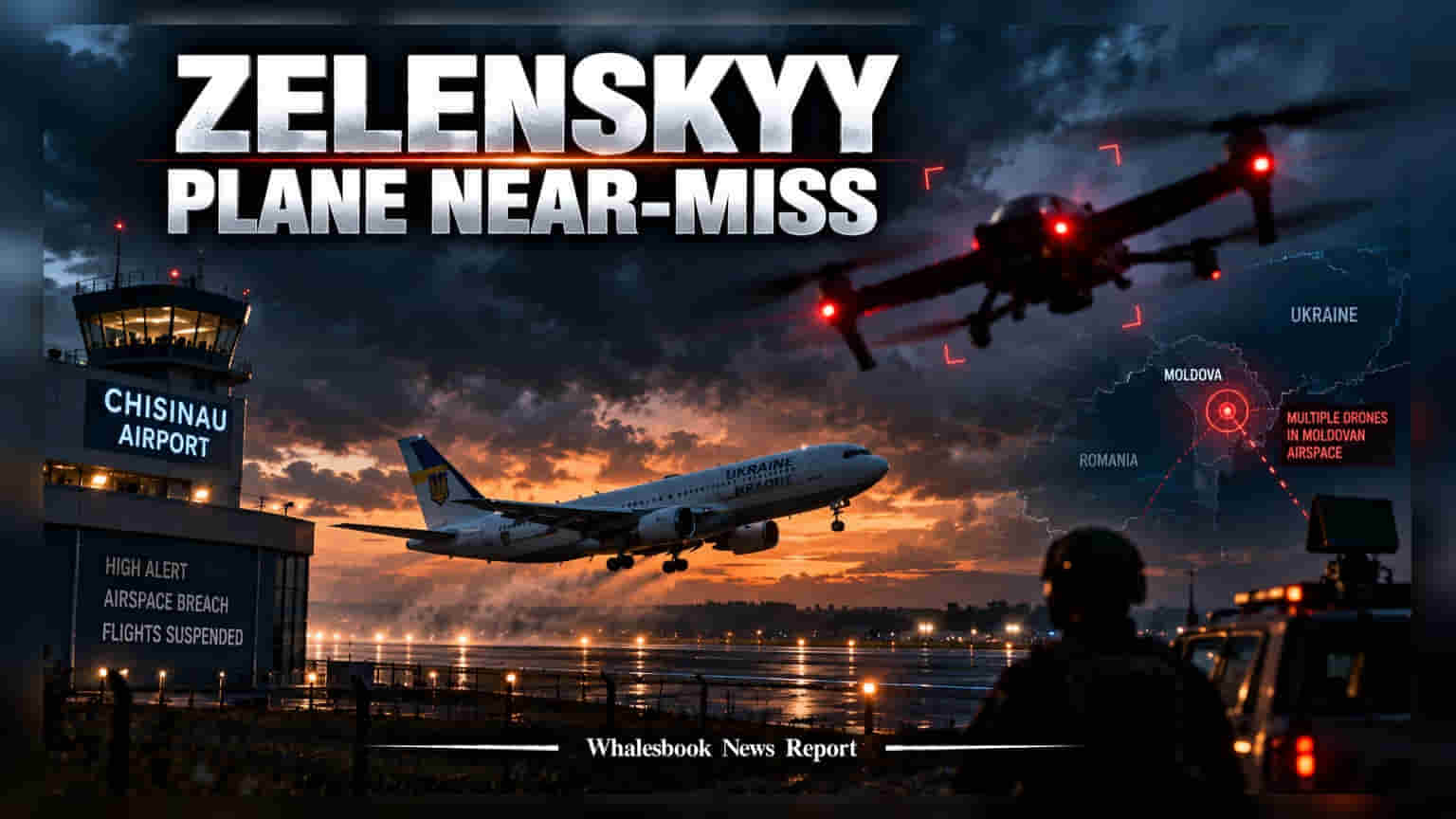
Ukrainian President Volodymyr Zelenskyy’s aircraft narrowly avoided a drone collision while departing Moldova on September 8, 2026. The incident occurred as he traveled to Norway for the state funeral of King Harald V, underscoring the persistent security risks facing diplomatic transit in the region.
Ukrainian President Volodymyr Zelenskyy faced a critical security incident on September 8, 2026, when his aircraft narrowly avoided a collision with a drone while departing from Moldova. The near-miss occurred during takeoff from Chisinau Airport, where the Ukrainian leader was scheduled to transit en route to Oslo, Norway, for the state funeral of King Harald V.
Norwegian Prime Minister Jonas Gahr Støre publicly confirmed the event on September 9, 2026, noting the persistent dangers faced by the Ukrainian leadership. The incident took place against a backdrop of wider aerial instability in the region. Reports indicate that multiple Russian drones entered Moldovan airspace throughout the day, which led to the temporary suspension of airport operations and the diversion of commercial flights to ensure the safety of civilian air traffic.
The breach highlights the ongoing challenges to regional airspace security as the conflict in the region continues. For international observers and diplomatic missions, the event emphasizes the logistical and physical risks associated with high-level travel in areas adjacent to active combat zones. While no corporate entity is involved, the incident underscores the broader geopolitical volatility that continues to influence stability in Eastern Europe and its neighboring regions.
Following the incident, President Zelenskyy completed his travel to Norway to attend the funeral proceedings and conduct diplomatic consultations. These meetings are part of a broader push for sustained defense cooperation and aerial security support. Investors and geopolitical analysts monitor such events as they often serve as indicators of the escalating security environment in Eastern Europe, which can influence international policy, defense spending, and regional stability.