

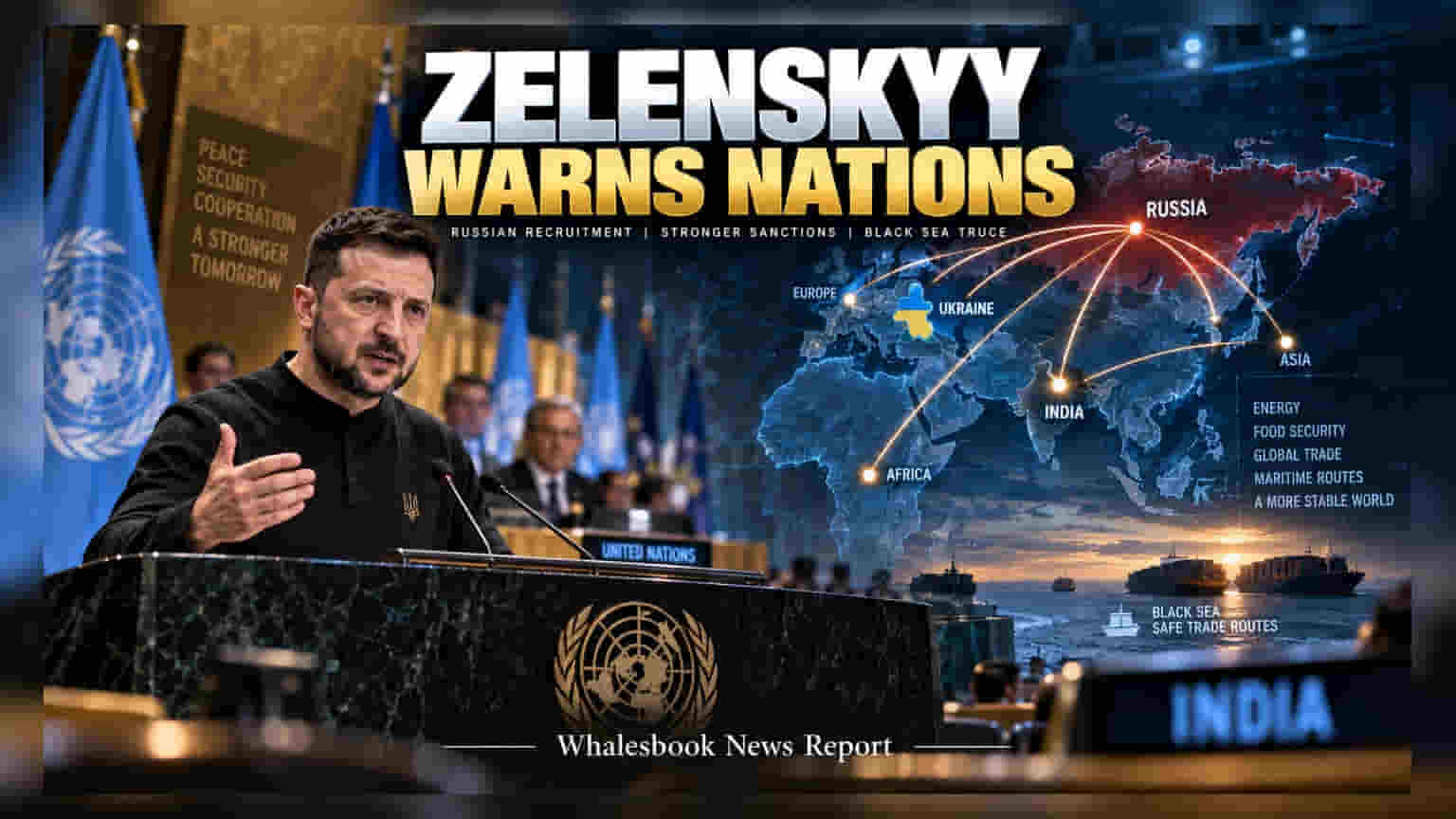
Ukrainian President Zelenskyy has alleged that foreign nationals, including Indians, are being recruited for the Russian military. The address also focused on maritime trade security in the Black Sea and potential tighter energy sanctions. These geopolitical developments may impact global supply chains, commodity pricing, and India's energy import landscape, which are important areas for investors to track.
Ukrainian President Volodymyr Zelenskyy addressed the United Nations General Assembly on Wednesday, raising concerns about the recruitment of foreign nationals from 47 countries, including India, into the Russian military. Alongside this, he urged global leaders to intensify economic pressure on Russia and called for a maritime truce in the Black Sea to secure vital trade routes. These developments carry potential implications for Indian markets, particularly regarding global energy, food inflation, and trade logistics.
Impact on Maritime Trade and Commodities
The Black Sea remains a critical corridor for the movement of grain and other essential commodities. Any uncertainty or conflict in this region creates volatility in global food supply chains, affecting prices across Asia and the Middle East. President Zelenskyy noted that India, alongside Egypt and Turkey, has been involved in diplomatic discussions to restore safe commercial navigation in the region. For Indian investors, stability in these maritime lanes is important, as disruptions can impact logistics costs and the availability of essential agricultural imports.
Energy Imports and Trade Policy
A significant part of the discussion focused on calls for stricter economic sanctions against Russian energy exports. This geopolitical friction is relevant for India, a major buyer of Russian crude oil. While the current global trade environment allows for these imports, calls for tighter sanctions and potential tariff hikes by western nations create an uncertain environment for global energy prices. Higher crude oil costs can place pressure on the Indian rupee and increase input costs for sectors such as manufacturing, logistics, and chemicals.
What Investors Should Monitor
The path forward involves watching global diplomatic outcomes regarding the Black Sea trade routes, as these directly affect food commodity pricing and freight rates. Additionally, any shifts in international sanctions policy on Russian energy could influence crude oil price trends. Investors may also track management commentary from Indian logistics and commodity-based companies for any potential impact on shipping costs or supply chain reliability as these geopolitical events evolve.