

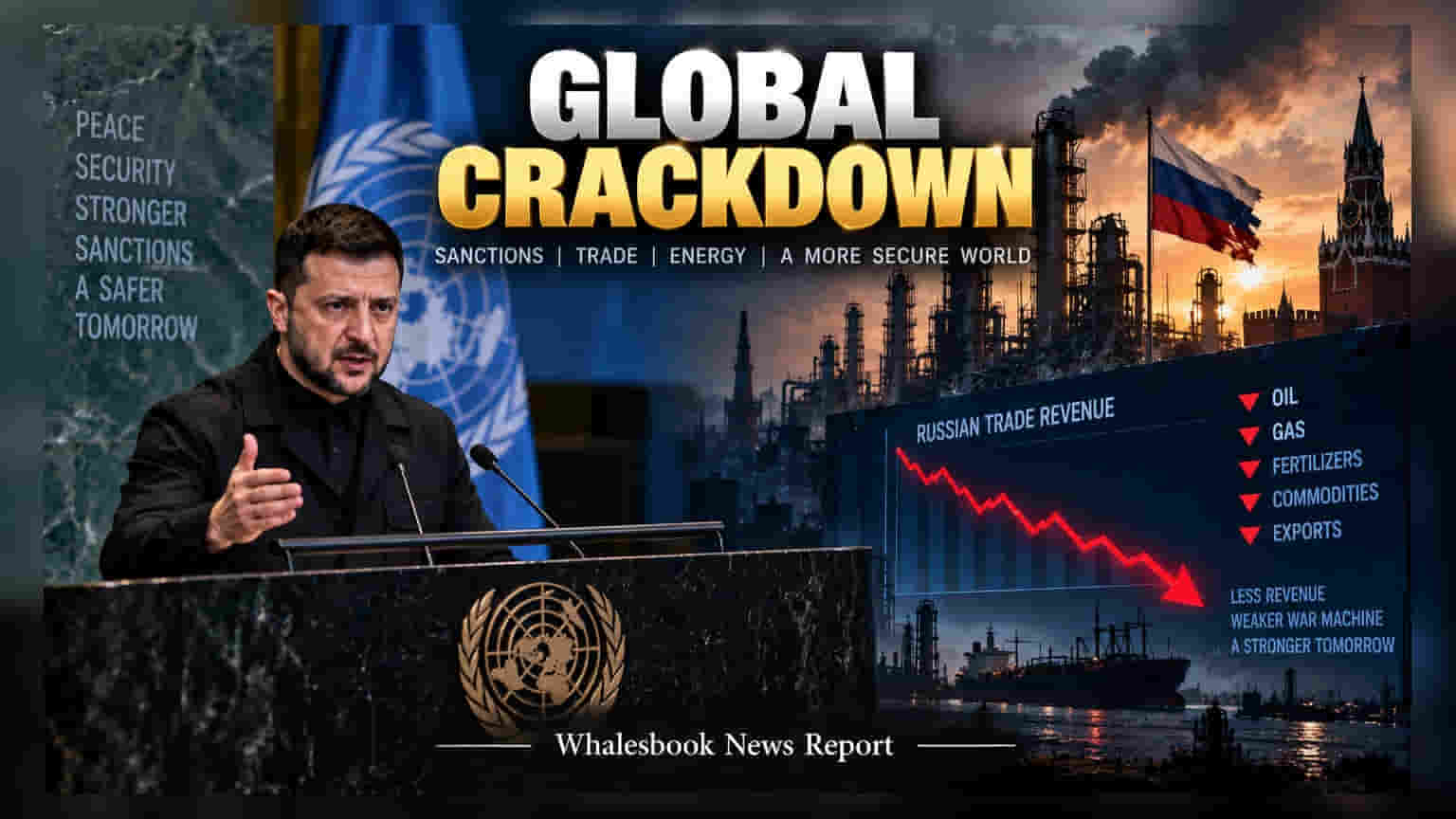
President Zelenskyy has urged the UN to restrict Russian revenue, aiming to reduce funding for the ongoing conflict. For investors, this prolongs the uncertainty around global commodity supply chains, including energy and fertilizers, which directly impacts import-dependent economies like India.
Ukrainian President Volodymyr Zelenskyy addressed the United Nations General Assembly, calling on global leaders to tighten economic sanctions against Russia. He argued that international trade with Moscow is providing the necessary capital to sustain its military operations, and he pushed for deeper restrictions to limit Russia's ability to finance the ongoing conflict. This demand represents a shift toward seeking more direct intervention in global trade flows to impact the war effort.
Commodity Markets and Supply Risks
The ongoing conflict continues to create friction in global commodity markets. The diplomatic stalemate between Ukraine and Russia suggests that disruptions to the supply of essential goods are likely to persist. Global markets have been sensitive to the trade of energy products, fertilizers, and grain throughout the conflict. Investors in commodities, particularly oil and gas, often monitor these diplomatic developments because any shift in sanctions or trade policies can lead to sudden price volatility.
For Indian investors, the focus remains on how these tensions affect energy and fertilizer import costs. India relies significantly on international imports for crude oil and fertilizer raw materials. If the international community adopts stricter measures as requested by the Ukrainian government, it could potentially complicate logistics, shipping insurance, or payment channels, even if India maintains its own trade policy. Any increase in global energy prices or supply bottlenecks directly influences the input costs for many Indian manufacturing and agricultural companies.
The Diplomatic Impasse
Following the Ukrainian president's address, Russian Foreign Minister Sergey Lavrov clarified that Moscow is not interested in temporary pauses or ceasefires at this stage. The Russian position is that any break in fighting would allow for military resupply by Western allies, which the Kremlin views as a strategic disadvantage. This rigid diplomatic stance indicates that the conflict is unlikely to resolve in the near future. As long as both sides remain firmly set on these positions, the risk of continued volatility in supply chains and global trade remains a factor for the market to consider.
Monitoring Next Steps
Investors should track developments in global commodity pricing, specifically crude oil and fertilizer benchmarks, as these are the primary transmission channels for the war's economic impact on India. Additionally, any new regulatory updates regarding international shipping or financial sanctions on Russian exports will be relevant for companies involved in global logistics, energy, and agriculture. The market will continue to assess whether these diplomatic requests translate into actual policy changes that might further tighten the global supply of energy and raw materials.