 Whalesbook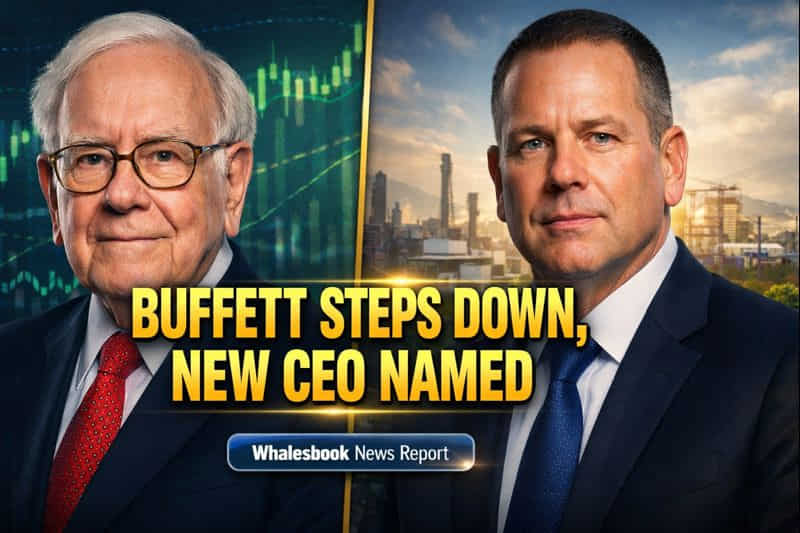
An Era Ends: Buffett Steps Down as Berkshire CEO
Warren Buffett, the iconic "Oracle of Omaha," is relinquishing his role as Chief Executive Officer of Berkshire Hathaway, concluding an extraordinary leadership tenure of nearly sixty years. This significant leadership change is set to take effect on January 1, 2026.
Buffett, who is turning 95 this year, took control of Berkshire Hathaway in 1965 when it was a struggling textile mill. Under his visionary guidance, the company transformed into a global powerhouse with a market value exceeding $1 trillion. His disciplined value-investing philosophy and long-term approach have been instrumental in delivering exceptional returns to shareholders over the decades.
The Succession Plan: Greg Abel Takes the Reins
Berkshire Hathaway has officially announced that Greg Abel will succeed Buffett as CEO. Abel, currently the vice chairman overseeing the company's non-insurance businesses, has long been considered Buffett's intended successor. He has been deeply involved in the company's strategic decisions and has played a crucial role in expanding Berkshire's energy and infrastructure segments over the past two decades.
Buffett will transition to the role of Chairman, a move designed to ensure the continuity of Berkshire's distinct corporate culture. This culture is characterized by decentralized management, prudent capital allocation, and a steadfast focus on long-term value creation. Industry experts anticipate that Buffett's continued presence will provide stability and confidence to shareholders during this pivotal leadership transition.
Financial Landscape and Future Challenges
Berkshire Hathaway currently holds a substantial amount of cash and Treasury bills, exceeding $380 billion. The deployment of this vast capital presents a key challenge for the incoming CEO, especially in an environment marked by elevated asset valuations and a scarcity of large-scale acquisition opportunities. Observers believe that Berkshire's fundamental investment strategy will remain unchanged under Abel's leadership, given his deep involvement and the trust placed in him by Buffett and the board.
Legacy and Market Impact
Buffett's retirement as CEO signifies the close of a monumental chapter not only for Berkshire Hathaway but for the broader landscape of American investing. His emphasis on patience, integrity, and rational decision-making has profoundly influenced generations of investors and corporate leaders. As Berkshire Hathaway embarks on its next phase under Greg Abel, Warren Buffett's enduring legacy as a master capital steward and a proponent of long-term thinking is set to persist.
Impact Rating: 8/10
Difficult Terms Explained
- Conglomerate: A large company composed of several different businesses operating in various industries.
- Value-investing philosophy: An investment strategy focused on buying stocks that appear to be trading for less than their intrinsic or book value, with the expectation that the market will eventually recognize their true worth.
- Stewardship: The responsible management and oversight of assets or a company on behalf of others.
- Subsidiaries: Companies that are owned or controlled by another company (the parent company).
- Decentralised management: A management structure where decision-making authority is distributed among various levels and departments within an organization, rather than being concentrated at the top.
- Conservative capital allocation: A strategy for using a company's financial resources that prioritizes safety, stability, and predictable returns over higher-risk, higher-reward ventures.
- Asset valuations: The process of determining the current worth of an organization's assets.