

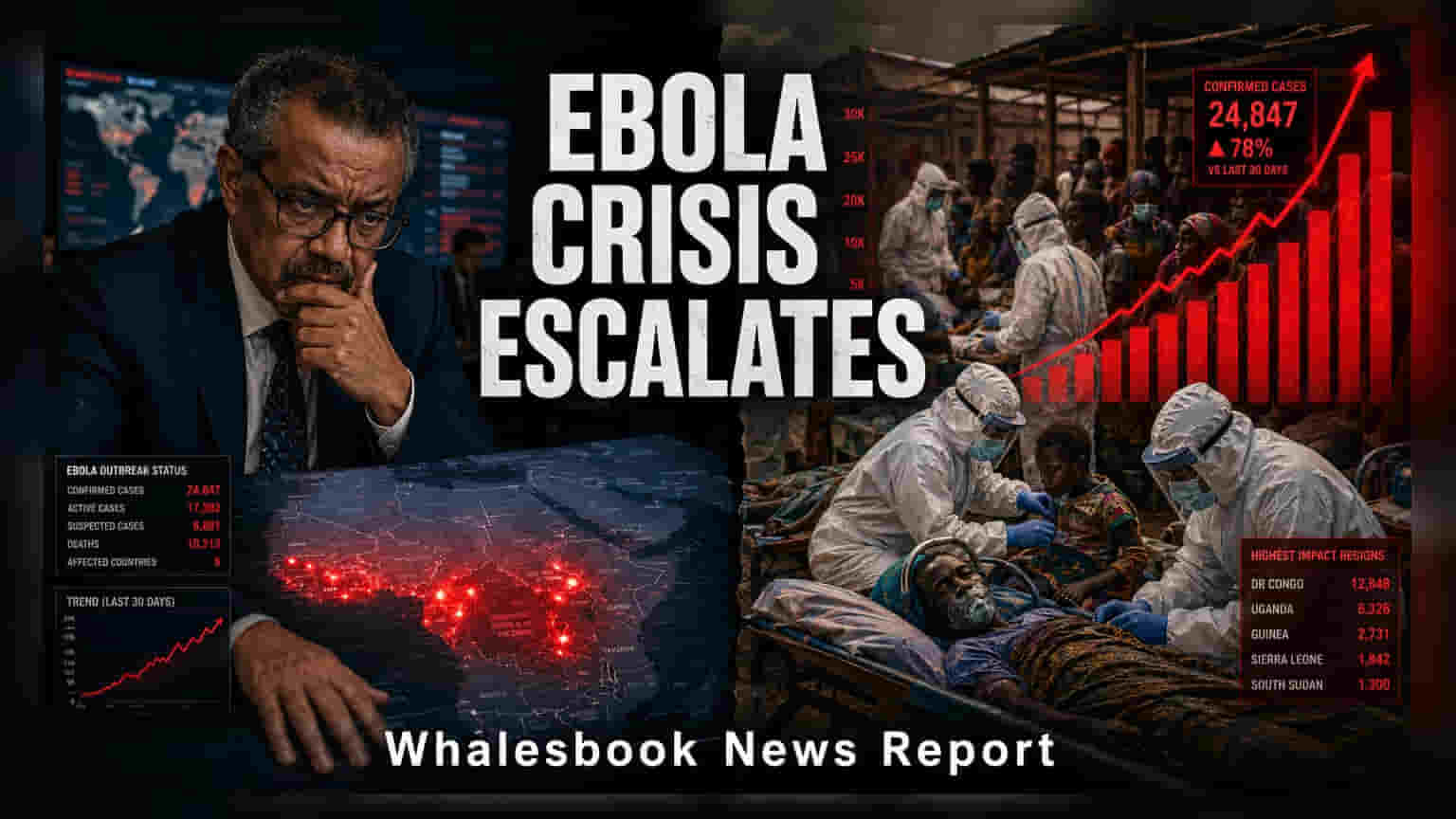
World Health Organization Director-General Tedros Adhanom Ghebreyesus has arrived in the Democratic Republic of the Congo to address an escalating Ebola outbreak. With confirmed cases reaching 3,874 and 1,751 deaths, the virus is spreading rapidly beyond monitored contact networks. The situation is further complicated by security instability and the absence of approved treatments for the current viral strain.
World Health Organization (WHO) Director-General Tedros Adhanom Ghebreyesus has arrived in the Democratic Republic of the Congo, marking his second visit to the nation since mid-May 2026. The visit comes as the country faces one of its most challenging Ebola outbreaks, which has now reached 3,874 confirmed cases and 1,751 deaths as of August 3, 2026. This health emergency is officially categorized as the second-largest Ebola outbreak in recorded history, trailing only the 2014-2016 West Africa crisis.
The current crisis is driven by the Bundibugyo strain of the Ebola virus. A significant complicating factor for health authorities is that there are currently no approved vaccines or specific, standardized treatments for this particular strain. This limitation is a primary driver behind the high fatality rate, which currently stands at approximately 45%. Without the availability of rapid-response medical interventions, the focus remains on isolation, supportive care, and containment, which are proving difficult to execute under current conditions.
Containment efforts are facing substantial obstacles. According to data provided by health officials, including Dr. Jean Kaseya, Director-General of the Africa Centres for Disease Control and Prevention, the effectiveness of contact tracing has dropped significantly. Between 60% and 70% of new infections are now emerging outside of established contact lists. This indicates that the virus is spreading through chains of transmission that are not currently being tracked or monitored, allowing the outbreak to outpace standard health response protocols.
The logistics of the response are further hampered by instability in the Ituri province, which serves as the epicenter of the current outbreak. Nearly 90% of all confirmed cases are concentrated in this region. However, armed conflict and security risks frequently prevent medical personnel from accessing affected communities to conduct testing and contact tracing. Additionally, the containment strategy has experienced intermittent disruptions due to health worker strikes, often sparked by disputes over unpaid wages, which halts critical field operations.
While some payments to health workers have been processed to resume activities, the combination of security threats, a highly transmissible strain, and failing contact tracing mechanisms creates a volatile environment for public health. For observers and global stakeholders, the primary monitorables remain the success of new, innovative tracing strategies to capture the missing chains of infection and the stabilization of the security situation in Ituri, which is essential for sustained health interventions.