

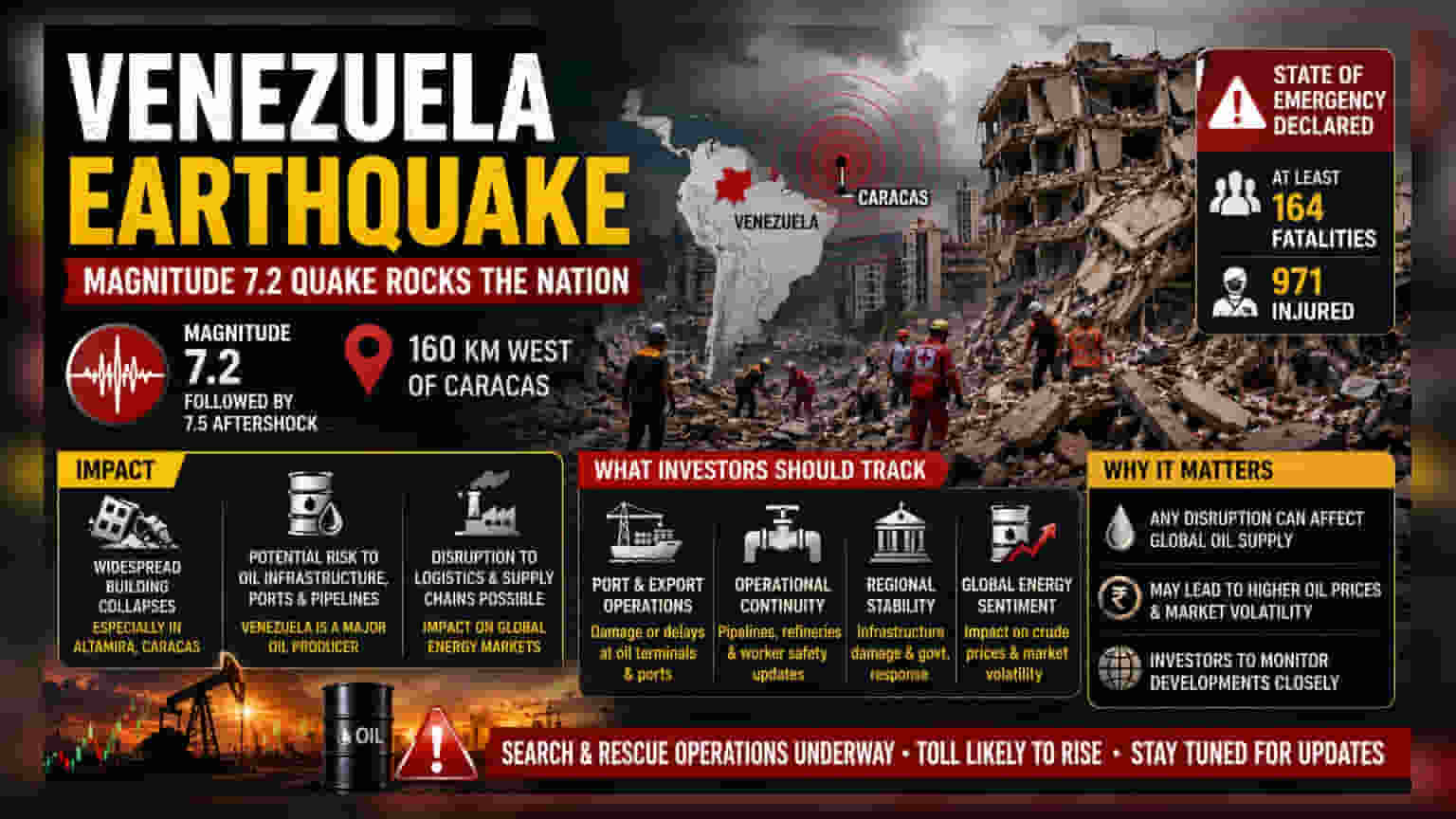
A 7.2 magnitude earthquake struck Venezuela, resulting in at least 164 deaths and 971 injuries. Major infrastructure damage was reported in Caracas. Investors are tracking the situation for potential disruptions to energy supply chains and regional logistics as the government assesses the impact on critical facilities.
What Happened
A 7.2 magnitude earthquake struck Venezuela on Wednesday, causing widespread devastation. The tremor, followed by a 7.5 magnitude aftershock, hit approximately 160 kilometers west of the capital, Caracas. The United States Geological Survey (USGS) reported the seismic activity, which has led the Venezuelan government to declare a state of emergency. Current reports confirm at least 164 fatalities and 971 injuries, with the toll expected to rise as search and rescue operations continue in affected areas.
Impact on Infrastructure and Energy
The earthquake caused significant structural damage, particularly in the Altamira district of Caracas, where multi-story buildings have collapsed. For global and Indian investors, the primary concern is potential disruption to the energy sector. Venezuela is a major global oil producer, and any impact on port infrastructure, pipelines, or refinery logistics can affect global energy supply chains.
While Venezuela's main oil production areas are often located away from the immediate epicenter of this quake, logistical chains rely on port facilities and transport networks that could face delays or structural assessments in the coming days. Any halt in export operations or tanker movements could influence global crude price sentiment.
The Economic and Regional Context
Venezuela has a history of seismic activity, which poses a recurring risk to its urban infrastructure. The region sits on the boundary between the Caribbean and South American tectonic plates, making it prone to high-energy events. The current disaster adds pressure to an economy already facing complex structural challenges.
Beyond immediate humanitarian aid, the economic impact will depend on the government's ability to maintain continuity in critical industrial and export sectors. Historical seismic events in the region have often caused temporary disruptions to trade routes and local manufacturing capacity due to damaged roads and energy grid issues.
What Investors Should Track
Investors with interests in the energy sector or commodity markets may monitor the following factors in the coming days:
Port and Export Data: Any reports of damage or delays at major Venezuelan oil terminals or shipping ports would be a key indicator of supply chain stress.
Operational Continuity: Official statements from state-owned energy entities regarding the status of pipelines, refineries, and worker safety will be critical to gauge the impact on crude output.
Regional Stability: The speed of the government's response and any impact on civil infrastructure could influence regional economic stability, which often has indirect effects on global commodity markets.
Global Energy Sentiment: Since oil prices are sensitive to supply-side logistics, any news suggesting a significant slowdown in exports could lead to increased volatility in the energy market.