

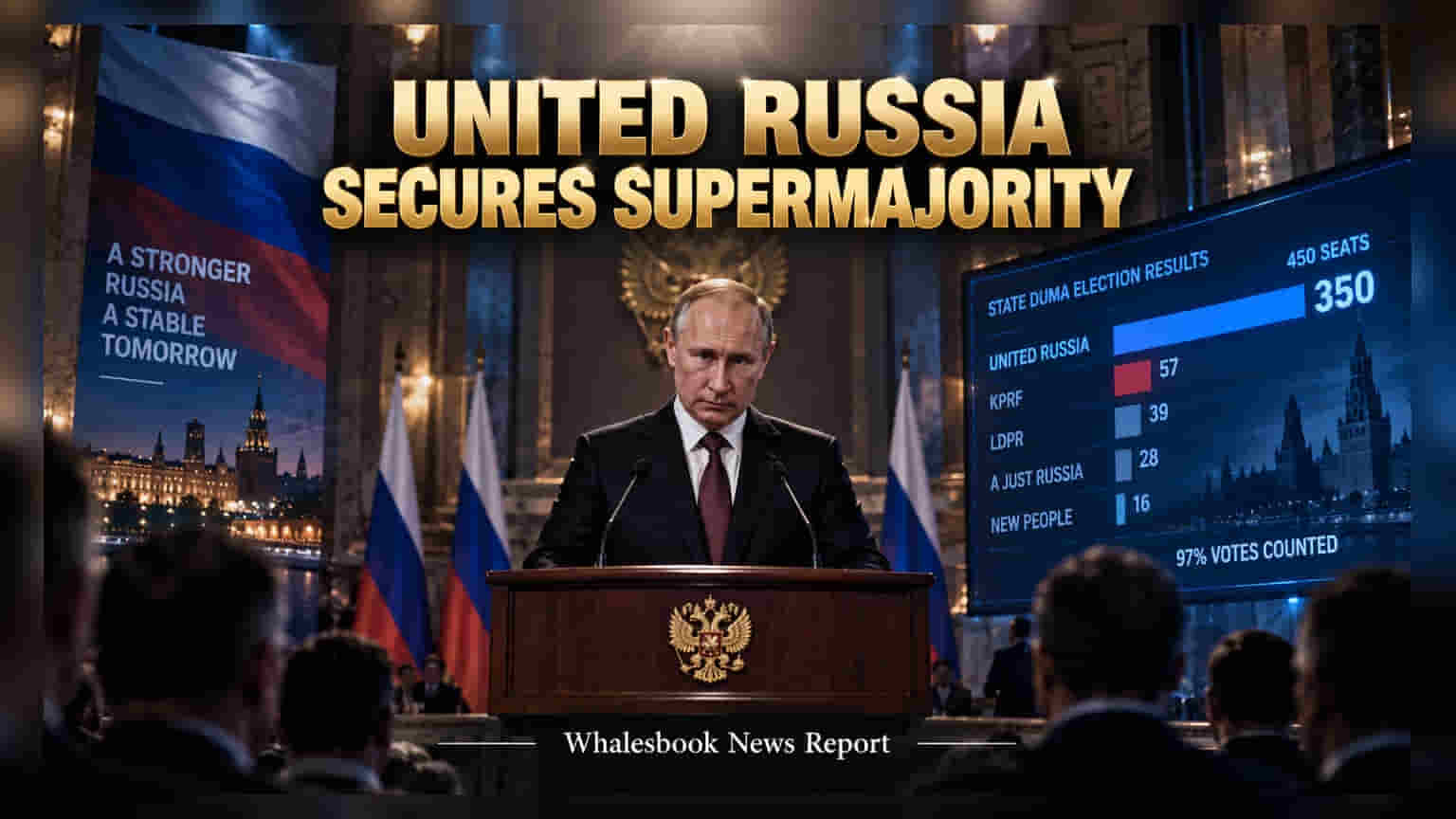
The ruling United Russia party has secured a supermajority in the State Duma, signaling continuity in existing economic and wartime policies. For investors, the key focus is on the stability of energy supplies and the broader impact of ongoing geopolitical tensions on global commodity prices and trade relations.
The United Russia party has secured a legislative supermajority, winning approximately 350 out of the 450 seats in the State Duma. With over 97 percent of votes counted, the result confirms the ruling administration's continued control over the legislative process. For the business community, this outcome signals a trajectory of policy continuity, suggesting that current economic and strategic priorities will remain in place without legislative friction.
The legislative confirmation comes amid a complex security environment, which has implications for regional energy infrastructure. Official reports confirmed recent damage to an oil refinery following intensified drone activity in the Moscow region. Any disruption to refining capacity or energy logistics can influence global energy market sentiment, as stable output remains critical for regional economic health and global commodity price trends. Investors typically monitor such infrastructure risks closely, as they can lead to fluctuations in crude and fuel prices, which indirectly impact global supply chains.
For Indian investors, the geopolitical and economic landscape in Russia remains a notable factor, primarily due to the ongoing trade in energy commodities. As India continues to rely on Russian crude oil, the stability of these trade flows is essential for domestic refiners and, by extension, the broader energy cost outlook. A consolidated political environment provides short-term predictability in trade policy, but the underlying geopolitical risks—such as the threat of expanded sanctions or further escalations in conflict—continue to create uncertainty for global markets.
The market’s focus now shifts to how the administration navigates these economic constraints. While the legislative outcome allows for swift policy implementation, the government faces the challenge of managing a war-time economy. Key factors to watch include any shifts in domestic fiscal policy, the resilience of infrastructure against further security risks, and the long-term sustainability of trade partnerships. Investors will likely look for updates on production capacity, export logistics, and any broader regulatory changes that could affect international trade relationships or the cost of imported raw materials.