

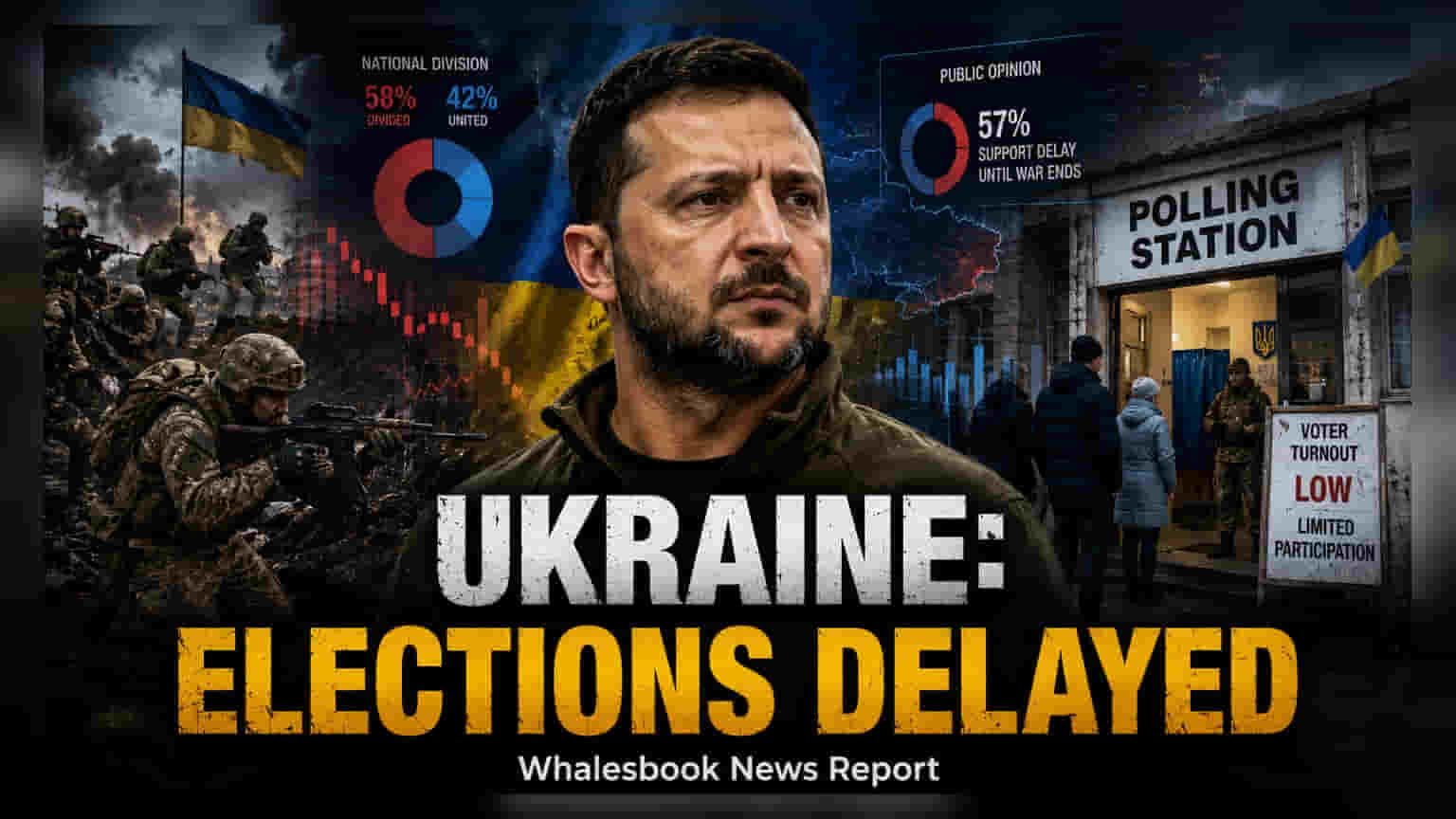
President Volodymyr Zelenskyy has rejected calls for national elections during the ongoing conflict with Russia, warning that a vote under current conditions could divide the nation. With martial law extended until October 2026, the decision maintains the status quo in Ukraine’s governance. For global investors, this confirms a continuation of current wartime policy, which remains a key factor in regional and geopolitical stability.
Ukrainian President Volodymyr Zelenskyy has formally rejected requests to hold national elections while the country remains in a state of conflict with Russia. On August 23, 2026, the President stated that attempting to conduct a democratic vote under the current climate of martial law would be a detrimental move that could deepen internal divisions and potentially weaken the state’s unity.
The decision comes following a push for electoral renewal by former Defense Minister Mykhailo Fedorov, who was dismissed from his post in July 2026. Fedorov had argued that the nation should find a mechanism to conduct democratic processes despite the ongoing war. However, President Zelenskyy emphasized that the current framework, which has been in place since the full-scale invasion in February 2022, legally bars national elections. Martial law has already been extended by the government through October 31, 2026.
From a logistical perspective, the obstacles to a national vote remain significant. Millions of Ukrainians are currently displaced, either living abroad as refugees or internally displaced within the country. Additionally, a large portion of the population is serving in active military roles on the front lines, and several territories remain under Russian control. President Zelenskyy noted that any move toward elections would require robust security guarantees from international partners to ensure fairness, which have not been presented.
Public sentiment, according to the Kyiv International Institute of Sociology, largely aligns with the government’s stance, with approximately 57% of citizens favoring a delay in elections until the conflict concludes.
For the global market, this development signifies a continuation of the established political and governance framework in Ukraine. Geopolitical uncertainty in the region often influences global sentiment, particularly regarding energy, grain supplies, and defense spending. Investors typically monitor these developments as they impact the broader stability of Eastern Europe, which can create ripples across international markets. The key monitorable for the coming months will be the status of the conflict and any future adjustments to the security environment as the October deadline for martial law approaches.