

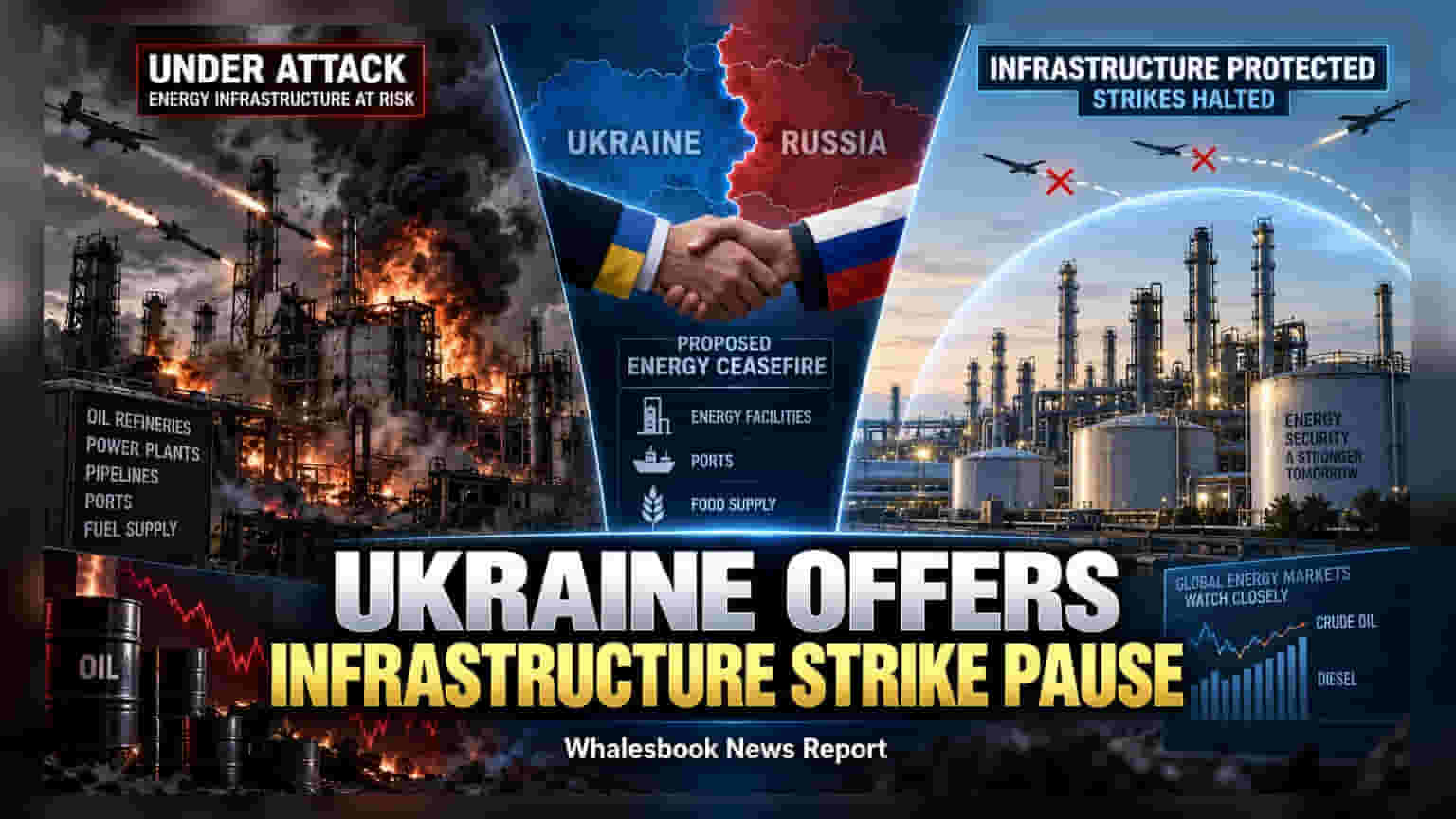
U.S. President Donald Trump reported an agreement to halt energy infrastructure strikes, but Ukrainian President Volodymyr Zelenskyy has clarified that no final deal exists. Investors are cautious as Russia has not confirmed the claim, and historical patterns suggest that such partial truces are difficult to maintain. The uncertainty keeps global energy markets and Indian import costs sensitive to further volatility.
On September 14, 2026, U.S. President Donald Trump announced that Ukraine and Russia had reached an agreement to stop striking each other's energy infrastructure. However, Ukrainian President Volodymyr Zelenskyy has clarified that no final deal has been formalized. While Ukraine has indicated openness to a limited ceasefire covering energy, port, and food supply facilities, President Zelenskyy emphasized that any such arrangement would require credible, long-term guarantees of Russian compliance to be considered effective.
The market has reacted with caution, largely due to the lack of formal confirmation from the Kremlin. Previous attempts at partial ceasefires during the conflict have often collapsed, with both sides frequently accusing each other of violating agreements. Without a formal, monitored mechanism to ensure that strikes on critical infrastructure—such as oil refineries, pipelines, and logistics networks—are truly halted, analysts and governments remain skeptical about the durability of this proposal.
Global energy markets are particularly sensitive to these developments. Recent Ukrainian strikes on Russian fuel refining capacity have contributed to supply tightness in global diesel markets. If a reliable ceasefire were implemented and sustained, it could theoretically ease some of the supply-side pressure that has been keeping fuel prices elevated. However, in the absence of a verified agreement, the existing risks to infrastructure and energy supply chains remain, which supports continued market volatility.
For Indian investors, the implications are primarily tied to commodity costs. India is a significant importer of crude oil and refined petroleum products. Any development that threatens to disrupt energy supply routes or affects global fuel prices directly influences India's import bill and can create domestic inflationary pressure.
Given the current uncertainty, investors may watch for two key indicators: formal statements from Russian officials regarding their acceptance of the reciprocal terms, and the establishment of any verifiable compliance or monitoring mechanism. Until such evidence emerges, the risk of renewed energy infrastructure targeting persists, meaning the geopolitical risk premium in crude oil and refined fuel markets is likely to remain in place.