

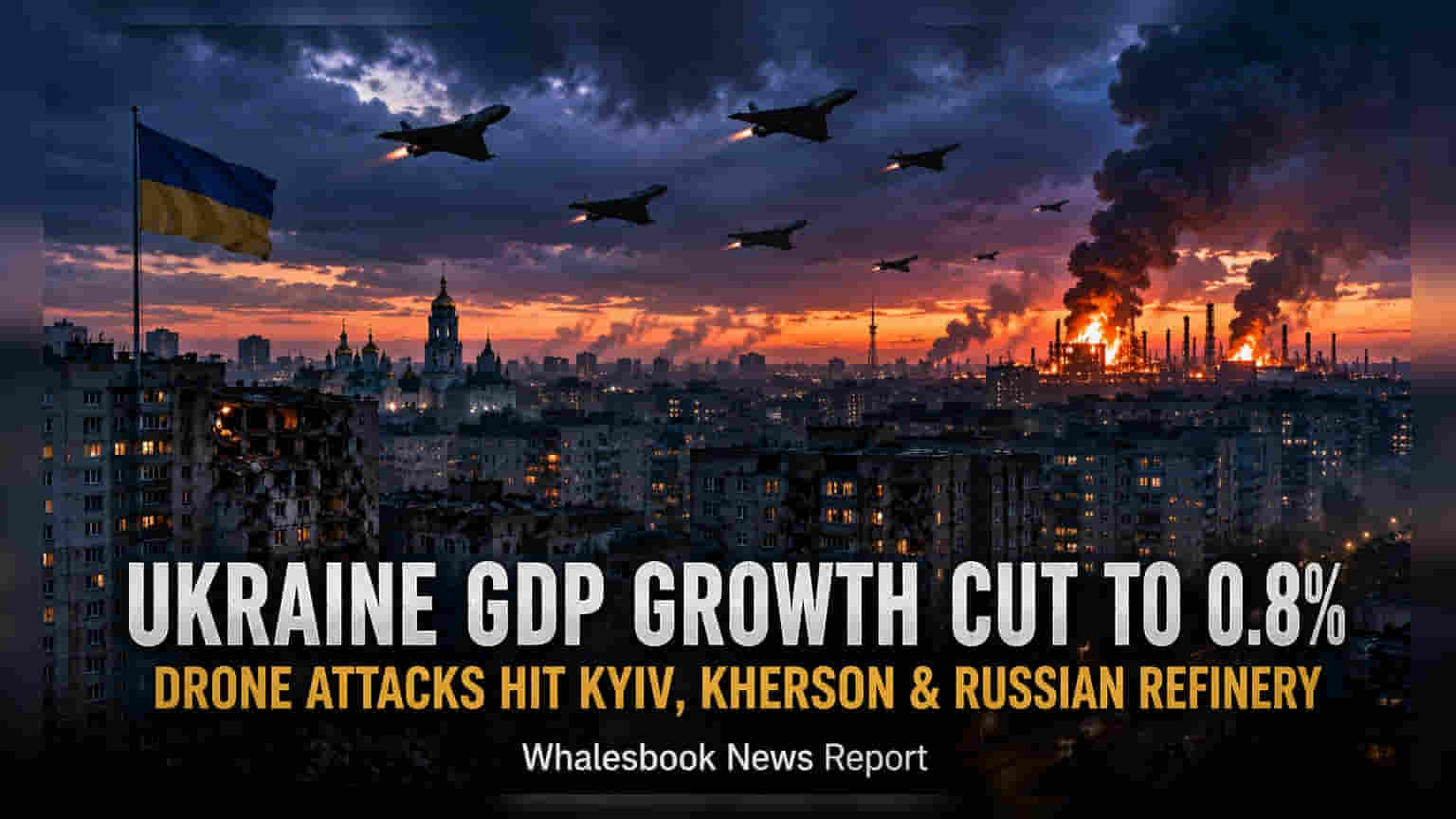
Ukraine has slashed its 2026 economic growth forecast from 1.3% to 0.8% due to severe infrastructure damage. The revision follows intense Russian drone attacks on Kyiv and Kherson, alongside retaliatory Ukrainian strikes on the Slavneft-YANOS oil refinery in Russia.
Ukraine's Ministry of Economy has revised its 2026 GDP growth forecast downward to 0.8 percent, a significant cut from its earlier projection of 1.3 percent. This economic adjustment reflects the growing toll of the ongoing conflict on the nation's critical infrastructure. Government officials identified the systemic destruction of logistics networks and the persistent blockade of Black Sea grain export routes as the primary factors stifling economic recovery efforts.
The revision comes as Russian forces have intensified their aerial campaign, deploying waves of drones to strike targets in Kyiv and the southern Kherson region. The sustained attacks have caused substantial damage to residential areas, warehouses, and energy grids. Local authorities in Kherson have warned of long-term electricity and heating disruptions, particularly as the conflict enters a colder phase, creating significant humanitarian and operational challenges.
In a related development, the conflict has continued to affect industrial assets deep within Russian territory. Ukrainian forces recently conducted a drone strike on the Slavneft-YANOS refinery in the Yaroslavl region. This facility, which is jointly controlled by major Russian energy firms Gazprom and Rosneft, reportedly caught fire following the impact. According to available reports, this incident marks the eighth attack on the refinery in 2026, highlighting the continued risk to energy infrastructure in the region.
The cumulative impact of these events creates a volatile environment for regional economic stability. For global investors and market analysts, the situation underscores the ongoing supply chain risks associated with the conflict. The continued targeting of energy and logistics infrastructure in both Ukraine and Russia adds uncertainty to energy markets and regional trade flows. Investors often monitor these developments for their potential impact on global commodity prices and the broader geopolitical risk premium.
The most important factor for stakeholders to track next is the durability of energy and logistics infrastructure in the face of continued attacks. Any further degradation of these assets could lead to additional economic revisions for Ukraine and sustained pressure on energy supply chains in the region.