

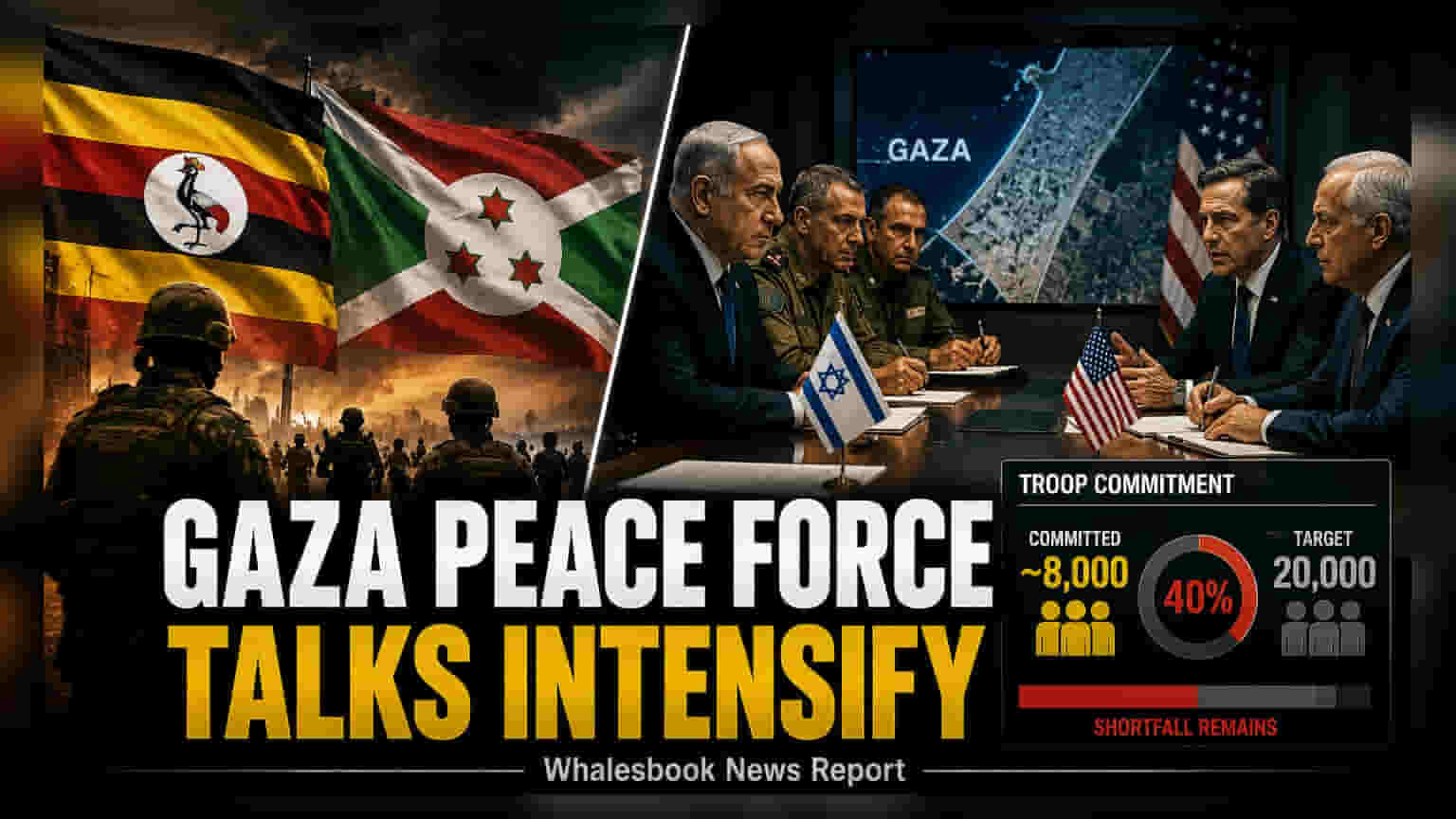
Uganda and Burundi are in talks to join a US-backed international security force for Gaza. With Uganda having parliamentary approval for 1,200 soldiers, the move aims to stabilize the region. For investors, the success of such peacekeeping efforts is important as Middle East stability directly affects global trade logistics and oil prices.
Uganda and Burundi are currently in discussions with Israeli officials regarding the deployment of troops to Gaza as part of an international security force. This initiative is a key part of a US-backed peace plan, often referred to as the 'Board of Peace' proposal, which aims to stabilize the region following the ongoing conflict. While the plan seeks to deploy a total force of 20,000 personnel, the current list of committed nations still faces a significant shortfall in meeting this target.
Ugandan authorities have moved forward, with the country’s parliament approving the deployment of approximately 1,200 soldiers to support the mission. Military delegations from both Uganda and Burundi visited Israel during the week of August 17, 2026, to conduct site surveys and discuss the practical details of the operation. While Uganda has finalized its commitment, Burundi is currently in the preliminary stages of discussion, with no final agreement reached yet.
Impact on Global Stability
For investors, the situation in the Middle East is a primary driver of macroeconomic sentiment. The region serves as a critical node for global energy supply and maritime trade routes. Continued volatility in the area can lead to uncertainty in oil prices and disruption in shipping lanes, particularly through the Red Sea. An effective international security force could theoretically help manage this risk by stabilizing the ceasefire and ensuring the safe delivery of humanitarian aid. However, investors often track these developments because unsuccessful peacekeeping missions can lead to prolonged regional instability.
Risks and Execution Challenges
There are significant risks associated with this deployment. The mission involves operating in an active conflict zone, which carries a high risk of casualties and potential diplomatic backlash for the participating nations. Furthermore, the effectiveness of such a force depends on its scale. With a target of 20,000 troops and only a fraction currently pledged by countries like Uganda, Morocco, and others, there is a risk that the force may be insufficient to maintain order. Negotiations regarding the withdrawal of Israeli forces and the disarmament of local militant groups also remain sensitive and unresolved, creating uncertainty about the mission's long-term viability.
Investors should monitor the progression of this international security force, as any update regarding the finalization of troop numbers or the establishment of a clear legal and operational framework will be a key indicator of whether the region is moving toward stabilization or continued uncertainty.