

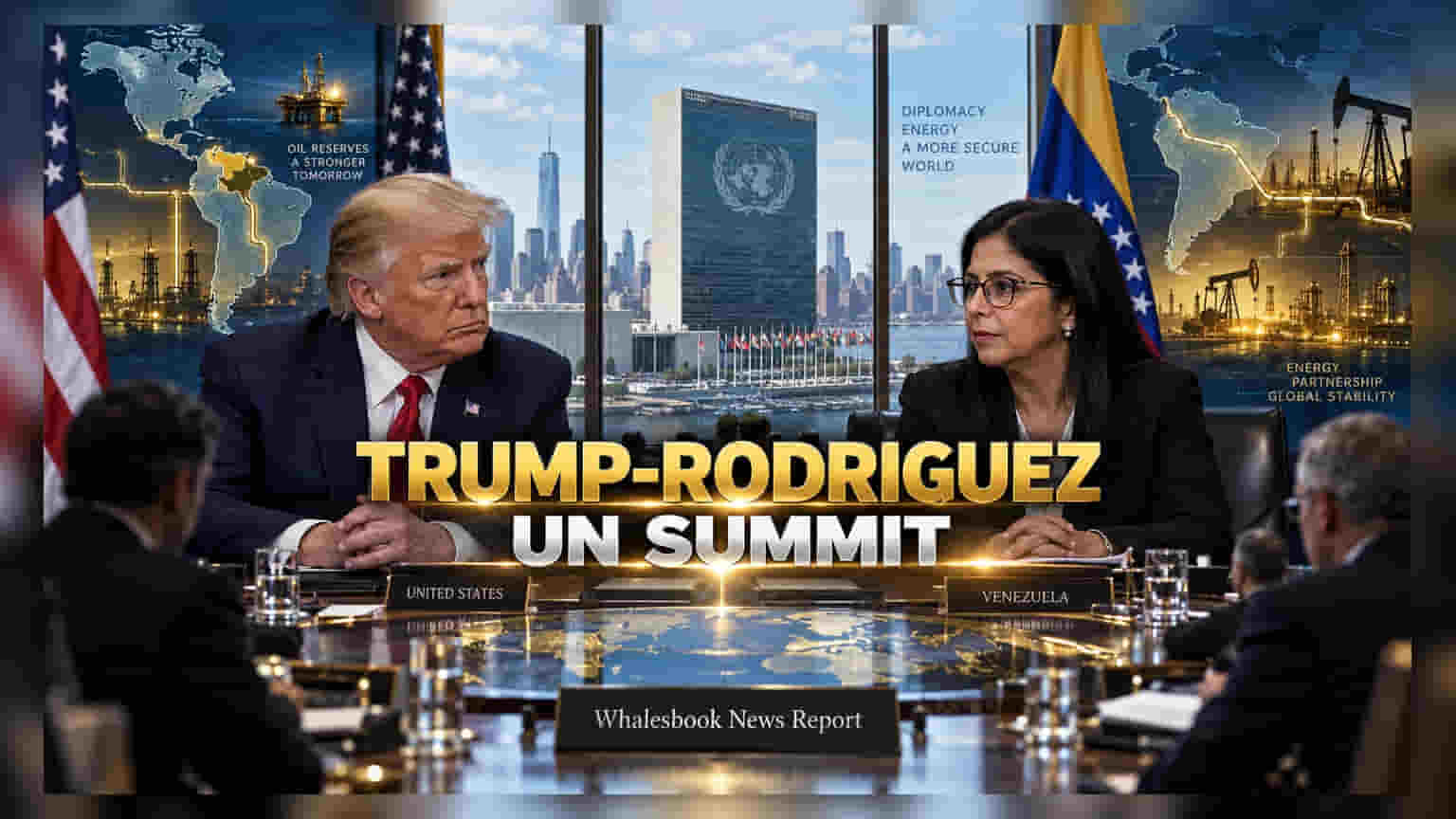
President Donald Trump will meet Venezuela’s Delcy Rodriguez at the UN to discuss a new oil production agreement. This deal, granting US firms access to Venezuelan reserves, could shift global energy supply dynamics. Investors are observing the potential for increased crude output and its effect on international trade and energy prices.
The United Nations General Assembly in New York will host a high-profile meeting between US President Donald Trump and Venezuelan acting leader Delcy Rodriguez. The core of this discussion is a newly finalized framework that secures United States involvement in Venezuela's expansive oil reserves. For global energy markets, this development represents a potential shift in supply dynamics as the administration seeks to stabilize and modernize the Venezuelan oil sector.
Impact on Global Energy Markets
Venezuela holds some of the world's largest proven crude oil reserves. Access for US companies to these assets could theoretically increase the global supply of heavy crude, a factor that investors typically watch for its influence on global oil prices. Historically, Venezuelan production has suffered from years of under-investment and decaying infrastructure. The speed at which these reserves can be brought back to efficient production levels will be a critical monitorable for the energy sector. If the modernization efforts are successful, it could offer a counterbalance to supply constraints currently affecting global energy markets, including those arising from the ongoing conflict in Iran.
Geopolitical and Trade Implications
Beyond the Venezuelan oil agreement, the US administration is conducting a series of strategic diplomatic meetings with the UK, Japan, and the Gulf Cooperation Council. These discussions, aimed at reinforcing trade alliances and security in the Indo-Pacific and Europe, provide the backdrop for the current administration's energy policy. Investors are watching these interactions, as alignment with major economic powers like the UK and Japan, alongside energy producers in the Gulf, remains central to maintaining global economic stability. The absence of a meeting with Israeli Prime Minister Benjamin Netanyahu suggests the administration is currently prioritizing the solidification of these new Western Hemisphere arrangements and existing global partnerships.
Risks and Execution Challenges
While the agreement marks a significant policy change, investors should note the substantial execution risks involved. The Venezuelan oil industry has faced decades of operational challenges, including limited maintenance, aging pipelines, and a shortage of technical expertise. Turning this framework into actual production will require significant capital spending and long-term political stability. Market participants will likely watch for details regarding the specific terms of the oil production agreements, including the expected timeline for production ramp-up, the extent of required infrastructure investment, and any potential regulatory hurdles that could arise. The success of this move will depend on whether the administration can effectively manage the transition while navigating the broader complexities of international sanctions and regional political volatility.