

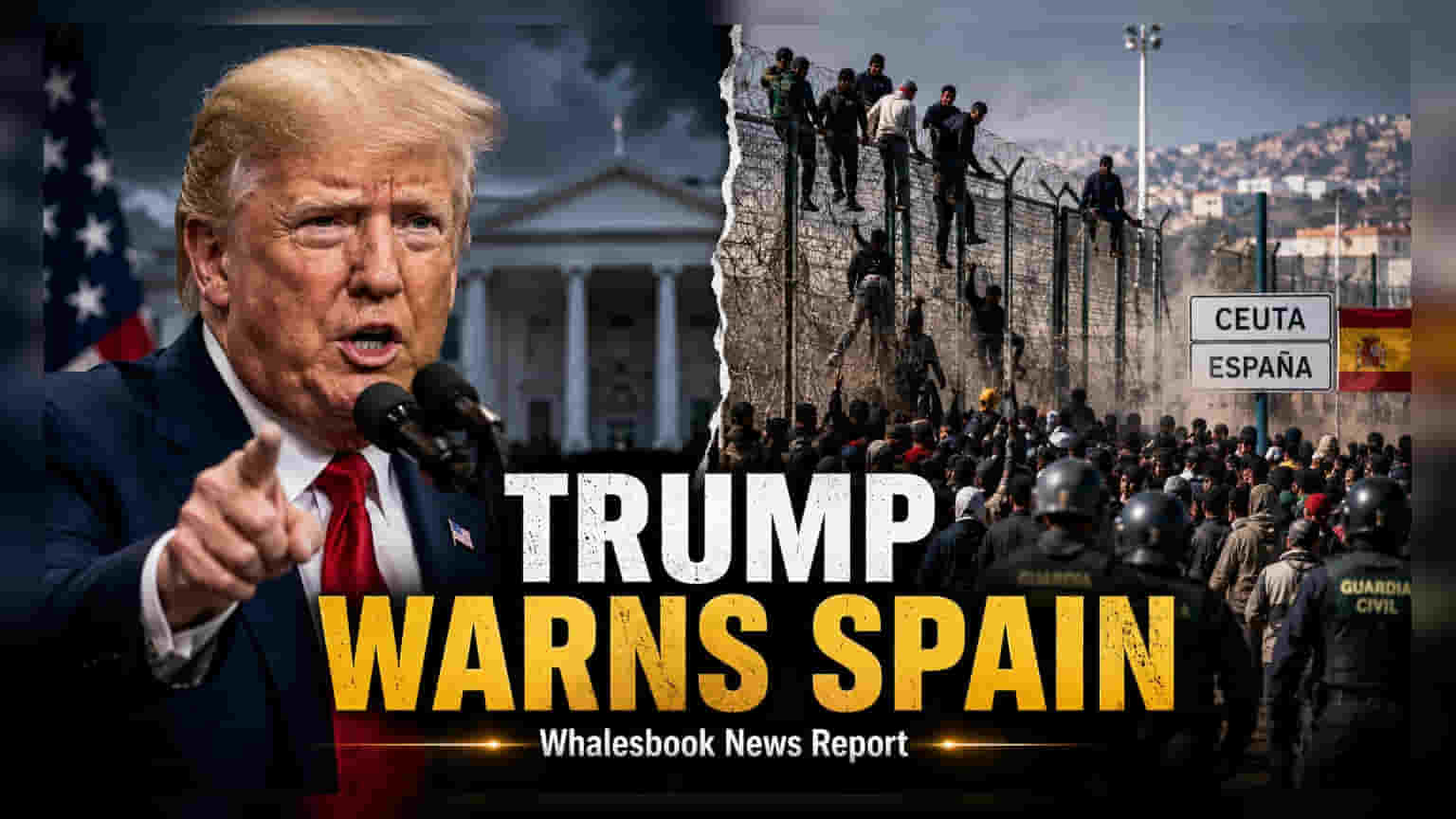
President Donald Trump has sharply criticized Spain’s handling of the migrant crisis in Ceuta, citing it as a threat to national stability. This rhetoric follows growing diplomatic friction over NATO defense spending targets and Spain’s refusal to permit U.S. military base access for operations regarding Iran.
Diplomatic relations between Washington and Madrid have hit a difficult phase as President Donald Trump publicly criticized the Spanish government’s management of its borders and security policies. The U.S. President labeled the situation in the North African enclave of Ceuta, which saw a reported influx of approximately 70,000 migrants in late July 2026, as an invasion that threatens the country's internal order.
The diplomatic rift extends beyond the border crisis. Significant tension has emerged regarding NATO defense commitments. While the alliance typically works toward a 2 percent GDP benchmark for defense spending, reports indicate that Washington has pressured Spain to increase its military budget to 5 percent by 2035—a demand Madrid has explicitly rejected. This disagreement has exposed deep fractures in the alliance’s internal consensus, complicating collective defense planning.
Strategic military cooperation has also stalled. The U.S. has faced pushback from the Spanish administration regarding the use of Rota and Morón military bases for operations concerning Iran. Spain's denial of access has reportedly irritated the White House, adding a layer of geopolitical friction to the traditional Western partnership. The consequences of this discord are already becoming visible in regional travel and trade; for instance, Italy has introduced temporary border checks for travelers arriving from Spain, citing regional instability as a key concern.
For investors and market observers, this situation creates a layer of uncertainty regarding European stability. The ongoing domestic protests in Spain and calls for Prime Minister Pedro Sánchez’s resignation, driven by the border crisis and foreign policy choices, suggest a period of political unpredictability. As Spain navigates these challenges, the primary monitorables for the markets will be the cohesion of the European Union’s diplomatic stance and any potential shifts in trade or travel policies that could impact regional economic activity. The ability of the Spanish administration to manage these external diplomatic pressures alongside its internal political difficulties will be crucial for maintaining investor confidence in the region’s stability.