

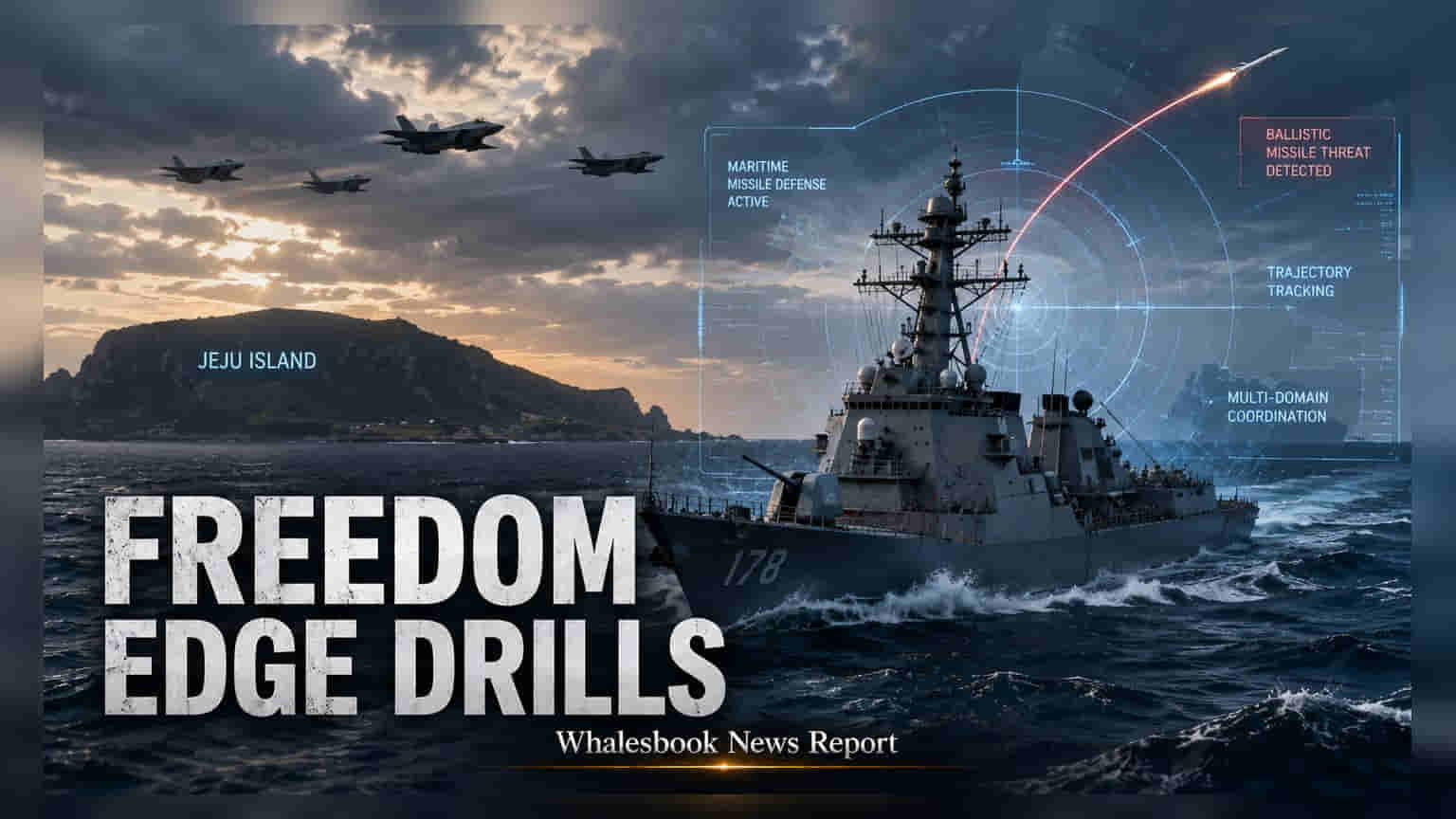
The US, South Korea, and Japan will hold the 'Freedom Edge' military exercises from September 7 to 11, 2026, near Jeju Island. This geopolitical event serves as a reminder of rising tensions on the Korean Peninsula, a factor that investors often watch for its potential impact on global market sentiment, oil prices, and safe-haven asset demand.
The United States, South Korea, and Japan have announced the dates for the upcoming 'Freedom Edge' military exercises, scheduled to take place from September 7 to 11, 2026. These drills will occur in international waters near Jeju Island and will focus on multi-domain capabilities, including maritime missile defense, anti-submarine warfare, and air defense coordination. This is an annual effort aimed at strengthening trilateral defense integration in response to ballistic and nuclear threats from North Korea.
Impact on Market Sentiment
While this exercise is a geopolitical event rather than a corporate development, investors often monitor such situations for their broader impact on market stability. Geopolitical tensions in key regions, especially those involving major global economies, can create uncertainty in financial markets. When regional security becomes a focal point, market participants often shift their focus toward defensive assets like gold, government bonds, or the US dollar, potentially causing short-term volatility in risk-heavy sectors like consumer discretionary or technology stocks.
For Indian investors, the primary channel for such geopolitical events is often through commodity prices. Tensions in the Pacific region, particularly if they affect shipping lanes or global energy supply, can influence crude oil prices. As India is a major importer of crude oil, significant fluctuations in oil prices can impact the country's trade deficit and domestic inflation outlook, which the stock market typically reacts to in the broader indices.
Defense Sector Context
Increased military activity and trilateral agreements are often viewed in the context of global defense spending. Investors frequently track how such strategic alliances influence the long-term capital allocation strategies of governments. While this specific exercise is a defensive drill and not a commercial order, the consistent focus on modernizing military capabilities in the Pacific often aligns with a broader, long-term trend of increased global defense spending. This can be a point of interest for those monitoring the defense manufacturing sector, though it does not provide direct guidance on individual company performance or order books.
Investor Monitorables
The most important takeaway for investors is that this is a recurring geopolitical development rather than a company-specific event. There are no exchange filings or corporate financial results linked to these drills. Investors may continue to track how these regional tensions influence global crude oil prices, safe-haven asset flows, and the overall risk appetite of foreign institutional investors in emerging markets. Future updates regarding the scale of these drills or changes in the security posture of the region will likely serve as the primary indicators for any shifts in global market sentiment.