

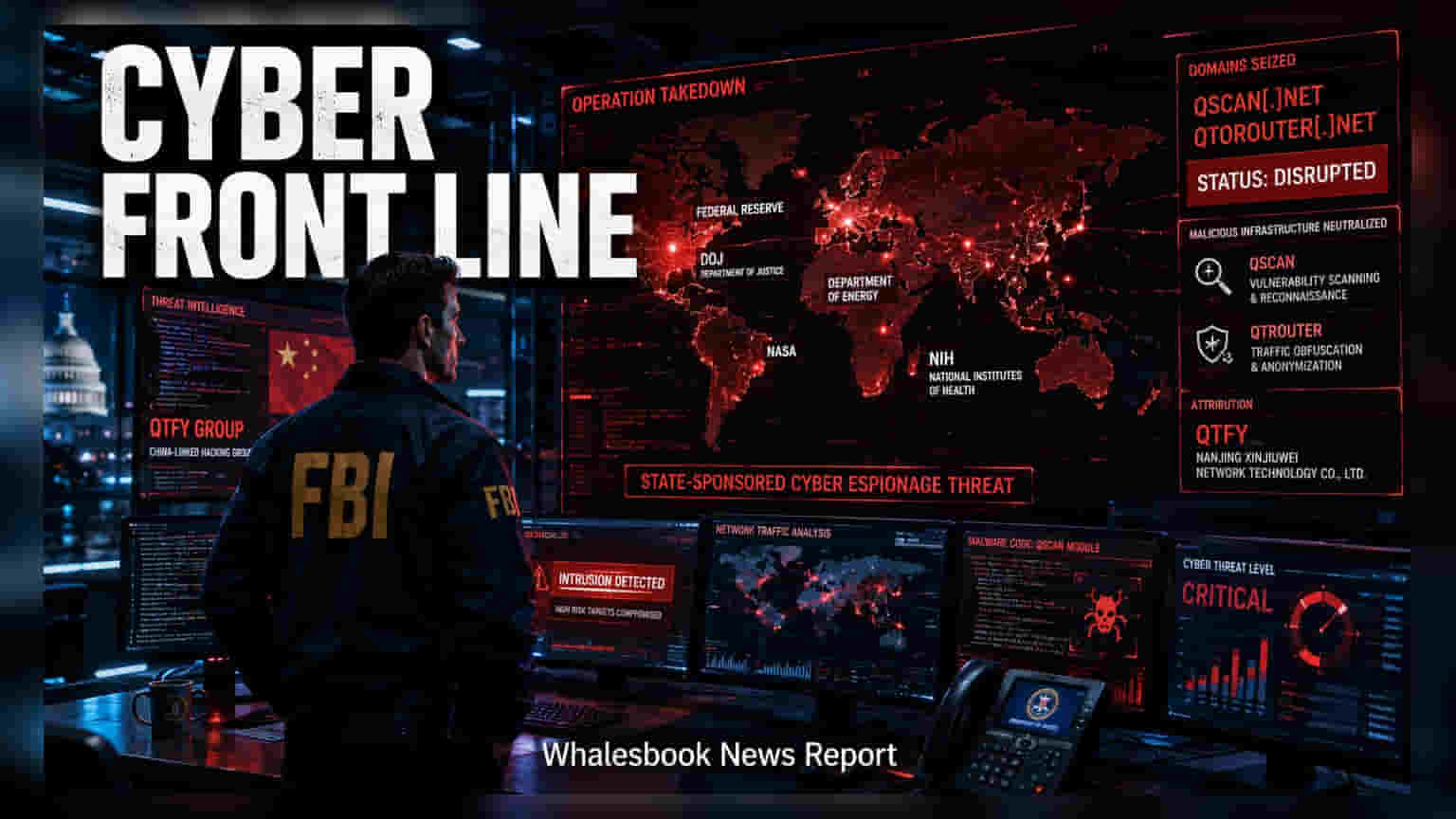
US authorities seized internet domains linked to 'QScan' and 'QTRouter' on August 26, 2026, targeting infrastructure used by the hacking group QTFY. Linked to Nanjing Xinjiuwei Network Technology, the platforms allegedly compromised sensitive US government networks. This event highlights rising geopolitical and cybersecurity risks, which are critical for investors to monitor in the global technology sector.
The United States Department of Justice and the Federal Bureau of Investigation (FBI) executed a court-authorized operation on August 26, 2026, to dismantle internet domains associated with two China-linked hacking platforms, QScan and QTRouter. These platforms were identified as being operated by a group known as QTFY, which has been linked by investigators to Nanjing Xinjiuwei Network Technology Company. The action follows a comprehensive investigation into digital intrusions affecting high-level American institutions.
Impact on Critical Infrastructure
The coordinated takedown was designed to neutralize a two-part offensive engine used for cyber espionage. According to official reports, QScan served as a tool for scanning vulnerabilities, while QTRouter acted as an obfuscation network, masking malicious traffic to hide its origin. The campaign was extensive, reportedly targeting key pillars of US infrastructure, including the Federal Reserve, the Department of Justice, the Department of Energy, the National Institutes of Health, NASA, and the US Senate. By seizing the domain addresses embedded within the malware's code, authorities effectively rendered the platforms inoperable.
Geopolitical and Market Significance
For investors, this development reinforces the ongoing digital standoff between Washington and Beijing, a theme that has persisted for several years. Frequent reports of state-sponsored cyber espionage often lead to increased regulatory scrutiny of technology companies, potential trade restrictions, and higher compliance costs for firms operating across international borders. As digital security becomes a primary concern for governments globally, companies involved in cybersecurity, cloud infrastructure, and IT services are frequently navigating a complex regulatory landscape. These geopolitical tensions can influence market sentiment, particularly for technology stocks exposed to global supply chains and cross-border data flows.
Sector Outlook and Future Monitoring
This incident is not an isolated event; it follows a history of technical interventions by US authorities against similar hacking operations in recent years. While Beijing has historically denied responsibility for such activities, the repeated nature of these announcements underscores the persistent risk that cyber threats pose to critical infrastructure. The primary monitorable for investors going forward will be the potential for new cybersecurity policies or sanctions that could impact technology firms with exposure to these regions. Furthermore, organizations globally are likely to increase their investment in network security to mitigate such risks, which may drive demand for advanced cybersecurity solutions. Investors should track how such geopolitical developments influence international trade policies and the operational environment for global tech companies in the coming quarters.