

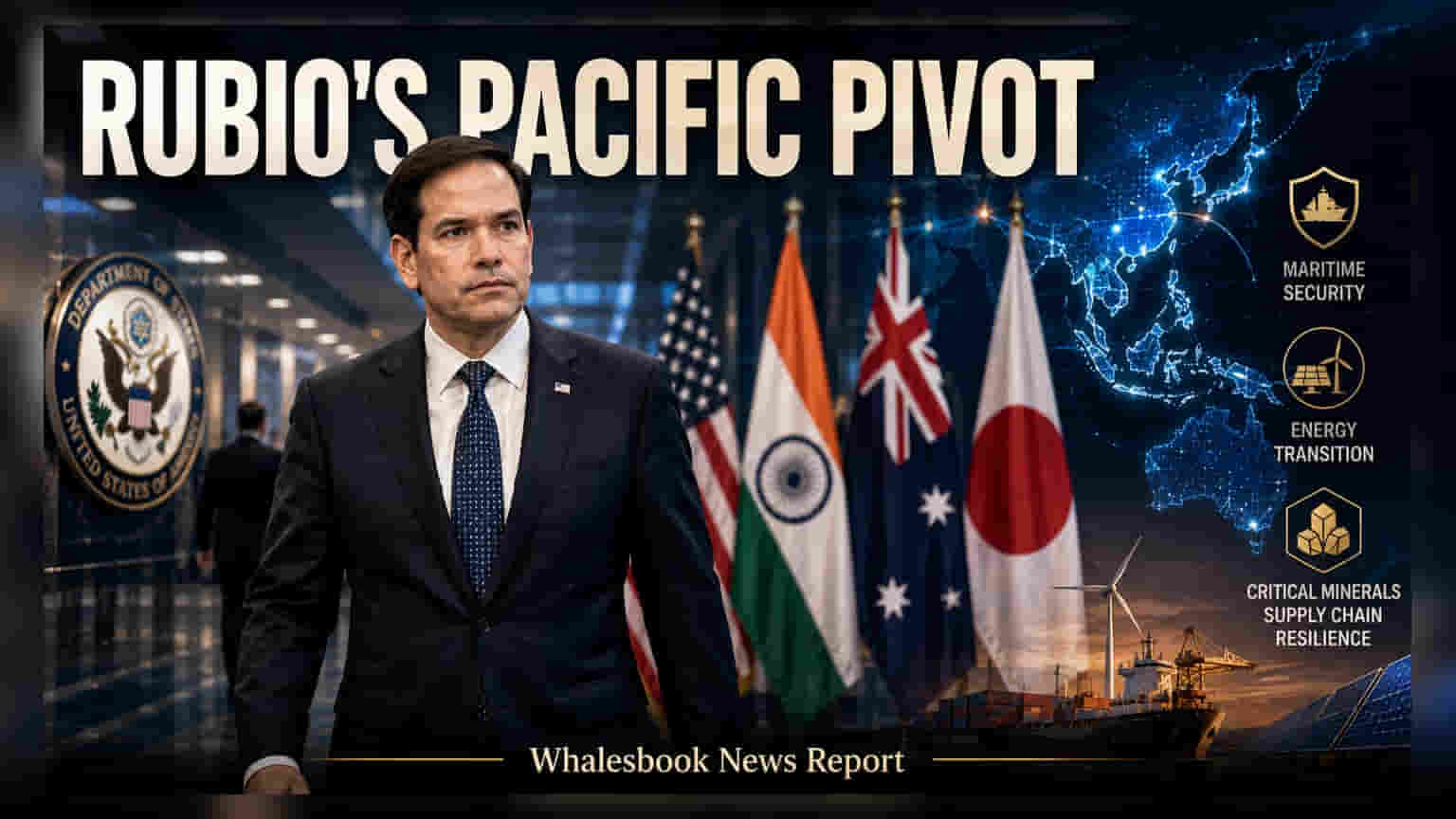
US Secretary of State Marco Rubio is scheduled to visit India and Australia this October for Quad ministerial discussions. The tour will focus on maritime security, energy transition, and critical mineral supply chains as the grouping seeks to move toward concrete project implementation. This visit signals a strategic shift in supply chain dynamics that may affect sectors involved in defense, energy, and industrial manufacturing.
US Secretary of State Marco Rubio is set to lead a diplomatic mission to India and Australia this October, marking a significant step in the Quad grouping’s efforts to strengthen ties among the United States, India, Australia, and Japan. This visit is expected to set the foundation for a future leaders' summit by focusing on practical, actionable goals rather than broad strategic discussions.
The tour is part of a coordinated effort by Washington to secure and diversify regional supply chains. As geopolitical dynamics shift in the Indo-Pacific, the upcoming meetings will prioritize three key sectors: maritime security, energy transition, and critical mineral supply chain resilience. For Indian investors, the focus on these specific areas is notable, as it reflects a broader move to reduce dependence on concentrated sources for essential industrial materials and energy resources.
Strategic Sectors Under Focus
The Quad’s shift toward "concrete deliverables" suggests a move toward tangible projects that require investment and operational expertise. Critical minerals, which are essential for electronics, electric vehicles, and renewable energy technologies, are expected to be high on the agenda. India’s push to become a manufacturing hub, combined with the Quad's interest in securing supply lines, creates a long-term context for companies involved in mining, processing, and high-tech manufacturing. Similarly, the emphasis on maritime security and energy transition implies ongoing collaboration in defense infrastructure and renewable energy adoption, sectors that are already seeing increased capital allocation in the Indian market.
Implementation Risks and Market Context
While the diplomatic momentum is clear, the real test for investors and the broader market lies in the execution of these projects. The Quad has historically focused on high-level agreements, and the transition to practical, on-the-ground infrastructure or defense projects often faces significant hurdles. These include complex regulatory environments, differences in trade policies among member nations, and the operational challenges of scaling new supply chains.
Investors should also be aware of the inherent risks in this sector-heavy approach. Geopolitical friction, such as differing stances on major global issues or potential trade disputes, can complicate bilateral negotiations and stall planned cooperation. If the four nations struggle to align their internal industrial policies with the collective goals of the Quad, the expected benefits for domestic industries may take longer to materialize than initial announcements suggest.
Monitoring Next Steps
The upcoming October visit serves as a key monitorable. Market observers and industry participants will be watching for specific announcements regarding joint ventures, technology transfer agreements, or infrastructure commitments that could provide a clearer roadmap for the sectors involved. The most specific next update for investors will be the official outcomes of these ministerial meetings, particularly any progress reports on the critical mineral and energy frameworks discussed during the tour.