 Whalesbook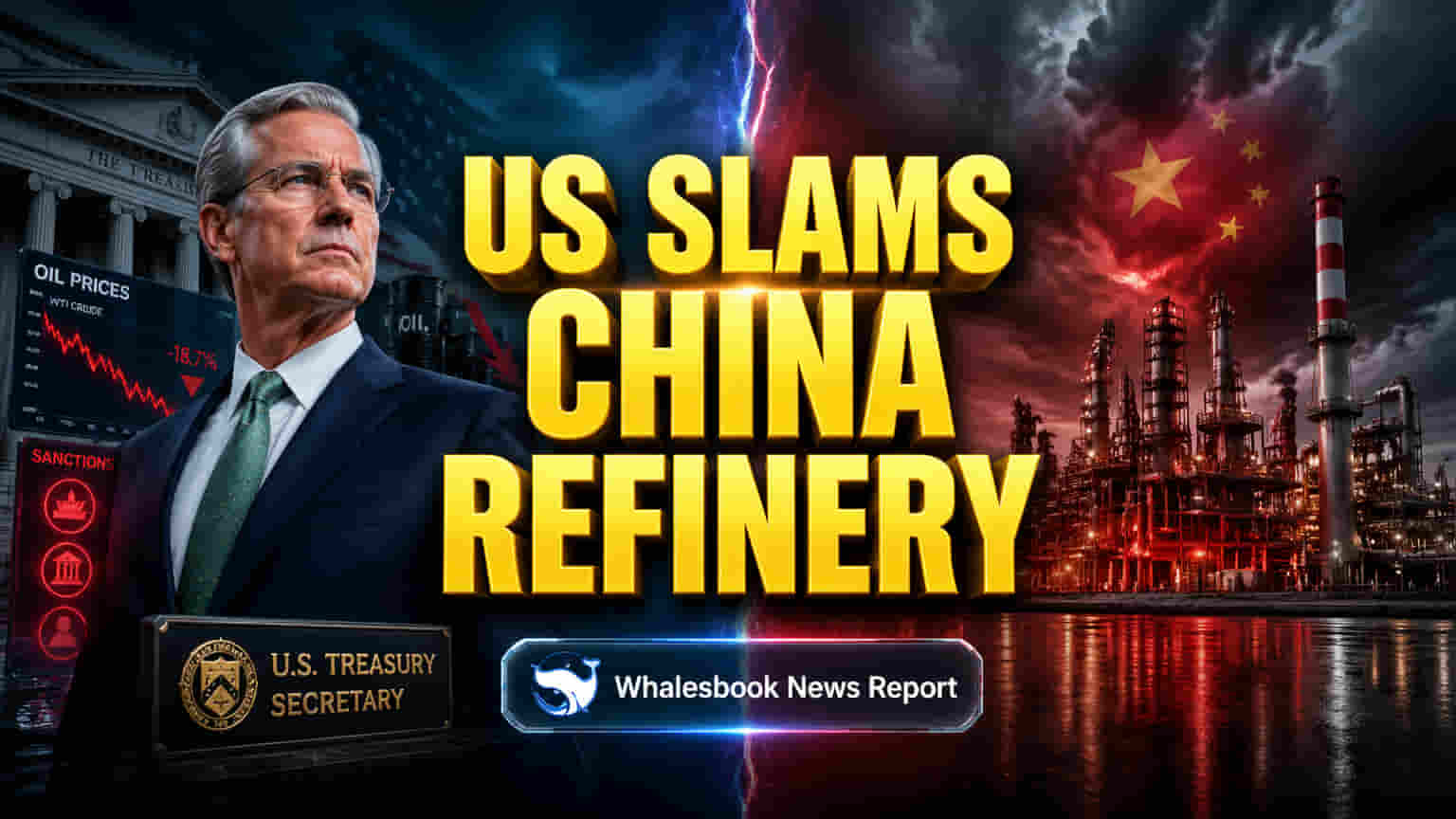


US Sanctions Hengli Petrochemical Over Iran Oil Purchases
The U.S. Treasury has sanctioned Hengli Petrochemical, a major Chinese independent refiner, for allegedly buying billions of dollars in Iranian crude oil and petroleum products. The sanctions are part of "Operation Economic Fury" and also target about 40 shipping companies and vessels involved in Iran's "shadow fleet" used to transport sanctioned oil. U.S. officials state these measures aim to cut off funding for Tehran's regional military activities and nuclear programs.
Beijing strongly protested the sanctions, urging the U.S. to stop using economic measures as a geopolitical tool and to respect standard commercial trade. China's embassy in Washington accused the U.S. of politicizing trade and misusing sanctions, stating such actions harm international trade rules and legitimate business.
China's Crucial Role in Iran's Oil Trade
The U.S. action marks a significant increase in pressure on Iran's oil exports, directly targeting a large foreign buyer. China has been Iran's main economic support for years, taking more than 80% of its oil exports. Independent refiners, known as "teapots," which operate on tight margins and need affordable raw materials, have increasingly bought discounted Iranian crude. This is partly because supplies from places like Venezuela have been disrupted. Hengli Petrochemical, reported as China's second-largest "teapot" refinery, is said to have been a major buyer since at least 2023, providing significant income for Iran's military.
Hengli Petrochemical's Valuation Compared to Peers
Hengli Petrochemical trades at a Price-to-Earnings (P/E) ratio of about 24.69 as of April 2026. This compares to much lower P/E ratios for larger, state-owned Chinese refiners: Sinopec at around 11.02 and PetroChina at approximately 9.87. This higher valuation for Hengli may indicate that investors expect greater growth from the company or are factoring in higher risks due to its reliance on non-sanctioned or less-regulated trade routes for its oil supply. Hengli's market value was about CN¥167.60 billion in April 2026.
Challenges for U.S. Sanctions Enforcement
However, U.S. sanctions against Hengli and its shipping network have limits. Experts point out that "teapot" refineries have little connection to the U.S. financial system, making direct sanctions less effective unless the Chinese banks involved are also targeted. Past U.S. sanctions on similar refiners in 2023 caused disruptions, forcing companies to change product branding and find different crude sources. These actions hindered operations but did not stop them completely.
Geopolitical and Operational Risks for Hengli
The expanded sanctions create significant risks for Hengli Petrochemical's future operations. Its dependence on discounted Iranian crude, which is under sanctions, exposes the company to greater geopolitical risks and potential future enforcement. China's firm opposition to unilateral sanctions and its promise to defend its companies' interests mean ongoing trade tension with the U.S.
Financially, Hengli has significant debt, with a Debt-to-Equity ratio of 2.33 as of April 2026, making it more vulnerable to market shocks. "Teapot" refiners, which operate with slim profit margins, are especially sensitive to price swings and supply interruptions for their raw materials. The current geopolitical situation, combined with Hengli's higher valuation compared to competitors, suggests potential for considerable stock price drops if sanctions enforcement increases or if U.S.-China trade relations worsen. Hengli Petrochemical's stock traded at CN¥23.44 on April 24, 2026.
Outlook: Uncertain Environment for Refiners
The U.S. is continuing its "maximum pressure" campaign to disrupt Iran's oil export network, placing Hengli Petrochemical at the heart of this geopolitical conflict. Although previous sanctions have disrupted but not stopped "teapot" refiners, targeting a large buyer like Hengli shows a strong U.S. effort to reduce demand for Iran's oil. Beijing's firm stance indicates ongoing tension and possible retaliation, leading to an uncertain business environment for Hengli and other independent refiners in China.