

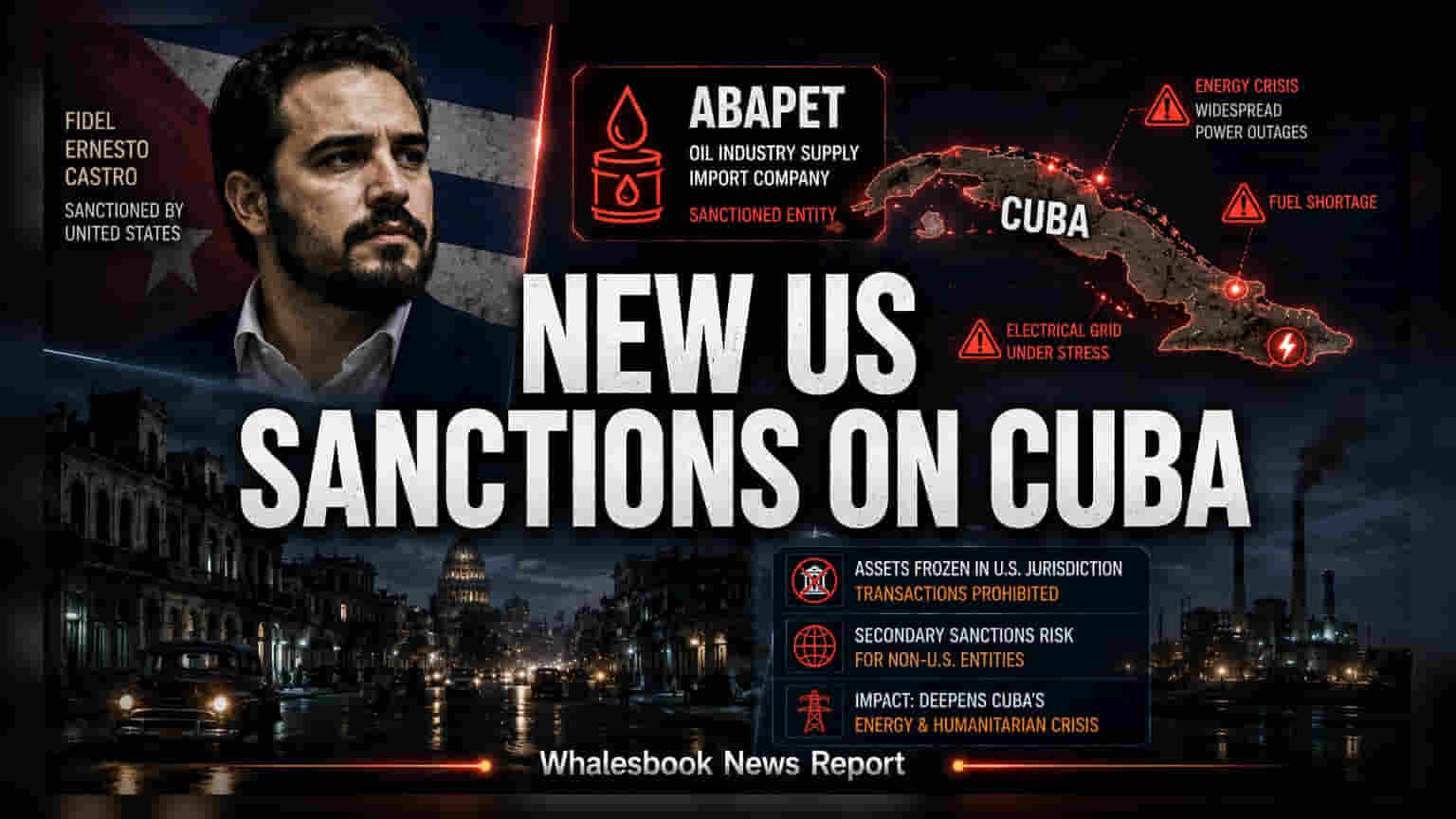
The United States has imposed sanctions on Fidel Ernesto Castro and the state-linked procurement firm Abapet to restrict Cuba's energy infrastructure supply chain. This move aims to increase economic pressure on the Cuban government amid ongoing electricity shortages.
The United States government has issued new sanctions targeting high-profile individuals and state-backed entities in Cuba, significantly impacting the island's energy infrastructure procurement. On September 3, 2026, the US designated Fidel Ernesto Castro, the grandson of former president Raúl Castro, and the Oil Industry Supply Import Company, widely known as Abapet, for sanctions.
Abapet acts as a primary procurement arm for the Cuban state oil firm, Cupet. Its role involves importing critical spare parts and industrial equipment needed to maintain Cuba's electrical grid. The US administration’s move is part of a broader strategy to choke the supply lines supporting the island's power generation, which has been struggling with chronic outages and limited fuel availability for an extended period.
For investors and global market observers, it is important to clarify that Abapet is a Cuban state-linked procurement entity and is not a publicly traded company on any Indian stock exchange. There is no connection between this Cuban firm and any Indian listed companies, including those that may have similar names like Abate AS Industries. Indian investors should distinguish between these separate entities to avoid any confusion regarding their investments.
The sanctions effectively freeze all property and interests of the designated parties within US jurisdiction. Furthermore, the action carries risks for non-US entities that continue to do business with these designated parties, as they could face secondary sanctions. This policy marks a significant escalation in the US strategy to apply economic pressure on the Cuban administration. The move is expected to exacerbate the current energy crisis on the island, potentially worsening the humanitarian and economic situation for citizens as the government faces greater difficulty in maintaining essential utility services.