

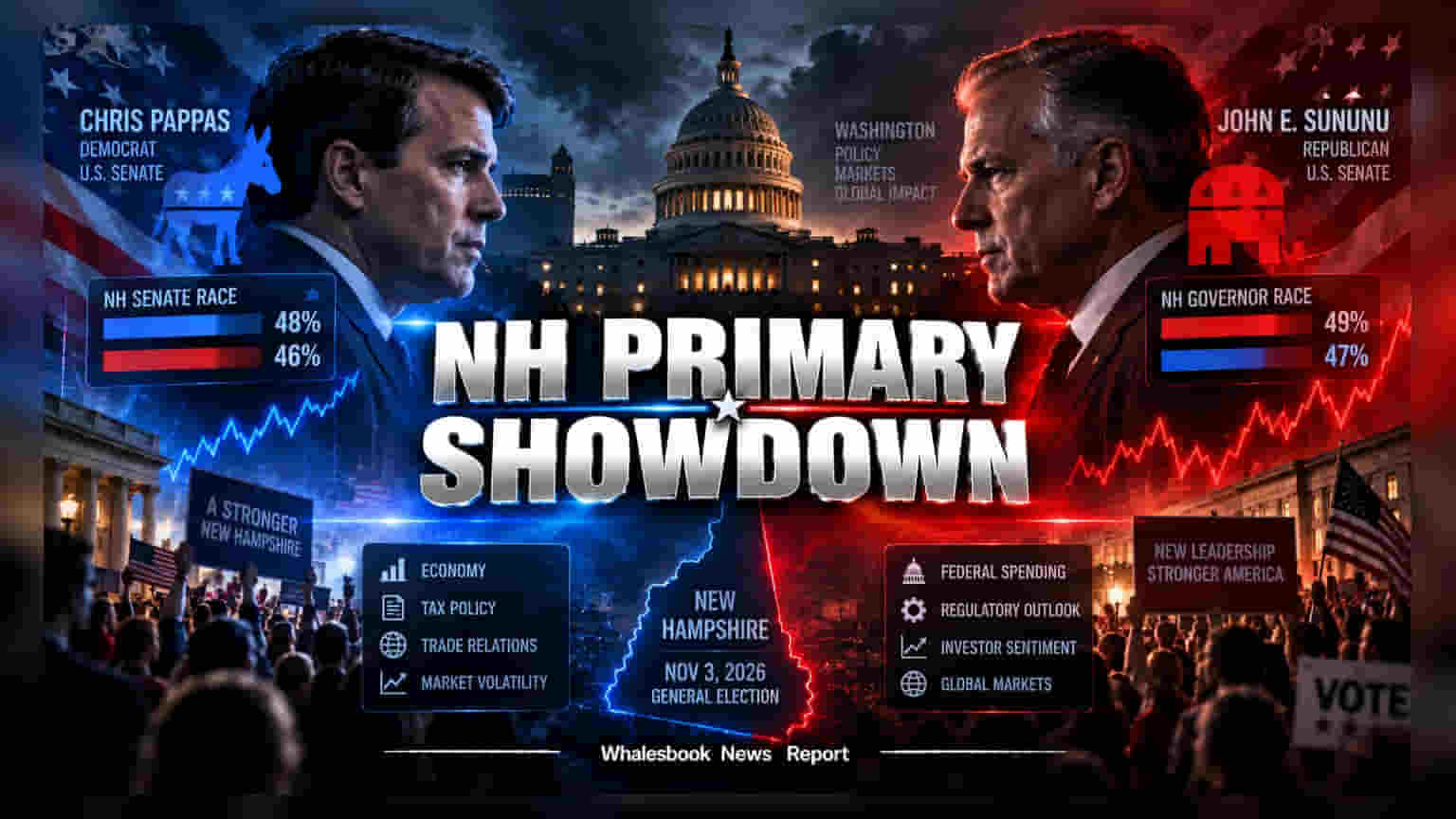
New Hampshire finalized its candidate slate on September 8, 2026, for the upcoming November 3 general elections. The high-profile races for Senate and Governor are significant for global investors, as they signal potential shifts in US legislative power, trade policy, and fiscal spending that could influence market sentiment and exchange rates.
New Hampshire concluded its primary elections on September 8, 2026, establishing the final candidate list for the general elections scheduled for November 3. These results are significant as they transition several competitive races from internal party contests to full-scale general election campaigns. The Senate contest will feature Democrat Chris Pappas against Republican John E. Sununu, vying for the seat being vacated by Senator Jeanne Shaheen. Additionally, incumbent Governor Kelly Ayotte secured the Republican nomination to face Democrat Cinde Warmington in the race for the state's top executive office.
For international investors, US political cycles are often linked to shifts in fiscal policy, regulatory environments, and trade relations. The outcome of these races contributes to the broader legislative balance in Washington. Changes in party control often influence federal spending, tax policy, and debt-limit discussions, which can create ripples in global financial markets. Because the US economy remains a major driver of global liquidity, any change in political direction that affects federal budgeting can influence investor confidence.
Historically, the lead-up to US general elections can be associated with increased market volatility. Shifts in economic sentiment, including corporate tax expectations and public spending plans, often accompany these political transitions. Investors typically track these election cycles to gauge potential impacts on the USD/INR currency pair and the flow of foreign institutional capital. While these contests are regional, they serve as a barometer for national political trends, which impacts the broader macroeconomic outlook.
The focus now shifts to the general election on November 3, 2026. The primary risk for the broader market remains the potential for prolonged legislative uncertainty or a divided government, which could complicate federal decision-making regarding fiscal policy and economic stimulus. As the election date approaches, observers will track campaign platforms and any proposed changes to tax or trade policies that might affect corporate earnings or global supply chains. Monitoring these political developments is important for understanding the potential volatility within the global economic environment.