

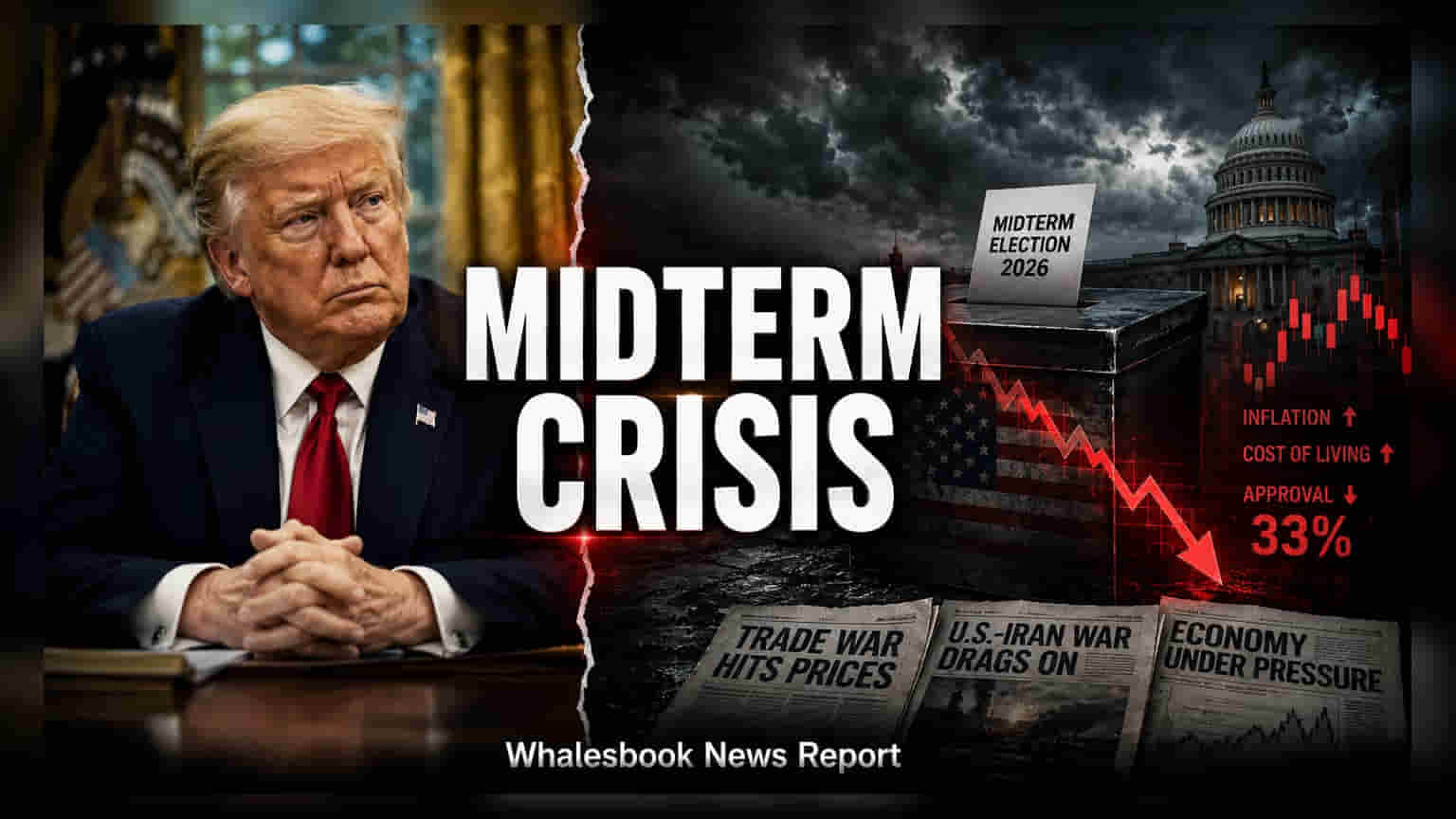
President Donald Trump’s approval rating has declined to 33% as the U.S. approaches the November 2026 midterm elections. The drop follows voter frustration over inflation, fuel costs, and the ongoing war with Iran. Additionally, a trade dispute with Canada and the controversial renaming of Lake Ontario have created further political friction, raising concerns about the potential shift in control of the U.S. Congress.
President Donald Trump is currently facing a significant political challenge as his approval rating has reached 33%, marking a historic low in his second term. With the November 2026 midterm elections fast approaching, these polling figures suggest a challenging environment for the Republican Party as it seeks to maintain its legislative hold on Congress. The decline in public sentiment is primarily driven by dissatisfaction with the current state of the U.S. economy, including persistent inflation and rising household costs.
Trade Tensions and Executive Actions
The administration’s recent trade policies have added a layer of complexity to the political landscape. A deepening trade dispute with Canada has resulted in retaliatory tariffs, which many voters blame for higher prices on everyday goods. In a move that has drawn both domestic and international criticism, the administration issued Executive Order 14422, which formally renamed Lake Ontario to "Lake America." This decision has faced significant pushback from regional leadership, including New York Governor Kathy Hochul, and has sparked a broader debate over government overreach. The controversy has been amplified by the involvement of major technology companies like Google and Apple, which updated their digital maps to reflect the new name, highlighting how political decisions are now impacting corporate operations and public infrastructure.
Geopolitical and Economic Concerns
Beyond domestic trade policies, the prolonged U.S. war with Iran continues to be a major drag on public approval. A majority of Americans have expressed concern over the duration and cost of the conflict, which remains a central theme in voter conversations. Polls indicate that the Democratic Party has gained a slight lead on economic policy messaging, signaling a shift in voter preference as households prioritize stability and cost-of-living concerns over the current administration's geopolitical strategies.
Investor Perspective
For investors, the primary concern remains the high level of uncertainty surrounding both domestic policy and international relations. Political instability in a major global economy typically leads to market volatility. The potential for a power shift in the U.S. legislative branch in November means that trade agreements, fiscal policy, and military engagements could face significant scrutiny or reversal. As the election cycle enters its final phase, the focus for the market will be on how these political risks influence long-term trade relations and whether the administration can address the voter concerns regarding inflation to stabilize the outlook for the coming year.