

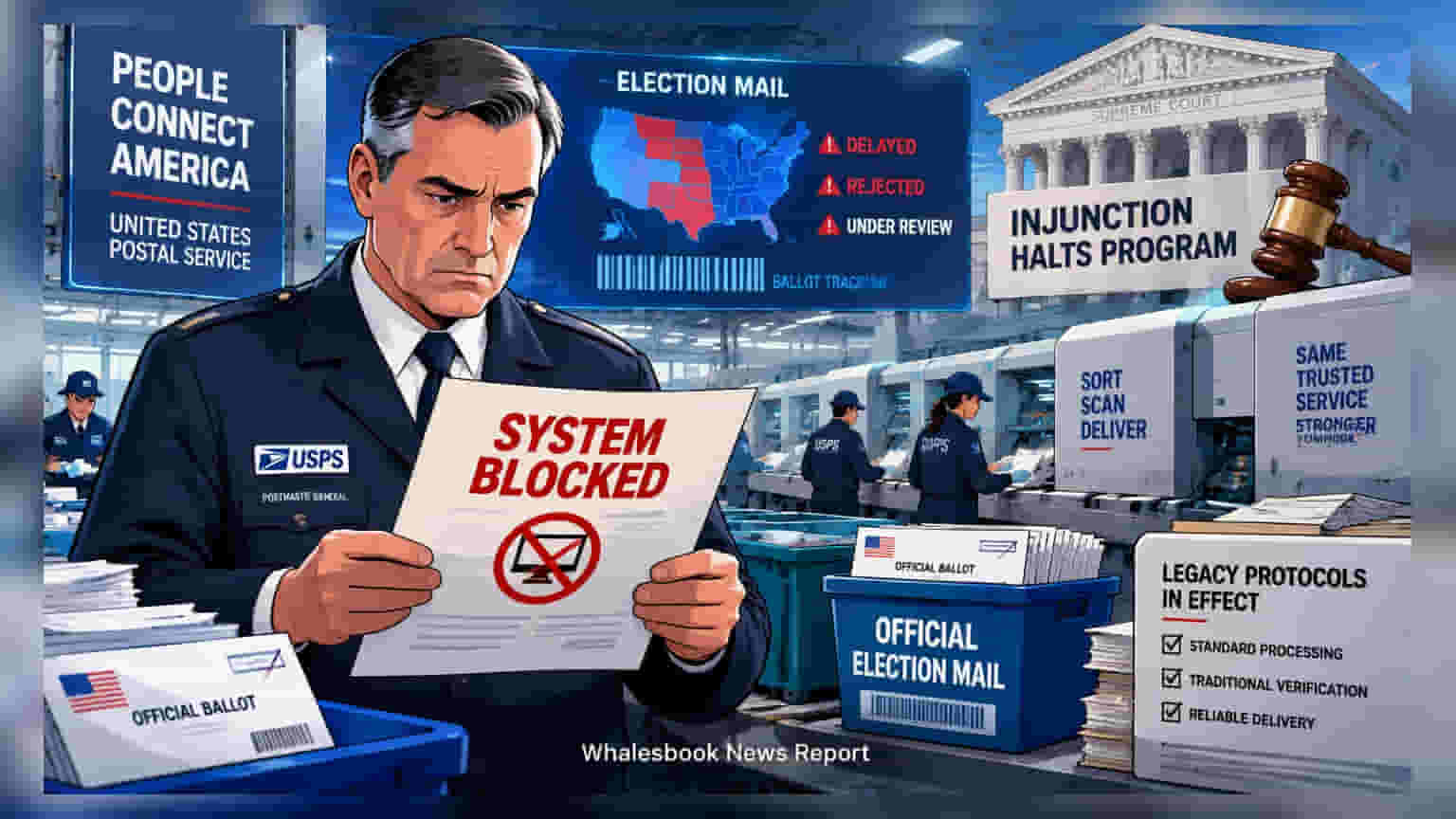
The United States Postal Service (USPS) has halted its controversial ballot-processing system following a Supreme Court injunction. Postmaster General David Steiner confirmed the agency is reverting to traditional election protocols. The decision comes as the logistics entity navigates systemic financial instability and operational scrutiny regarding mail-in ballot integrity.
The United States Postal Service (USPS) has officially halted the development of its proposed ballot-processing system. This decision follows a Supreme Court injunction that neutralized the executive mandate originally authorizing the infrastructure. Postmaster General David Steiner has confirmed that the agency will immediately revert to established, legacy protocols for the upcoming federal election, prioritizing traditional mail delivery processes over the planned citizenship-based verification portal.
From an operational perspective, the move marks a significant pivot after the agency invested considerable capital into the project. For investors and observers of large-scale, state-run logistics entities, this episode highlights the risks associated with rapid, high-pressure infrastructure development and the potential for capital to be tied up in projects that face significant legal or regulatory resistance. The agency’s internal memos indicate a return to standard election mail operations, effectively de-prioritizing the automated verification platform that had been under development.
Beyond the immediate operational shift, the USPS remains under pressure due to its ongoing financial crisis. While the agency has avoided the immediate complexities of the new voting system, it continues to grapple with systemic liquidity challenges. The institution is facing scrutiny over performance metrics, including postmark delays, with data from states such as Washington and Oregon showing rising instances of rejected ballots. These logistical hurdles have prompted Postmaster General Steiner, former CEO of Waste Management, to continue his push for congressional intervention to address the agency's long-term financial viability.
Regulatory and legal risks remain a persistent factor for the organization. While the Supreme Court's current injunction has provided clarity for the upcoming election cycle, Justice Brett Kavanaugh noted that the door remains open for future litigation. This ongoing legal uncertainty creates a challenging environment for the agency’s leadership as they attempt to balance institutional stability with changing administrative requirements. Additionally, while the USPS has incentivized the use of envelopes with standardized barcodes to improve efficiency, these measures remain voluntary, leaving the agency’s total processing reliability subject to the varying quality of external mail submissions.
The next important monitorable for stakeholders will be whether the agency can secure necessary congressional support to manage its deepening financial and institutional instability. Investors and analysts will also likely track any further updates on the agency’s capital spending and the potential for recurring litigation related to its election-season logistics protocols.