

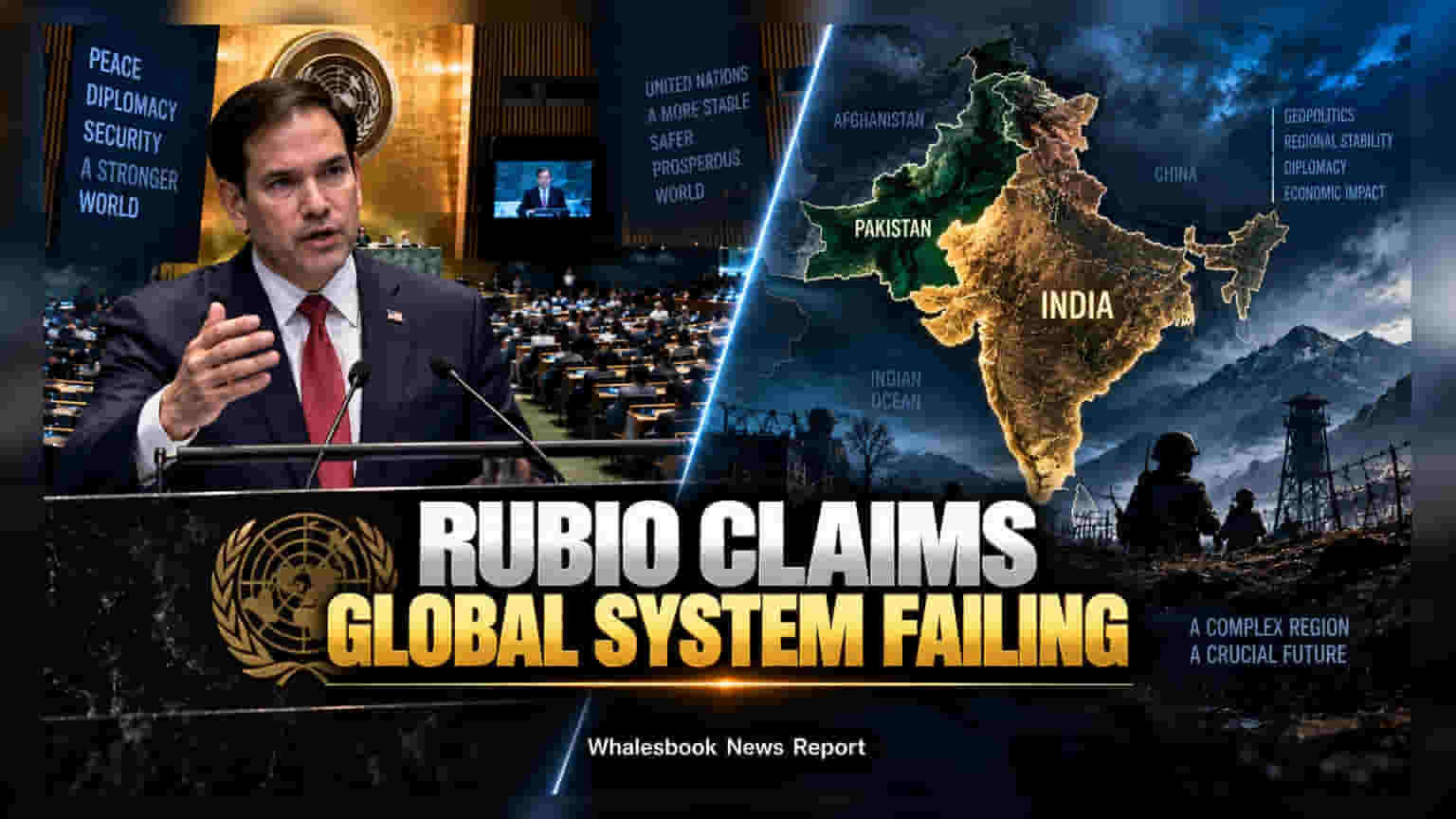
US Secretary of State Marco Rubio’s latest comments on foreign policy and India-Pakistan tensions have drawn market attention. For investors, such diplomatic rhetoric can influence foreign capital flows, regional stability, and market sentiment, particularly in sectors sensitive to geopolitical developments.
US Secretary of State Marco Rubio has signaled a shift in American foreign policy, questioning the effectiveness of international institutions like the United Nations in maintaining global stability. Speaking on the sidelines of the UN General Assembly, Rubio indicated that the US administration would prioritize its national interests over multilateral mandates. For Indian investors, this shift toward a more unilateral US diplomatic approach creates a new variable in the regional geopolitical landscape.
Disagreement on Mediation Claims
Part of this diplomatic recalibration involves persistent US claims regarding the resolution of tensions between India and Pakistan. Rubio’s comments coincide with statements from the White House, with President Trump recently asserting that his administration successfully mediated a ceasefire between the two neighbors. New Delhi has consistently rejected these claims, maintaining that the ceasefire agreement resulted from direct negotiations between the militaries of both countries. This ongoing discrepancy between US statements and Indian official accounts remains a point of friction in bilateral discourse.
Impact on Market Sentiment
Geopolitical tension is often a key factor that investors monitor, as it can influence broader market volatility. When there is uncertainty regarding diplomatic relations between major global powers and the Indian subcontinent, market participants often look for stability to support foreign capital inflows. If foreign institutional investors perceive heightened regional risk due to public diplomatic disagreements, it can occasionally lead to a more cautious approach to local equities.
Furthermore, heightened regional tension is frequently associated with increased attention on the domestic defense sector in India. Investors typically monitor whether such diplomatic volatility influences defense spending, order flow, or the government's long-term security strategy. While the current rhetoric does not immediately alter the fundamental business performance of Indian companies, the persistence of public disagreement between New Delhi and Washington on key issues like mediation is a factor that market analysts track for its potential impact on long-term diplomatic alignment.
What Investors Should Monitor
Market observers are likely to track future diplomatic developments between Washington and New Delhi to gauge the consistency of the relationship. The focus remains on whether these public differences in diplomatic narratives persist or whether they are contained through private channels. For now, the key monitorable for investors is the stability of foreign portfolio flows and the overall market reaction to evolving geopolitical rhetoric, as these factors can influence short-term sentiment and the risk premium assigned to Indian assets.