

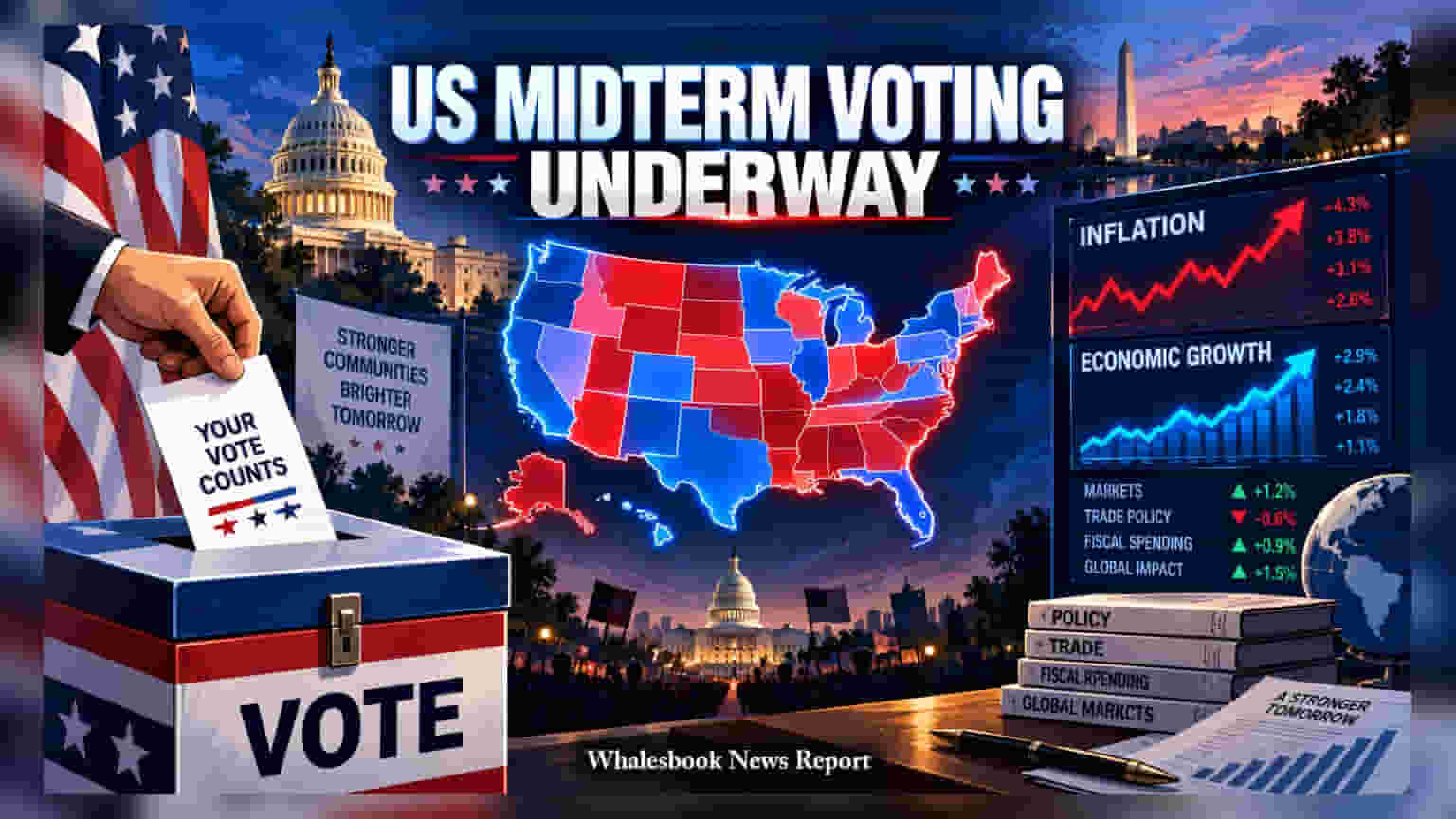
Early voting for US midterm elections has started in Virginia, Idaho, Minnesota, and South Dakota. As US voters address inflation and policy shifts, Indian investors should monitor the outcome for potential cues on global trade, interest rates, and foreign investment flows.
Early voting for the US midterm elections has begun in Virginia, Idaho, Minnesota, and South Dakota, marking the final six-week stretch before the November 3 polling day. While this is a domestic political process, the results are being closely watched by global financial markets, including India. The election will determine which party holds control over the US Congress, a factor that effectively dictates the legislative trajectory and trade policies for the next two years.
For Indian investors, the primary interest lies in how these political shifts influence market sentiment and global capital flows. Historically, major elections in large economies create periods of uncertainty, which can lead to volatility in how Foreign Institutional Investors (FIIs) manage their portfolios. If the election results signal significant changes to US fiscal, tax, or trade policies, it could have a direct impact on Indian sectors with high exposure to the US market, such as Information Technology (IT) services and Pharmaceuticals.
The current US election environment is shaped heavily by persistent concerns over the cost of living and global conflicts. These macroeconomic factors are already influencing Federal Reserve policies regarding interest rates. Indian markets are highly sensitive to US monetary policy. A shift in legislative control could alter how the US government manages its budget and national debt. Such changes can influence global bond yields, which subsequently affect the amount of capital flowing into emerging markets like India.
Political discourse in the US has also included debates over election administration and administrative control. While these domestic administrative issues generally have a limited impact on foreign policy, market participants often remain cautious during periods of intense political divide. A lack of consensus in Washington can lead to legislative gridlock, which sometimes causes unpredictability in government spending or policy implementation.
Investors should track the November 3 results for clarity on the path ahead. A decisive outcome often helps stabilize markets by providing a clearer view of future US policies. Conversely, a contested or highly divided result could prolong market uncertainty. The most critical factor for Indian stakeholders will be whether the new Congress maintains existing trade relations or moves toward more protectionist policies, which would directly impact global supply chains and export-oriented Indian industries.