

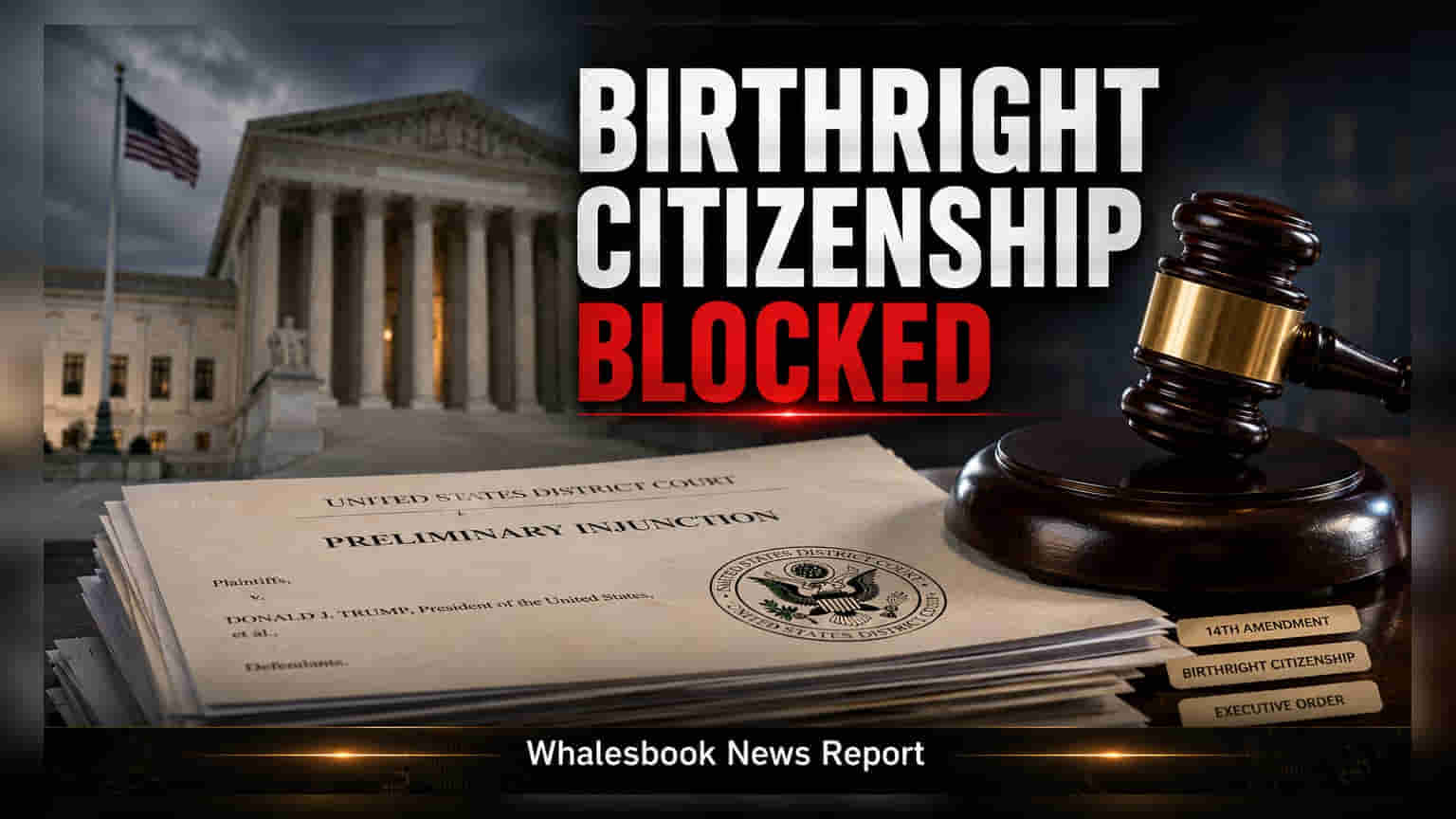
A federal judge has issued an injunction blocking the Trump administration's August 6 executive order that aimed to limit birthright citizenship. This ruling prevents federal agencies from enforcing new restrictions on children born to specific non-citizen groups, citing constitutional concerns. The decision maintains the current legal status for now, though further legal appeals and policy uncertainty remain likely.
U.S. District Judge Deborah Boardman issued a preliminary injunction on September 2, 2026, effectively freezing the Trump administration’s executive order aimed at restricting birthright citizenship. The ruling prevents federal agencies, including the Department of State, the Department of Justice, and the Department of Homeland Security, from enforcing the directive that sought to deny automatic citizenship to children of specific groups, including those classified as "alien enemies" or foreign government employees.
Constitutional and Legal Conflict
The court’s decision stems from an August 6, 2026, executive order that attempted to curtail automatic citizenship for certain categories of individuals born in the United States. Judge Boardman’s ruling emphasizes that the directive likely contradicts the 14th Amendment of the U.S. Constitution and conflicts with established Supreme Court precedents. The injunction serves as a significant legal hurdle for the administration, which had argued that the new policy was narrower than previous, unsuccessful attempts to modify citizenship laws. The judge rejected arguments that the challenge was premature, noting that the plain text of the order necessitated immediate court intervention.
Broader Implications for Market Sentiment
While this is primarily a legal and political development, such shifts in U.S. immigration policy are often monitored by international investors. Changes in rules surrounding citizenship, visas, and international residency influence the operational landscape for global businesses, particularly those in the Indian IT and professional services sectors. Any unpredictability regarding immigration status or cross-border talent mobility can influence sentiment in these sectors, as companies often rely on stable visa and residency frameworks to manage human capital. For now, the ruling preserves the existing legal framework, providing temporary stability for the affected class of individuals.
Legal Uncertainty Ahead
The legal battle remains ongoing. The administration may seek an emergency stay or move to appeal the decision in higher courts. Additionally, similar legal challenges are reportedly pending in other jurisdictions, such as New Hampshire. These concurrent cases could potentially lead to conflicting rulings, which would likely accelerate the timeline for higher court review or bring the matter before the U.S. Supreme Court. Stakeholders should continue to monitor future administrative guidance, potential appeals, and any secondary rulings that could either revive the policy or signal a more permanent legal rejection.