

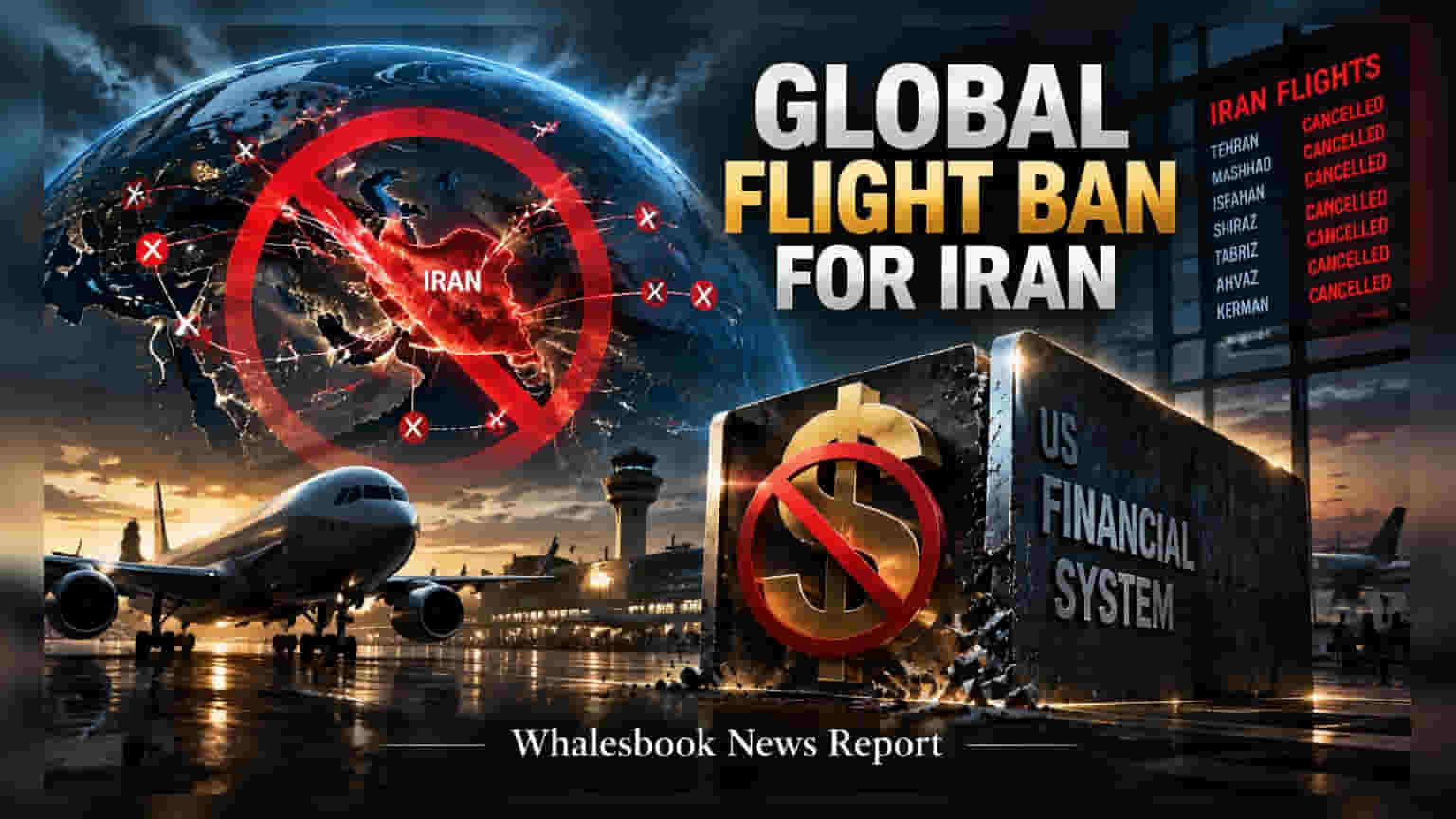
The US Treasury has threatened to exclude global entities from the US dollar system if they service Iranian airlines starting September 23. This ultimatum forces firms to choose between business with Iran and US financial access. Investors should monitor potential impacts on global logistics, energy markets, and compliance risks for international financial institutions.
The United States Treasury has issued a critical warning regarding international aviation operations, announcing that any entity providing services to Iranian airlines will face exclusion from the US financial system starting September 23, 2026. This move utilizes secondary sanctions, targeting not just the airlines themselves but also third-party infrastructure providers including international airports, fuel suppliers, and ticketing agencies.
The directive effectively compels global companies to choose between facilitating Iranian air travel and maintaining their access to the US dollar system. For international firms, losing access to the US financial network would be a significant operational disruption, making it nearly impossible to conduct standard cross-border trade. This strategy aims to create an environment where servicing Iranian aviation becomes financially unviable for global players.
From an investor perspective, this move raises potential risks for global logistics firms and financial institutions that handle cross-border payments. Indian financial institutions, which maintain essential dollar-denominated accounts for international trade, are generally sensitive to US regulatory shifts regarding high-risk jurisdictions. While most major Indian banks operate under strict compliance protocols to avoid violating international sanctions, heightened enforcement can lead to increased scrutiny and compliance costs. Investors should watch how global banks adjust their risk management frameworks in response to these tighter rules.
The broader implications for the energy sector may also emerge. Iran remains a significant player in the global energy market, and any further isolation of its aviation and logistics infrastructure could contribute to regional uncertainty. Although the sanctions specifically target aviation, increased geopolitical tension often spills over into commodity markets, particularly crude oil. Investors may monitor volatility in energy prices, as shifts in regional supply or trade routes can impact the margins of sectors dependent on imported raw materials.
Washington is also intensifying pressure on Beijing, which acts as a key economic partner for Tehran. The US government is currently in discussions with Chinese financial authorities to ensure compliance with these new restrictions. If these efforts succeed in closing alternative payment channels, it would likely leave the Iranian aviation sector with limited international connectivity. The key monitorable for investors will be whether this leads to a broader tightening of global trade compliance or if it results in localized disruptions that might affect specific multinational supply chains.