

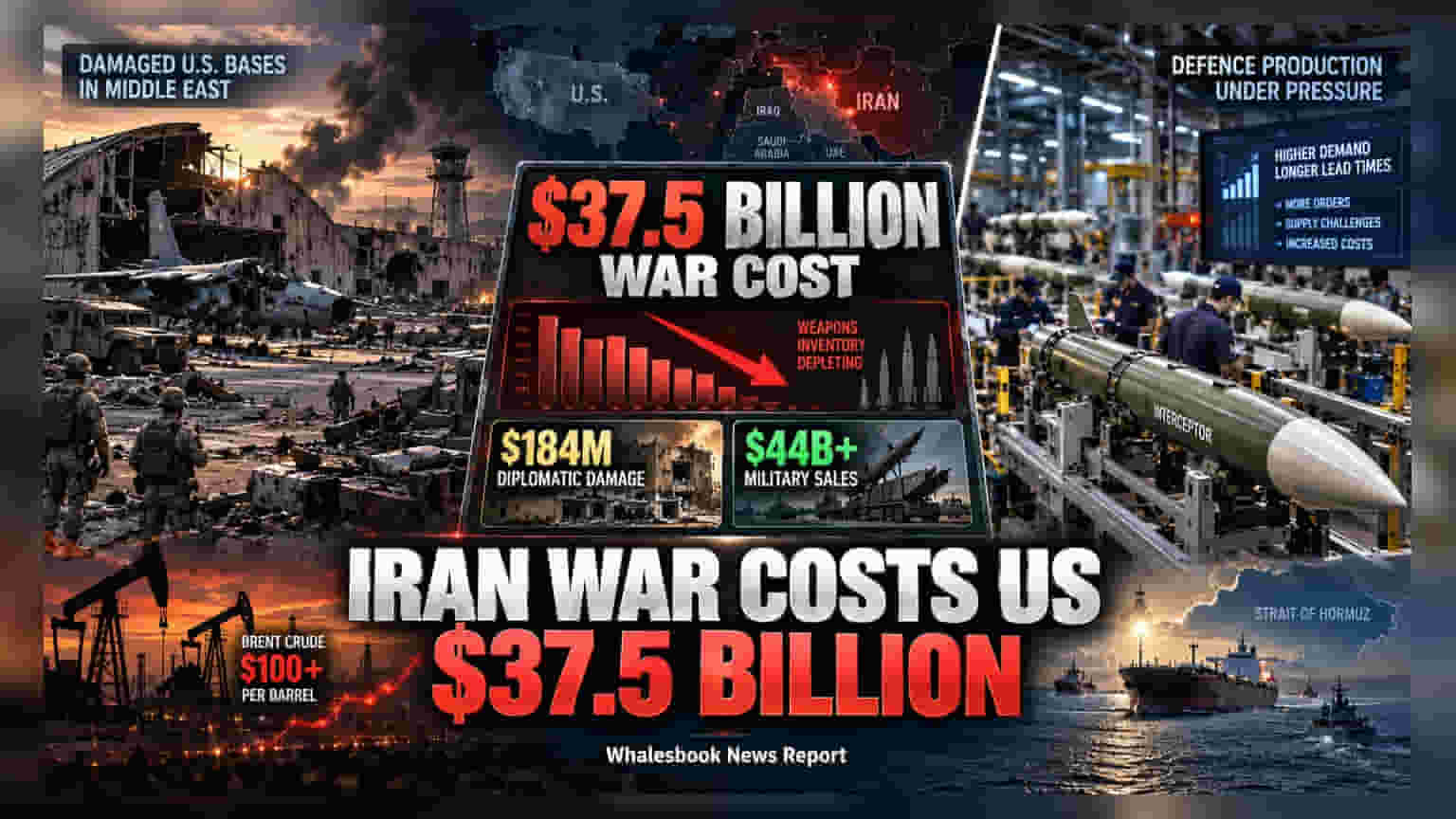
The ongoing U.S. conflict with Iran has reached a financial toll of $37.5 billion, causing significant damage to military and diplomatic infrastructure. For investors, this creates two primary pressures: extreme volatility in oil prices, which have crossed $100 per barrel, and severe supply chain bottlenecks for essential defense equipment. These factors are now shaping discussions around industrial manufacturing capacity and global trade stability.
The U.S. government has reported that the ongoing military conflict with Iran, which began in February 2026, has cost the American treasury approximately $37.5 billion as of late July. Beyond the direct financial expenditure, a recent Pentagon inspector general report has flagged critical shortfalls in advanced weapons inventories and systemic bottlenecks within the industrial capacity needed to replace depleted munitions. This situation brings the resilience of the global defense supply chain into sharp focus.
Defense Industry Supply and Demand
The conflict has highlighted a significant challenge for the defense manufacturing sector: the time required to replenish high-end missile interceptors and advanced missiles. With physical infrastructure damage across several U.S. bases in the Middle East and the loss of various aircraft and drones, the military has had to lean heavily on existing stocks. The industrial challenge lies in the speed at which defense manufacturers can scale up production to meet both current combat needs and the surge in global military sales. During this period, more than $44 billion in emergency and non-emergency U.S. military sales have been recorded, particularly with partners in the Middle East. This rise in demand suggests that while defense companies may see order books grow, the primary operational risk remains the ability of factories to deliver products without long delays or cost overruns.
Energy Markets and Economic Impact
For global investors, the most immediate impact of the prolonged conflict has been the volatility in energy markets. Brent crude oil prices have breached the $100 per barrel mark in September 2026, driven by fears of supply disruptions in the Strait of Hormuz and wider Middle Eastern instability. For a country like India, which is a major importer of crude oil, high and volatile oil prices typically increase the import bill and can create pressure on the Indian rupee. This macro factor is a significant monitorable for Indian markets, as it affects inflation and the operating costs of various industries, from transportation to manufacturing.
Diplomatic and Infrastructure Costs
The financial strain of the conflict extends beyond weapons and munitions. The U.S. State Department has noted that diplomatic facilities, particularly in countries like Iraq, Kuwait, Saudi Arabia, and the UAE, have sustained physical damage estimated at $184 million. Additional costs have been incurred for the evacuation of thousands of American citizens and personnel from the region earlier this year. These expenditures, while smaller relative to the military costs, highlight the broader fiscal burden of maintaining a footprint in a conflict zone.
Investors monitoring the situation may track three key areas moving forward: the timeline for the U.S. defense industry to normalize missile and munition inventory levels, any further spikes or sustained highs in crude oil pricing that could impact global inflation, and future updates on U.S. supplemental funding requests that could shift government spending priorities.