

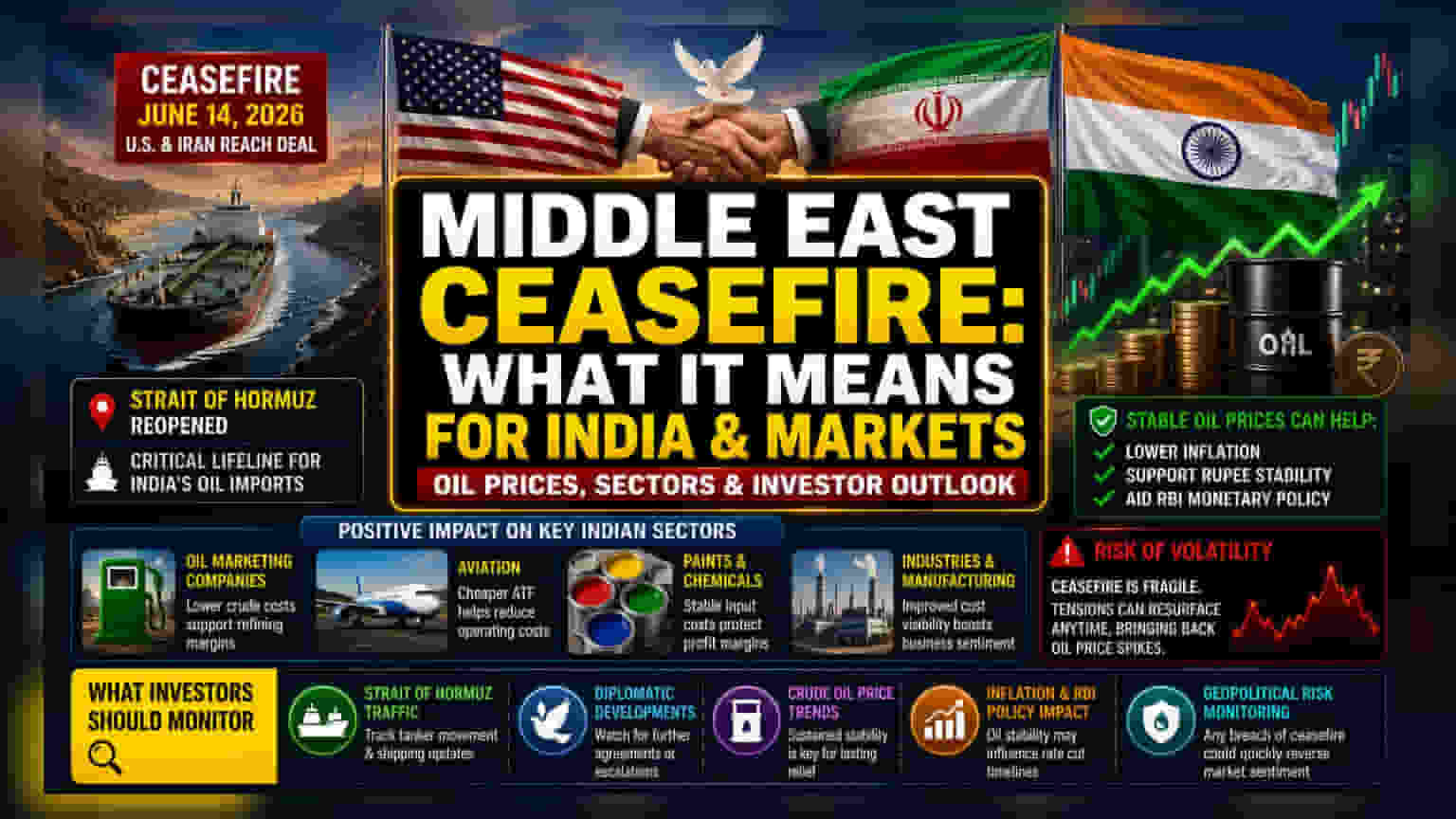
On June 14, a US-Iran ceasefire was brokered, easing regional hostilities. For Indian investors, the primary focus is the Strait of Hormuz, a critical transit route for India's energy imports. A stable supply route may help control crude oil prices, potentially benefiting sectors like oil marketing companies, aviation, and paints that rely on stable import costs.
What Happened
On June 14, 2026, the United States and Iran reached a ceasefire agreement, signaling a potential halt to over 100 days of conflict in the Middle East. The deal includes key provisions such as the reopening of the Strait of Hormuz, a suspension of bombing campaigns in Lebanon, and a general cessation of hostilities. While the situation is described as a fragile truce, this diplomatic development is being watched closely by global markets for its impact on supply chains and commodity prices.
Why The Strait Of Hormuz Matters To India
The Strait of Hormuz is one of the world's most critical shipping lanes for oil and natural gas. A significant portion of India’s crude oil imports passes through this narrow waterway. When conflict arises in this region, markets often price in a 'fear premium'—the extra cost buyers pay due to the risk of supply disruptions. This leads to higher global oil prices. For an energy-importing nation like India, any disruption at this chokepoint directly impacts the national import bill, potentially weakening the rupee and raising inflation concerns.
Economic Impact On Indian Sectors
Stable and secure energy supplies are essential for the Indian economy. When tensions ease in the Middle East, it can help stabilize or reduce global crude oil prices, which has a positive ripple effect on several domestic sectors:
- Oil Marketing Companies (OMCs): Lower crude prices generally reduce the input costs for refining companies, allowing them to better manage their margins.
- Aviation: Jet fuel (ATF) prices are directly linked to global crude oil trends. A decline in oil prices helps airlines manage their largest operational expense.
- Paints and Chemicals: These industries use petroleum-based derivatives as raw materials. Stable oil prices help protect their profit margins from unexpected volatility.
The Risk Of Volatility
While a ceasefire is generally viewed as a positive development, market participants are cautious. The truce is described as delicate, and geopolitical situations can change rapidly. If the agreement fails or tensions resurface, the risk premium on oil prices could return quickly. Investors usually look for sustained diplomatic success rather than a temporary pause, as uncertainty is the primary driver of volatility in energy and equity markets.
What Investors Should Monitor
For investors, the immediate monitorables include the actual movement of oil tankers through the Strait of Hormuz and any further updates on the diplomatic process. Beyond the daily news cycle, analysts track how crude oil prices respond to the news in the coming weeks. If global oil prices remain stable, it may reduce inflationary pressure, which is a key factor for the Reserve Bank of India’s monetary policy decisions. Any renewed escalation or breach of the ceasefire will likely be the primary risk factor to watch, as it could abruptly reverse market sentiment.