

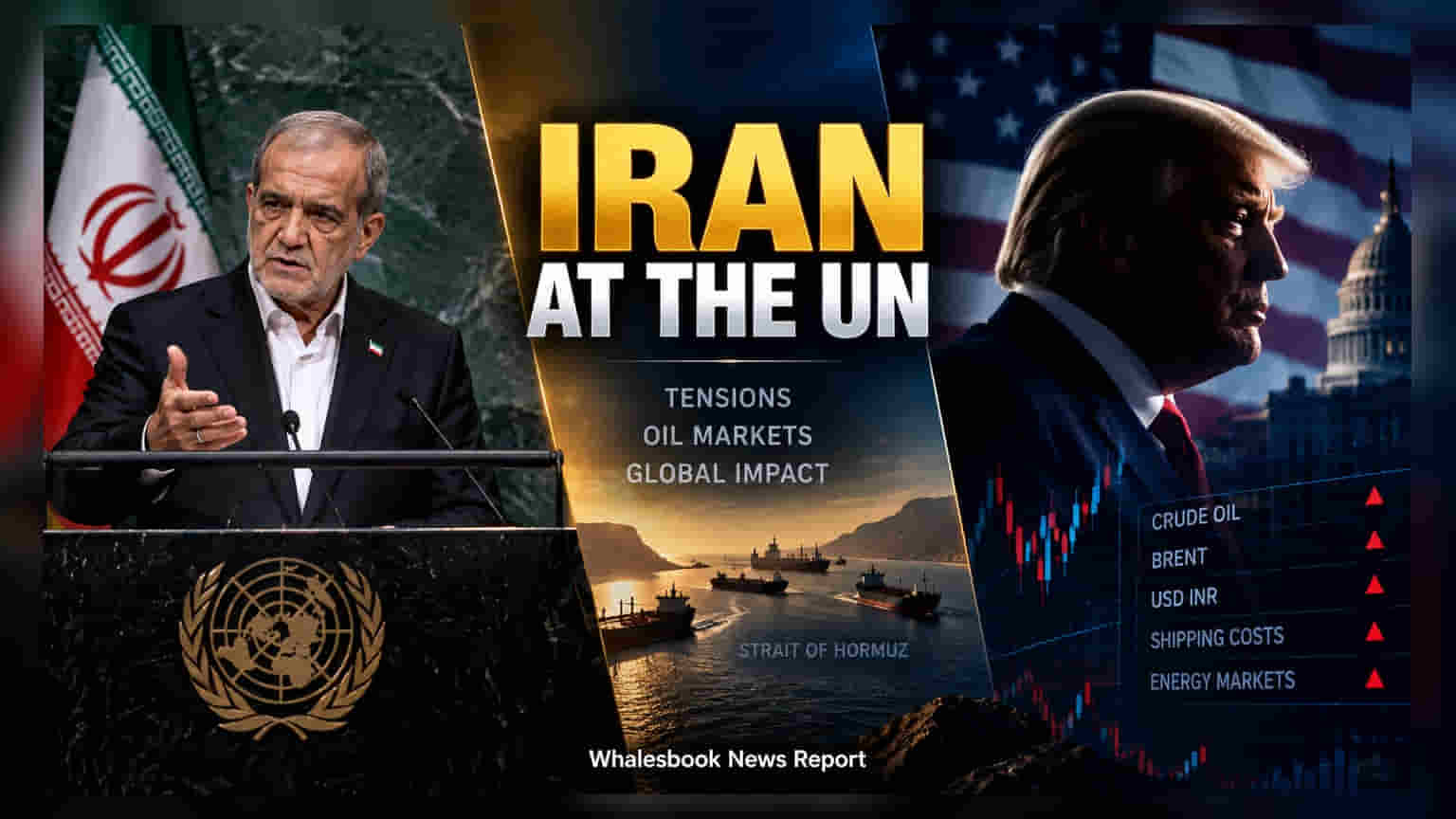
As Iranian President Masoud Pezeshkian prepares to address the UN, the ongoing US-Iran conflict remains a critical risk for crude oil prices and global trade. For Indian investors, the persistent instability in the Strait of Hormuz raises concerns about potential volatility in energy costs, shipping logistics, and the domestic currency.
Iranian President Masoud Pezeshkian is set to address the United Nations General Assembly amid escalating tensions with the United States. While diplomatic backchannels remain active, with reports of meetings involving US envoys, the core issues of port blockades and frozen assets persist. For Indian markets, the primary focus is not merely the diplomatic rhetoric, but the economic ripple effects caused by instability in the Persian Gulf region.
Impact on Energy Security and Trade
The Strait of Hormuz serves as one of the world's most critical maritime chokepoints, through which a significant portion of global crude oil shipments passes. Persistent security incidents in this region have kept shipping volumes below historical averages and increased freight insurance costs. Because India relies heavily on crude oil imports, sustained volatility or any disruption in this waterway directly affects energy security and can exert pressure on the Indian rupee and the domestic current account balance.
Implications for Indian Sectors
Indian oil marketing companies such as Indian Oil Corporation, Bharat Petroleum, and Hindustan Petroleum often face margin pressure when crude oil prices spike due to geopolitical uncertainty. A sudden increase in energy costs typically leads to higher import bills, which can complicate inflationary management for the Indian economy. Furthermore, sectors dependent on imported inputs or those with significant export exposure to the Middle East may face indirect pressure from higher logistics and shipping costs caused by increased security risk premiums in the Gulf region.
The Diplomatic Stalemate
Despite recent reports of discussions between US envoys and Iranian representatives, Tehran has maintained a firm stance on its core demands, specifically the lifting of blockades at its ports and the release of frozen state assets. Market observers are closely monitoring whether the diplomatic spotlight at the UN will lead to any softening of these positions or if the ongoing conflict will deepen. For investors, the disconnect between public confrontation and private backchannel talks suggests that the situation remains fragile, with potential for sudden shifts in policy or regional stability.
Investor Monitorables
The key factor for Indian investors remains the potential for volatility in crude oil prices, which directly impacts the financial performance of oil-dependent companies. Investors should continue to monitor developments regarding maritime security in the Strait of Hormuz, as any disruption would likely trigger an immediate reaction in global energy markets. Additionally, updates on the status of US-led blockades or any thaw in diplomatic relations will be important indicators of whether energy market risks are likely to subside or persist in the near term.