

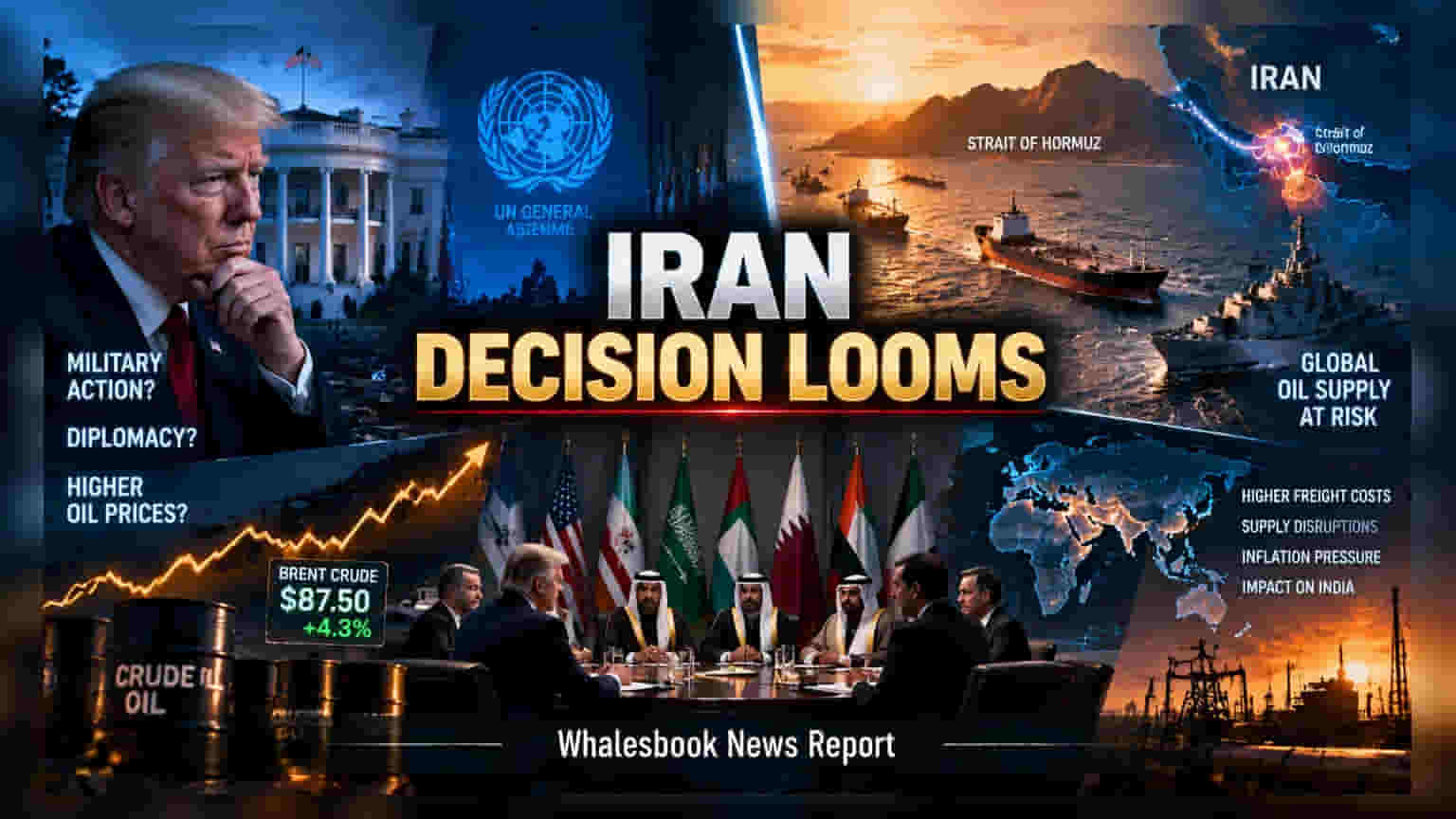
US President Donald Trump’s potential policy shift regarding Iran has increased geopolitical uncertainty ahead of UN meetings. For Indian investors, the primary concern is the impact on crude oil prices, which directly affects the nation's import bill, currency stability, and broader inflation trends.
US President Donald Trump is weighing options between intensifying military action and pursuing diplomacy regarding Iran as he prepares for upcoming meetings with Gulf leaders at the United Nations General Assembly. This development has heightened focus on the Strait of Hormuz, a vital maritime corridor for global energy supplies, as markets assess the risk of potential supply chain disruptions.
Impact on India's Energy Security
For Indian markets, the situation is significant due to the country's high dependency on imported energy. India imports over 85% of its crude oil requirements, and a substantial portion of this supply passes through the Persian Gulf and the Strait of Hormuz. Any geopolitical escalation in this region risks pushing up shipping insurance premiums and freight costs, which eventually increases the landed cost of crude oil for Indian refiners.
Economic Consequences for Investors
Geopolitical tension often acts as a risk premium for global oil prices. For the Indian economy, sustained high crude oil prices can create several challenges. First, it directly expands the country's import bill, which can widen the Current Account Deficit and put downward pressure on the Rupee. Second, it fuels domestic inflation. When fuel prices rise, they increase the operating costs for the logistics, transportation, and manufacturing sectors. Consumer goods companies (FMCG) often face margin pressure as they try to balance rising logistics costs with consumer demand.
Sector-Specific Observations
Investors typically watch how different energy-related companies react to crude volatility. Oil Marketing Companies (OMCs) like Indian Oil Corp, BPCL, and HPCL often face challenges when global crude prices spike, as their ability to pass on the full cost increase to consumers can be restricted by regulatory or competitive factors. Conversely, upstream oil exploration companies like ONGC and Oil India may see higher realisations, though these gains are often moderated by government-imposed windfall taxes and price ceilings. The interplay between these factors determines the net impact on corporate profitability.
Monitoring Future Updates
Market participants are currently tracking three key variables: movements in the Brent Crude oil benchmark, the Rupee-Dollar exchange rate, and any official announcements from OPEC+ regarding production adjustments. The outcome of the diplomatic meetings at the UN General Assembly will be a primary trigger, as clarity on the geopolitical path will determine whether the current uncertainty persists or eases.