

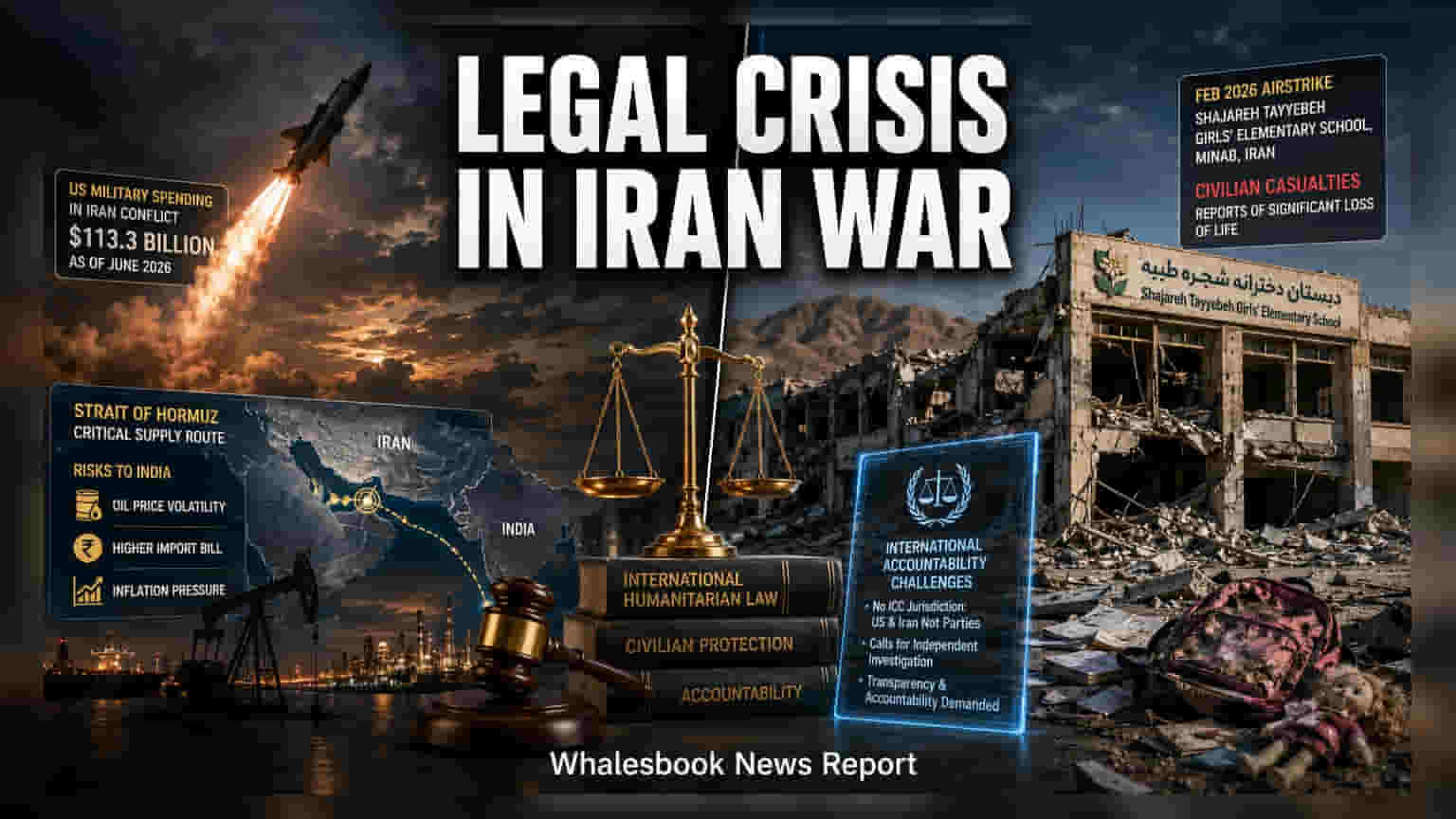
Six months into the US-Iran conflict, international legal experts are raising concerns over military conduct, particularly regarding civilian infrastructure damage. For Indian investors, the ongoing war creates significant market risks, primarily through potential disruptions to oil supplies in the Strait of Hormuz, rising global inflationary pressures, and continued volatility in commodity prices.
The ongoing US-Iran conflict, which began in February 2026, has entered a period of intense scrutiny from the international legal community. Recent discussions have shifted toward the adherence to international humanitarian law, following reports of damage to civilian infrastructure and concerns over the rules of engagement utilized during military operations.
At the center of these discussions is the February 2026 airstrike on the Shajareh Tayyebeh Girls' Elementary School in Minab. International human rights organizations and legal experts have raised questions regarding the targeting of this facility, which resulted in significant civilian casualties. While reports suggest that internal investigations have acknowledged a US Tomahawk missile was responsible—likely due to outdated intelligence regarding the site's usage—the lack of a public, independent investigation has intensified calls for greater transparency and accountability. Legal scholars note that without formal jurisdiction from bodies like the International Criminal Court, as neither the United States nor Iran are parties to the statute, accountability remains difficult to establish.
Economic and Market Implications for India
For Indian investors and the broader market, the significance of this conflict extends beyond the legal and humanitarian debates. The most immediate risk involves the global supply chain, particularly the ongoing tension and periodic disruptions at the Strait of Hormuz. As a major importer of crude oil and natural gas, India is highly sensitive to price volatility in energy markets. Any escalation that further restricts movement through this critical shipping lane can lead to rapid spikes in oil prices, which directly impacts India’s import bill, trade deficit, and domestic inflation.
Furthermore, the financial cost of the conflict is a growing concern for global economic stability. As of June 2026, the US administration’s military spending related to the conflict has reportedly reached $113.3 billion. Increased military spending often diverts capital from other economic sectors and can contribute to persistent inflationary pressures in the global economy. This creates an environment of uncertainty for emerging markets like India, where higher energy costs and inflationary trends can affect consumer spending and corporate profit margins.
Managing Exposure to Global Volatility
Investors may track the status of energy supply routes and international diplomatic efforts to contain the conflict. The persistent targeting of infrastructure, including desalination plants and other critical facilities near the Strait of Hormuz, keeps the risk of supply chain shocks elevated. Additionally, the lack of a clear exit strategy or a move toward de-escalation means that market volatility could remain a recurring theme.
The key monitorables for the coming months will be the movement of crude oil prices, data on India’s import costs, and any updates regarding diplomatic mediation. While the conflict remains focused in the Middle East, the ripple effects on commodity prices and global shipping logistics remain a tangible risk that necessitates caution in sectors heavily dependent on imported energy or global trade volumes.