

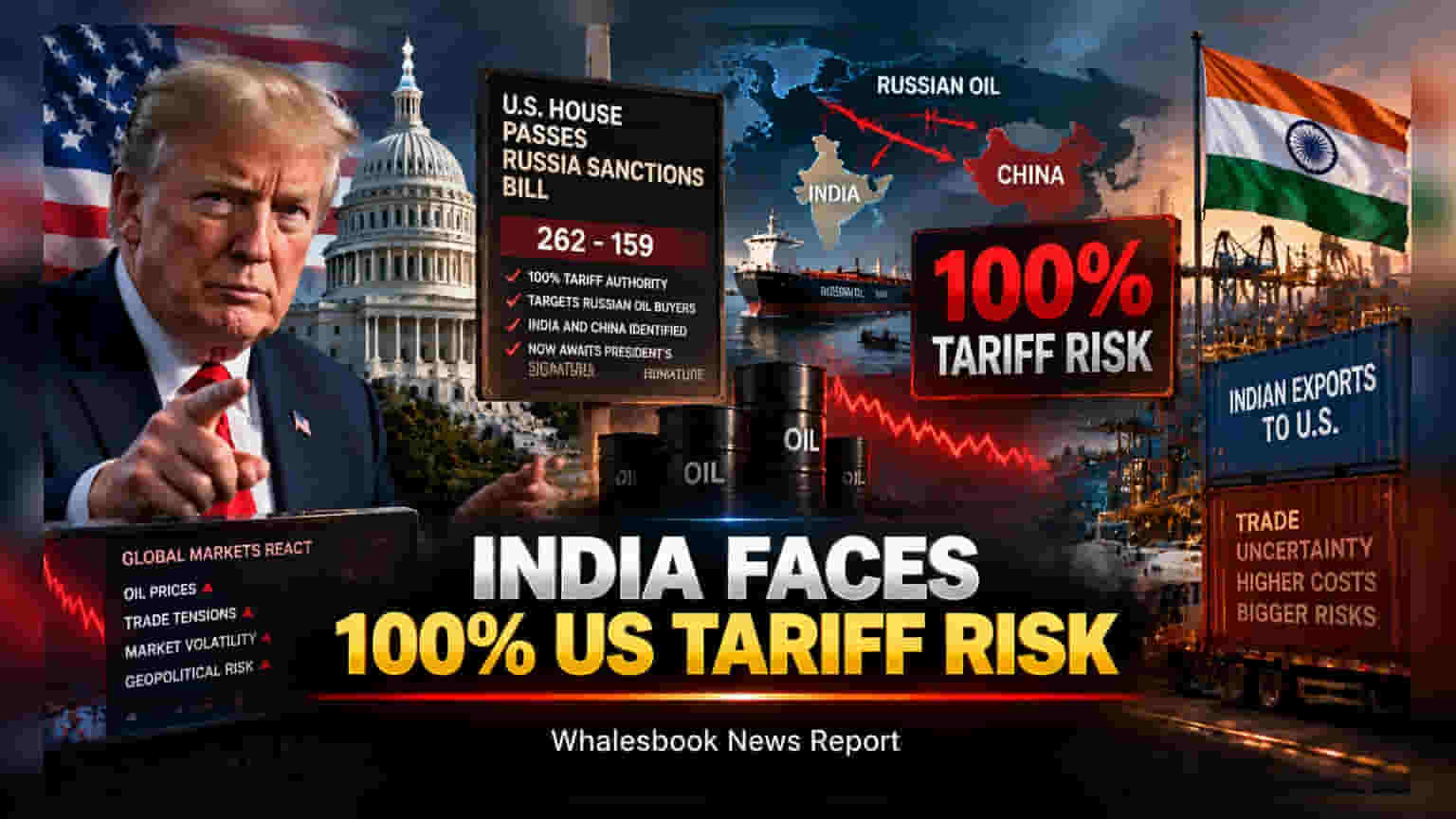
The U.S. House of Representatives passed the Lindsey O. Graham Sanctioning Russia and Iran Act of 2026 on September 16. The legislation authorizes the U.S. President to impose tariffs of up to 100% on major importers of Russian energy, specifically naming India and China. This creates new policy uncertainty for Indian energy sourcing and potential risks for U.S.-India trade relations.
The U.S. House of Representatives has passed the Lindsey O. Graham Sanctioning Russia and Iran Act of 2026, marking a significant development in international trade policy. The bill, which cleared the House with a 262-159 vote on September 16, 2026, follows its earlier approval in the U.S. Senate. It now moves to President Donald Trump for his signature to become law.
A central component of the legislation is the authority granted to the U.S. President to impose tariffs of up to 100% on the world's five largest purchasers of Russian oil and gas. The bill explicitly identifies India and China as major buyers currently exposed to this provision. The objective of the legislation is to reduce the energy revenues that fund Russia's military operations by creating a direct financial disincentive for large-scale energy importers.
For Indian investors and companies, the immediate impact is a rise in policy uncertainty. It is important to note that the 100% tariff is not automatic. The bill provides the U.S. President with significant discretionary power to implement these duties. Furthermore, the legislation includes an exception clause for countries that import less than 15% of Russia’s natural gas exports and have taken demonstrable steps to reduce these purchases.
The energy sector remains the primary point of focus. India has significantly increased its reliance on discounted Russian crude, which accounted for approximately 51% of its oil imports by July 2026. Any move by the U.S. to leverage this new tariff authority would force a difficult choice for the Indian government: continue sourcing lower-cost energy from Russia or prioritize trade stability with the United States. If the U.S. decides to apply trade pressure, companies with high export exposure to the American market could face indirect risks, as tensions in the energy trade often spill over into broader diplomatic and commercial negotiations.
Investors should monitor how the Indian government navigates this new regulatory landscape. The risk is that if energy sourcing costs rise—either due to a shift in suppliers or potential trade duties—it could affect the profit margins of Indian oil refining and marketing companies. Additionally, any cooling in U.S.-India trade ties would be a concern for export-oriented sectors like textiles, engineering goods, and technology services that rely on the U.S. as a major market.
The next important updates to follow will be the official signing of the bill into law and any subsequent diplomatic communications from the U.S. administration regarding the enforcement of these tariff powers. Market participants will also be tracking any shifts in India's energy import strategy or potential trade talks aimed at securing exemptions from these provisions.