

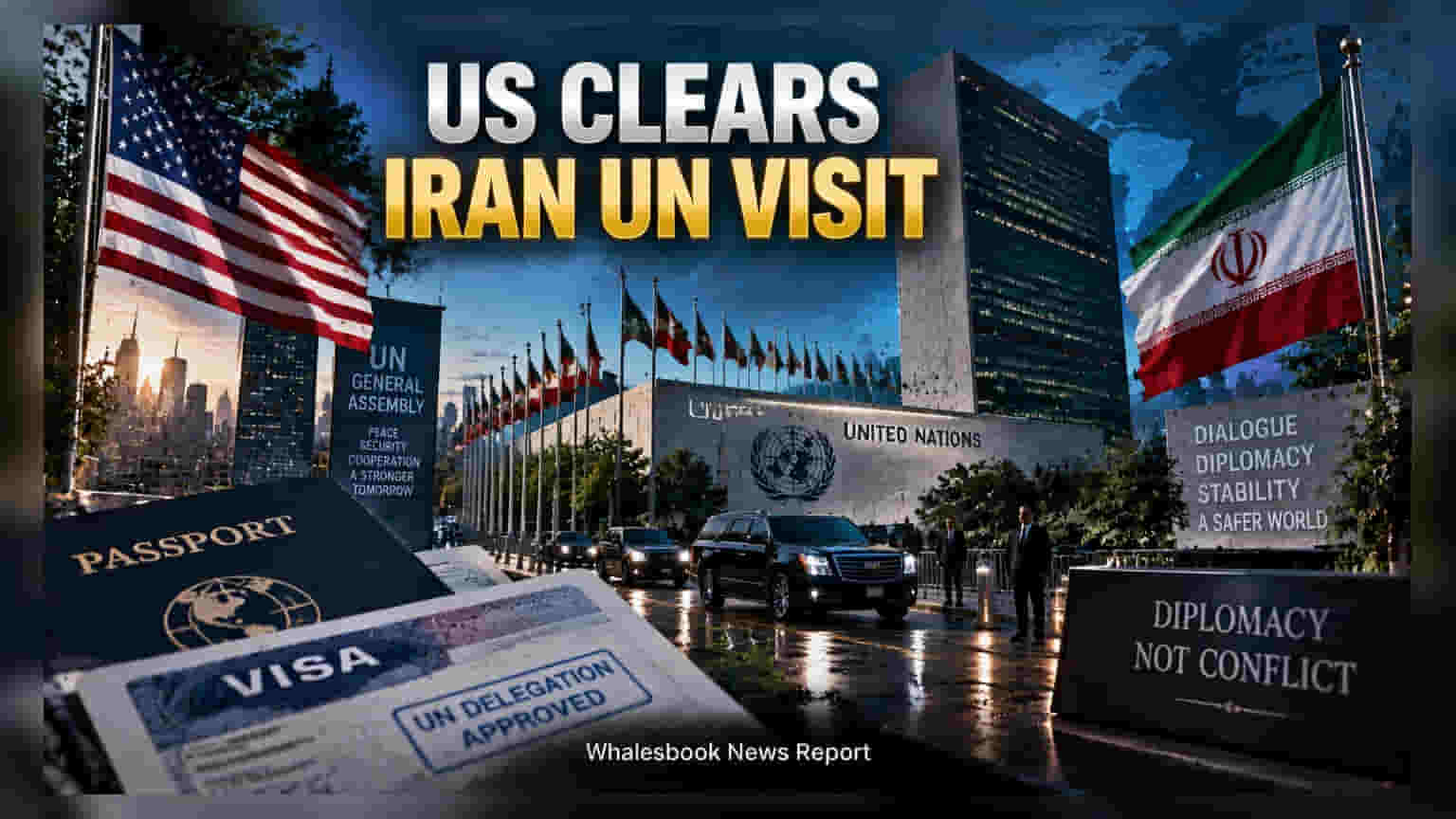
The United States has granted visas to a core Iranian delegation, including President Masoud Pezeshkian, to attend the upcoming UN General Assembly. While this move upholds host-nation obligations, travel and trade restrictions on the officials remain. For Indian investors, this diplomatic engagement is a key monitorable as it impacts regional stability and energy market sentiment.
The United States government has announced it will permit a small delegation of senior Iranian officials, including President Masoud Pezeshkian and Foreign Minister Abbas Araqchi, to attend the United Nations General Assembly in New York next week. The decision is being framed by US officials as a fulfillment of America’s legal obligations as the host nation for the United Nations, rather than a shift in broader bilateral policy.
While the visas allow for travel to the UN headquarters, the Iranian delegation will continue to face strict limitations. Their movement remains largely confined to the UN mission area, the ambassador's residence, and the airport. Furthermore, the officials remain subject to existing US sanctions, which prohibit them from purchasing luxury goods and certain other items while in the country. US officials also noted that this year's delegation size will be smaller than the previous one.
For investors, this diplomatic update is significant primarily due to its potential impact on regional stability in the Middle East. India, being a net importer of crude oil, remains sensitive to geopolitical developments in this region. Any fluctuation in oil prices—often driven by tensions in the Middle East—can affect India’s import bill, currency stability, and the profit margins of oil-marketing companies and oil-dependent industries like aviation and chemicals.
While this diplomatic contact does not immediately signal an end to the ongoing conflict or a change in US-Iran relations, markets often track these interactions as potential indicators of broader geopolitical shifts. The dialogue, even if limited, is watched for any impact on energy supply chains and the overall global risk appetite.
This decision stands in contrast to the US government's recent choice to deny visas to Palestinian officials for the same UN session. The difference in outcomes underscores that the US is navigating its obligations under the UN Headquarters Agreement while simultaneously applying its specific foreign policy frameworks to different situations.
Investors may monitor for any commentary or signals coming out of the UN sessions regarding the ongoing regional conflict. The next important steps for market observers include tracking energy price volatility, any official statements regarding trade or sanctions, and the general tone of international diplomatic discourse as it relates to the stability of the Middle East.