

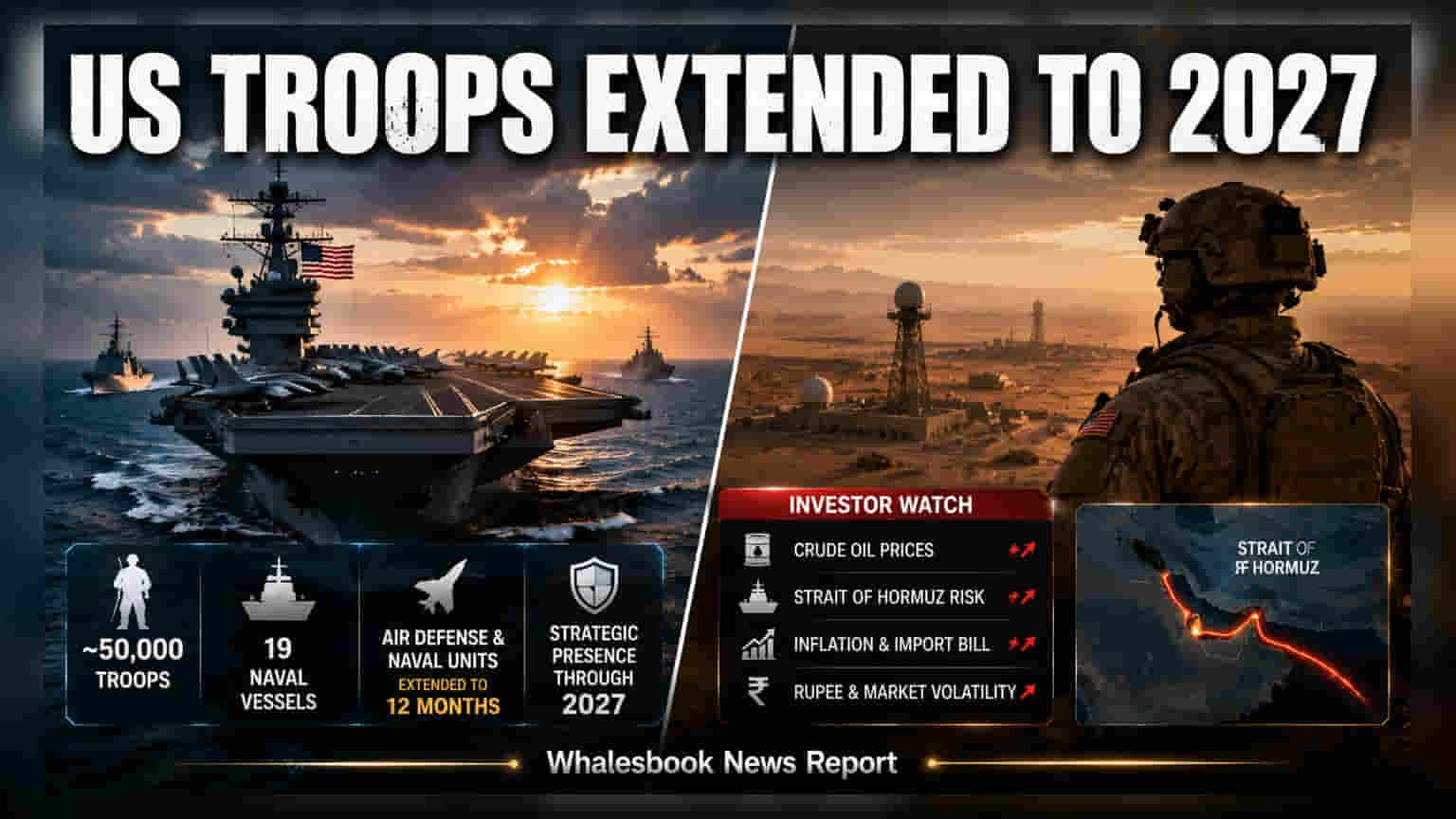
The US has extended its military deployment in the Middle East through 2027, maintaining 50,000 troops and 19 warships in the region. For Indian investors, this prolonged commitment increases the risk of volatility in global energy prices and supply chain disruptions, given India’s high dependence on energy imports from the region.
The United States has extended its military deployment in the Middle East through 2027, as tensions with Iran show no signs of easing. Defense Secretary Pete Hegseth confirmed that the current operational tempo will remain in place, with approximately 50,000 troops and 19 naval vessels, including aircraft carriers, stationed across the region. This decision extends the rotation cycles for many air-defense and naval units from nine months to 12 months, reflecting the strategic need to maintain a strong presence while balancing equipment and personnel strain.
While the administration is pivoting its strategy to prioritize severe economic pressure to influence Tehran’s policies, the military presence provides a safety net for potential contingencies. This extended commitment keeps the region in a state of high alert, which carries specific implications for the global economy and, by extension, the Indian stock market.
For Indian investors, the primary concern remains the potential impact on crude oil prices. A significant portion of India's crude oil imports passes through the Strait of Hormuz, a critical maritime choke point that is central to the current geopolitical tensions. Any escalation in the conflict or disruption to shipping routes in this area can lead to a sharp increase in global oil prices. Higher oil prices directly impact India’s import bill, which can put pressure on the rupee, affect the profit margins of oil marketing companies, and potentially fuel inflation.
Beyond energy costs, the prolonged nature of this engagement adds a layer of uncertainty to global trade. Supply chain disruptions are a common side effect of regional instability, and Indian companies with significant exposure to Middle Eastern trade routes may face challenges in managing logistics and shipping costs. The operational strain reported by the US military—including delays in maintenance windows and personnel fatigue—also highlights the intensity of the situation, suggesting that the conflict remains a live issue rather than a resolved one.
Investors should closely track movements in Brent crude oil prices and any updates regarding shipping disruptions in the Middle East. Broader macroeconomic indicators, such as inflation data and updates from the Reserve Bank of India on trade and currency, will also reflect how the country navigates the potential pressure from rising energy costs. The long-term impact on equity markets will depend on whether the current strategy of economic pressure effectively lowers tensions or if the risk of regional escalation persists, keeping energy markets volatile.