

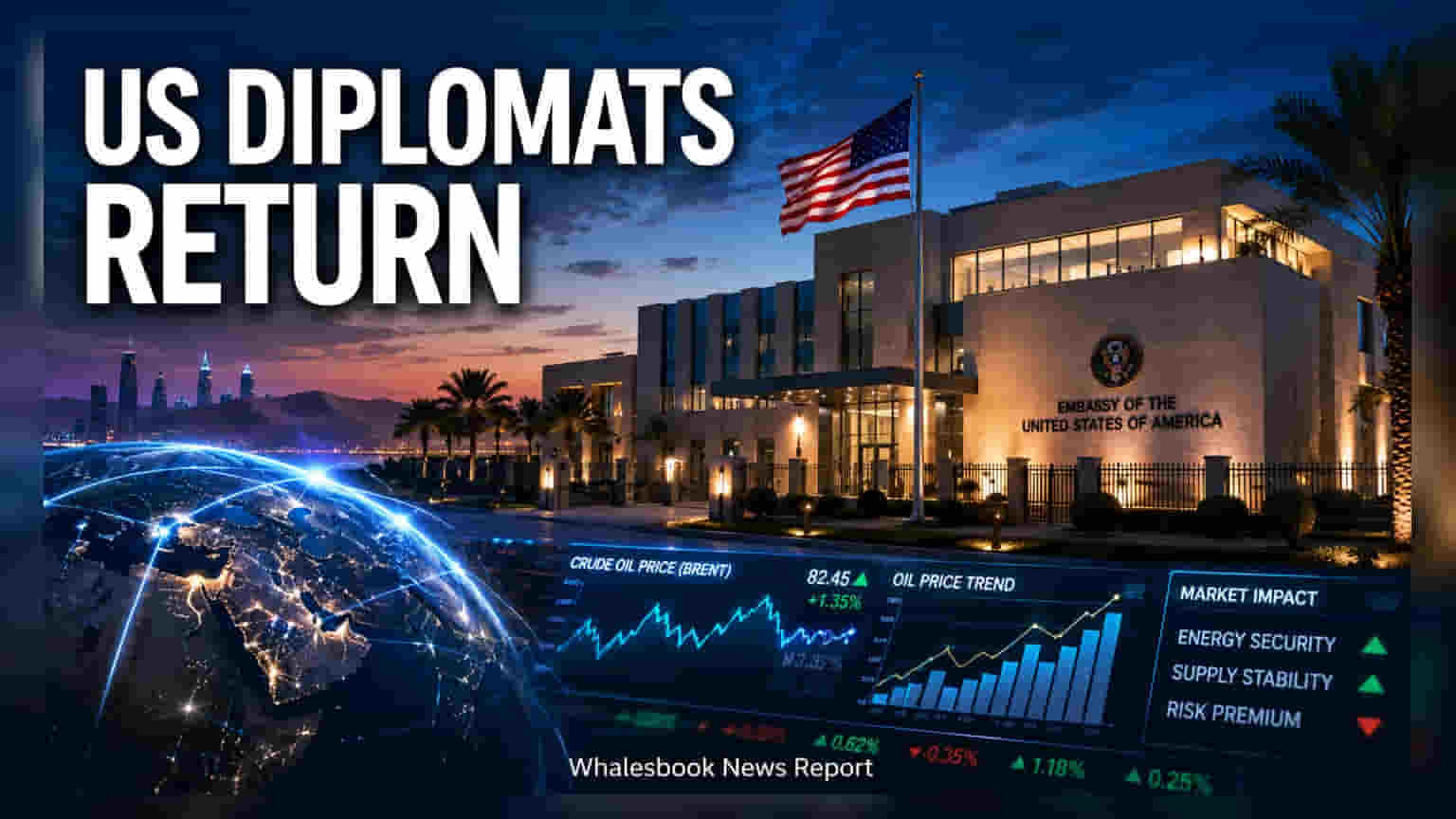
US embassies in the Middle East have begun a phased return of staff following a six-month evacuation period. While the move is driven by administrative HR timelines, it signals a slight reduction in immediate regional tension. For Indian investors, the focus remains on how this impacts global energy price stability and supply chain risks in a volatile, oil-dependent region.
The US State Department has initiated a phased return of diplomatic staff and their families to several missions across the Middle East. This transition marks the end of a six-month period of restricted operations that began during heightened regional instability earlier this year. Embassies in countries including Qatar, Kuwait, Bahrain, Israel, Lebanon, Saudi Arabia, Jordan, and Oman are in the process of restoring their presence, though initially at reduced capacity.
Administrative Drivers and Operational Limits
While the return of diplomatic families is a notable shift, it is primarily driven by bureaucratic necessity rather than a major change in military or foreign policy. Diplomatic personnel on authorized departure status faced a six-month deadline to remain eligible for specific overseas housing and compensation benefits. By transitioning to a new 'restricted operations' classification, the State Department aims to manage its workforce effectively while keeping benefits intact.
Operational capacity will not return to full levels immediately. Missions have implemented specific staffing caps, with most posts in the UAE, Saudi Arabia, Qatar, and Lebanon operating at approximately 85% capacity. More sensitive locations, including Iraq, Kuwait, and Bahrain, are initially capped at 75% staffing. These levels remain subject to continuous security assessments by embassy leadership.
Implications for Indian Investors and Energy Markets
For Indian markets, the primary interest in Middle Eastern stability lies in its direct correlation with crude oil prices and global supply chain security. As a major net importer of energy, India is sensitive to supply disruptions in this region. The gradual restoration of diplomatic presence can be interpreted by markets as a signal that the risk of immediate, large-scale escalation has marginally decreased compared to the peak of the recent tensions.
However, this does not eliminate the underlying risks. The US administration continues to pursue a strategy of economic pressure on Iran, and diplomatic talks remain stalled in several areas. For investors, this creates a mixed environment where, on one hand, the resumption of normal diplomatic functions suggests a level of stabilization, while on the other hand, the threat of new economic sanctions and the ongoing potential for regional volatility remain relevant factors that could influence global oil benchmarks.
Investors should monitor energy price trends and official updates on regional security. The ability of the US and other nations to maintain diplomatic channels while managing geopolitical conflicts will be a key determinant of market sentiment regarding energy-related stocks and broader inflationary pressures in the coming months.