

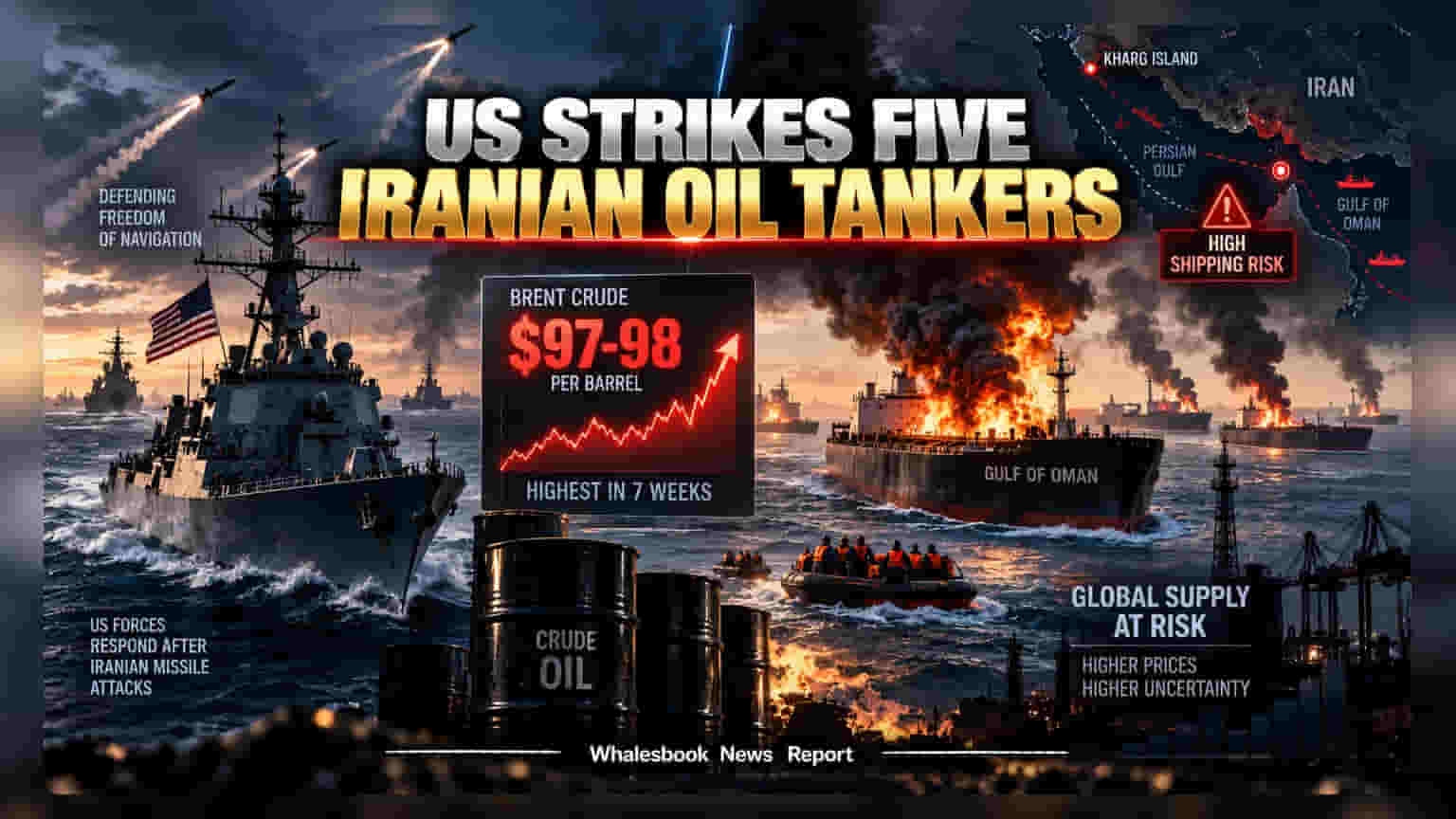
US forces destroyed five Iranian oil tankers following missile attacks on a US warship, escalating Gulf tensions. With Brent crude trading near seven-week highs around $98 per barrel, Indian investors are tracking risks to inflation, import costs, and sectors reliant on fuel.
The United States Central Command forces destroyed five Iranian crude oil tankers on September 8 in the Gulf of Oman and near Kharg Island. This action followed a series of retaliatory strikes after the Islamic Revolutionary Guard Corps reportedly launched ballistic missile attacks against a US Navy warship over the previous 48 hours. No US personnel were injured in the engagement, and crews were ordered to abandon the vessels before the operation commenced.
This marks a significant escalation in regional conflict, coming just days after a similar operation on September 5, when three other tankers were destroyed. The US has identified these vessels as part of a network used to finance regional proxy groups, though the situation remains fluid with Iranian state media offering a different account of the damage. For global markets, the primary concern is energy security, as the Gulf region serves as a critical route for global oil supplies.
Energy markets reacted immediately, with Brent crude futures climbing toward the $97–$98 per barrel range—a level not seen in seven weeks. This spike in prices creates immediate challenges for import-dependent economies like India. Higher crude oil prices typically increase the country's import bill, potentially weakening the trade balance and adding pressure to domestic inflation rates.
Indian investors are assessing the potential impact across various sectors. Companies in fuel-intensive industries, such as airlines, paints, chemicals, and logistics, often see their profit margins squeezed when crude costs rise rapidly, as their ability to immediately pass these costs to customers can be limited. Conversely, upstream oil producers like ONGC and Oil India may see increased interest as their realized prices for crude oil tend to track global benchmarks.
Beyond direct fuel costs, the situation poses broader risks to commercial shipping. Iran has reportedly threatened to target commercial vessels in the vicinity of Kuwait and Bahrain, raising concerns about potential supply chain disruptions. If the conflict widens to major shipping channels, companies could face significantly higher freight and insurance costs, which may further weigh on operational expenses across global trade.
Indian equity indices, including the Nifty 50 and BSE Sensex, have reflected this uncertainty, with markets showing signs of volatility and increased risk-aversion. The key monitorable for investors in the coming days will be the stability of crude oil prices and any further geopolitical developments in the Strait of Hormuz. Sustained high oil prices or reports of shipping channel disruptions would likely keep markets on edge regarding the potential for renewed inflationary pressures.