

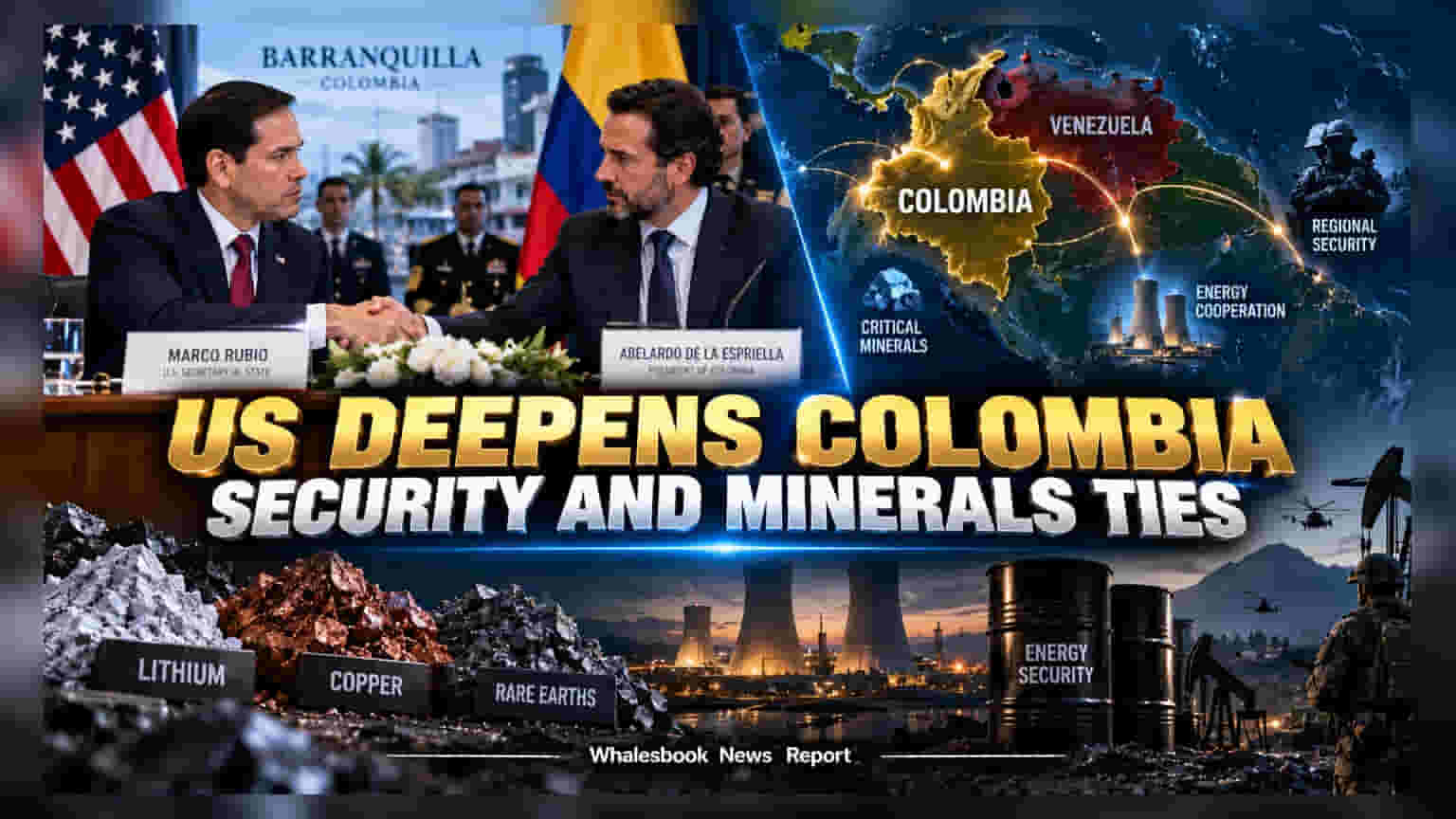
US Secretary of State Marco Rubio has begun a three-nation tour in Colombia to discuss critical minerals and civil nuclear energy cooperation. These talks aim to secure regional supply chains and reduce dependence on Chinese influence. For investors, the potential agreements signal a broader US shift in Western Hemisphere trade and energy strategy.
US Secretary of State Marco Rubio has landed in Colombia, marking the first stop of a three-nation Latin American tour. Meeting with President Abelardo de la Espriella in Barranquilla, the visit focuses on deepening security and economic ties, with both nations expected to sign agreements on civil nuclear cooperation and access to critical minerals.
Why critical minerals matter
The push for a minerals agreement is part of a larger US effort to secure vital resources, such as lithium, copper, or rare earth elements, which are essential for technology, defense, and energy sectors. Washington is actively looking to reduce its strategic dependence on global supply chains controlled or heavily influenced by China. By partnering with resource-rich nations in the Western Hemisphere, the US aims to create more reliable and geographically closer supply networks.
A broader energy shift
Beyond minerals, the civil nuclear cooperation deal points toward long-term energy planning. While specific details on project scope, technology transfer, or financing are still missing, the intent is clear: to establish deeper energy partnerships that extend beyond traditional oil and gas. This visit follows a recent US oil agreement with Venezuela, highlighting a clear pattern. The US is moving quickly to secure energy access and strategic influence across Latin America to counter competition from other major powers like Russia and Iran.
Security and political context
The trip also aligns with Colombia’s recent internal policy changes. Under President de la Espriella, the nation has moved toward a more aggressive security stance, including ending previous peace talks and strengthening military operations against organized crime. This shift fits well with the current US administration's priorities regarding drug trafficking, migration, and regional stability. However, this harder line on security carries its own risks, as it may face local political opposition or lead to periods of social instability that could disrupt project execution.
Risks and investor impact
For investors, the immediate impact on markets is indirect. There are no sudden changes in global stock prices linked to this visit, but the geopolitical shifts are worth tracking. The primary risk lies in the execution of these deals. Without finalized financing or implementation plans, it is difficult to determine how much actual trade or infrastructure development will occur. Investors should monitor the official terms of the signed agreements, as vague promises often fail to materialize into tangible economic growth.
Furthermore, the competition for global resources remains high. As the US works to integrate Latin American supply chains, global commodity prices and trade routes could see long-term adjustments. The next important step for markets will be to see if these negotiations move from intent to signed contracts, particularly regarding the specific minerals involved and the timeline for any proposed nuclear energy infrastructure.