

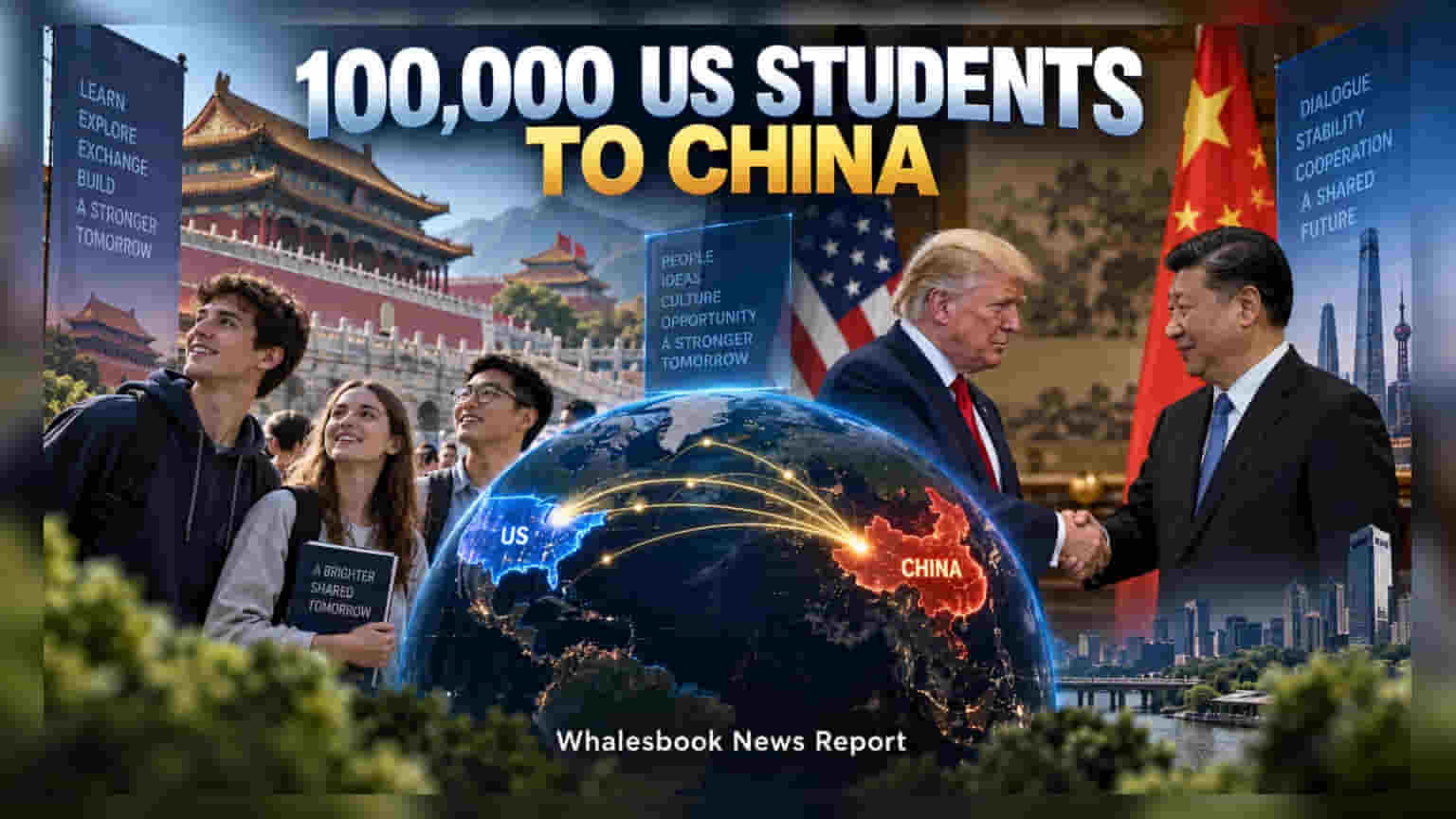
Chinese President Xi Jinping has launched a five-year initiative to host 100,000 young Americans for cultural and academic exchanges. Discussed during a meeting with President Donald Trump, this program aims to stabilize US-China relations. For global investors, the move signals a diplomatic pivot that could impact future trade, technology regulations, and cross-border security policies, potentially easing global market volatility.
Chinese President Xi Jinping has announced a new five-year initiative to invite 100,000 young Americans to China for academic and cultural exchange programs. This move, which aims to strengthen people-to-people connections between the world's two largest economies, was confirmed during recent high-level discussions with US President Donald Trump. The program is designed to build long-term relationships that may help stabilize diplomatic relations, which have been strained by ongoing tensions over technology, security, and trade policies.
Strategic Diplomacy and Market Stability
For investors, this diplomatic outreach is significant because geopolitical tension between the US and China is a primary driver of global market risk. Historically, periods of reduced tension have often led to more predictable environments for global trade and supply chains. By focusing on cultural exchange, the administration appears to be attempting to lower the temperature on bilateral discourse, which could indirectly benefit sentiment in sectors sensitive to global trade, such as technology, manufacturing, and shipping. However, the current initiative builds on a previous program that successfully facilitated exchanges for 50,000 participants, indicating a structured approach to building influence.
Technology and Security Context
During their dialogue, both leaders framed current interactions by referencing historical cooperation, specifically citing the 'Flying Tigers' and other World War II-era alliances. While the rhetoric focused on friendship, the underlying economic and security environment remains complex. President Trump noted that decisions concerning technological competition and national security would continue to be central to both nations' prosperity. This suggests that while diplomatic channels are being reopened through youth engagement, fundamental disagreements regarding technology, artificial intelligence, and trade regulations remain unresolved.
Investor Monitorables
Investors should view this development as a tactical attempt to de-escalate rhetoric rather than a guarantee of immediate policy shifts. The core monitorable for the market is whether this diplomatic warmth leads to tangible changes in intellectual property regulations, trade tariffs, or export controls on critical technologies. While the exchange program may improve soft-power perception, capital markets will likely continue to react to hard policy decisions rather than diplomatic initiatives. Moving forward, observers should watch for potential follow-up meetings or official trade agreements that could provide clearer signals on the trajectory of US-China economic policy. The sustainability of this effort and its ability to influence actual policy decisions will determine whether this pivot has a lasting impact on global business stability.