

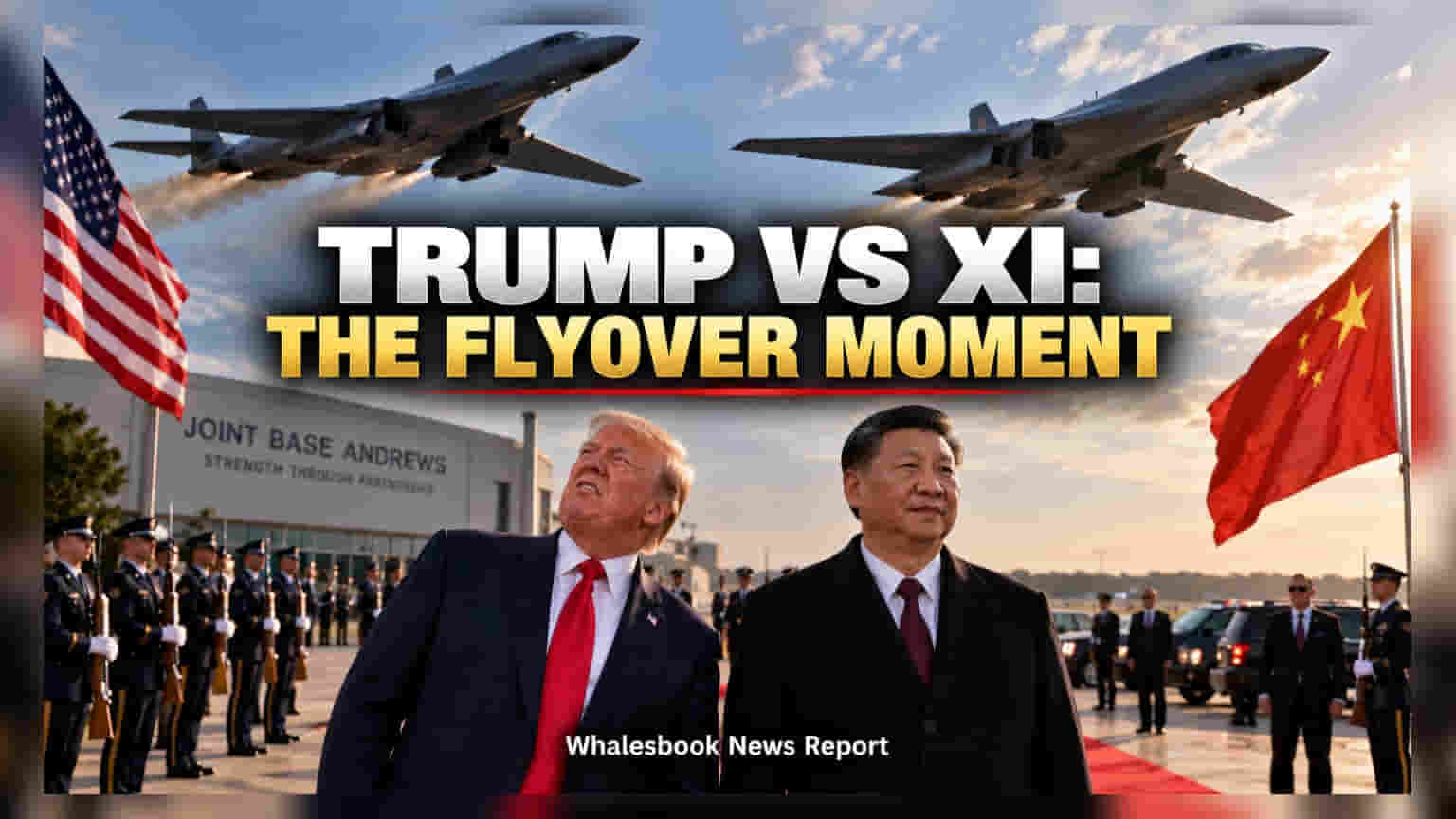
US President Donald Trump and Chinese President Xi Jinping have commenced a three-day summit to discuss trade tariffs, artificial intelligence, and military policies. For Indian investors, the outcome of these talks could signal shifts in global trade flows and supply chains, potentially impacting technology and export-oriented sectors.
The three-day state visit between US President Donald Trump and Chinese President Xi Jinping at Joint Base Andrews has officially begun, setting a high-stakes tone for global economic relations. While the initial welcome ceremony included ceremonial military displays, the core of this summit is a complex agenda that affects investors worldwide, particularly regarding trade tariffs, semiconductor technology, and competition in artificial intelligence.
The meeting comes during a period of friction between Washington and Beijing, with both nations navigating disagreements over military ties and geopolitical stability, including conflicts in the Middle East and Ukraine. For global markets, this summit serves as a crucial signal for potential shifts in trade policy. Investors are primarily focused on whether the two leaders can find common ground on tariffs, which have historically introduced volatility into global indices and international supply chains.
For Indian investors, the relationship between the US and China is a critical factor in market sentiment. India is increasingly positioning itself as a vital manufacturing alternative through the China+1 strategy, where companies look to diversify their supply chains away from a single-country dependency. Any significant policy changes resulting from this summit, particularly regarding trade barriers or incentives, could impact how multinational corporations reallocate their manufacturing capacity, potentially benefiting sectors such as electronics and specialty manufacturing in India.
Furthermore, the discussions surrounding artificial intelligence and military-grade technology are of particular interest to the tech sector. Stricter export controls or new collaborative policies on chip technology could influence the cost of raw materials and hardware for companies dependent on global tech supply chains. Market observers will be monitoring whether the summit leads to a cooling of tensions or if trade restrictions remain a primary hurdle for global commerce.
The final outcomes of this summit will likely influence investor confidence in global trade stability. Key monitorables for the coming days include official statements on import duties, any agreements regarding high-tech component restrictions, and the direction of US arms policy concerning Taiwan, which remains a central point of tension. Shareholders in companies with heavy exposure to US or Chinese trade should track these updates closely, as any sudden policy shifts could impact stock performance and sector-specific risk premiums.