

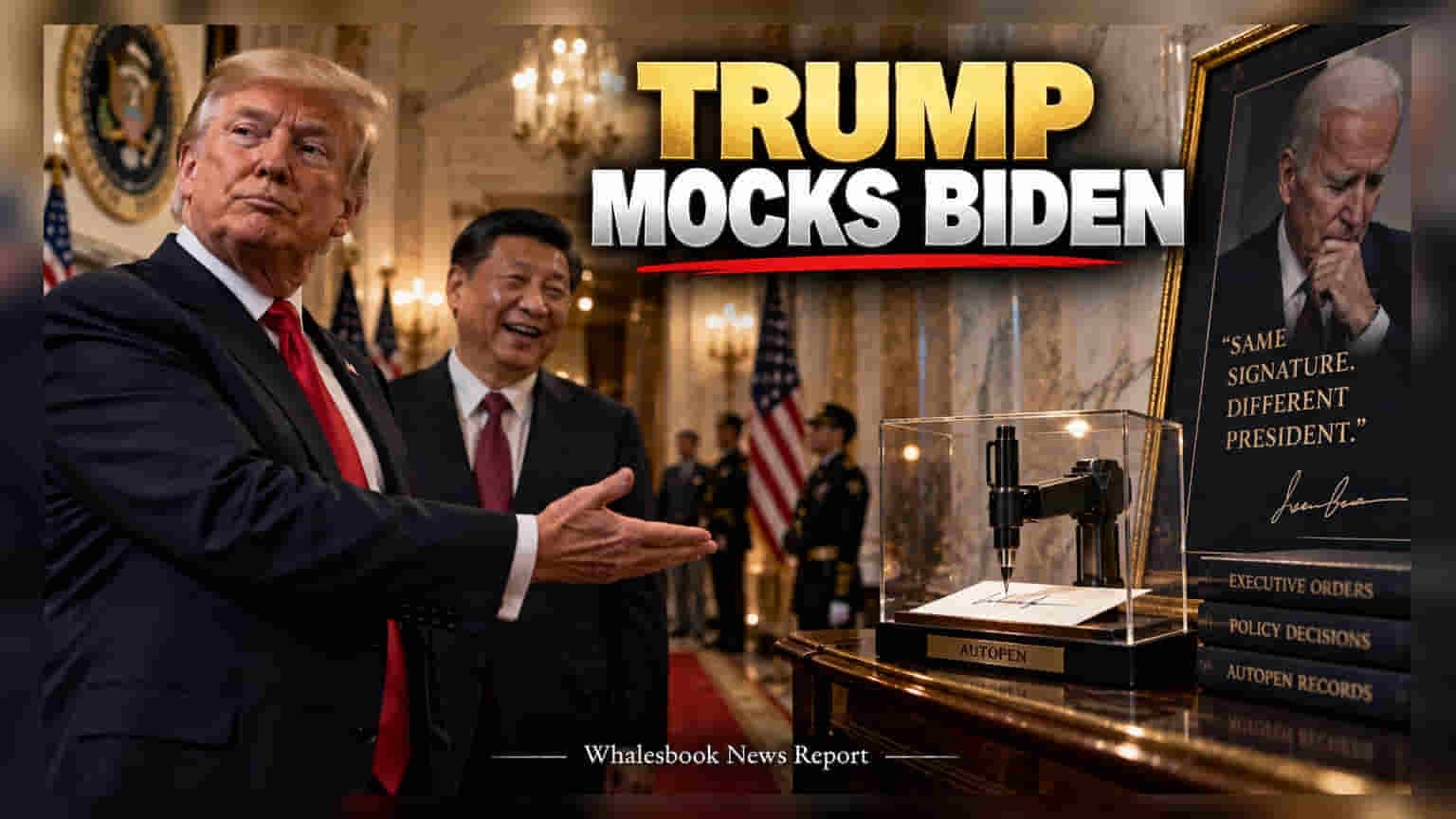
President Donald Trump and Chinese leader Xi Jinping held a high-level summit to discuss bilateral ties. For investors, the focus remains on potential shifts in trade policy and supply chain stability, which could impact global markets and influence India's role in manufacturing.
The recent meeting between US President Donald Trump and Chinese leader Xi Jinping marks a significant moment for global trade relations. While the diplomatic encounter involved various exchanges, the primary interest for financial markets lies in the potential for shifts in economic policies between the two largest global economies.
Diplomatic interactions between these nations often signal future changes in trade regulations, tariffs, and technology restrictions. Global markets generally prefer stability to manage risk and forecast demand. When diplomatic tension is visible or unpredictability increases, it can introduce volatility into international indices and currency markets, affecting investor sentiment.
For Indian investors, the relationship between the US and China is an important macro factor. In recent years, many Indian sectors—including electronics, specialty chemicals, and textiles—have aimed to capitalize on the 'China+1' strategy, where multinational companies diversify their supply chains away from China. A significant thawing or hardening of US-China trade relations could change the speed and scale of this manufacturing shift. If trade barriers remain high or increase, it may continue to drive supply chain diversification toward India. Conversely, a reduction in trade friction could stabilize global costs but might slow the urgent need for global companies to seek alternative manufacturing bases.
Uncertainty remains a primary risk for shareholders and corporate planners. Investors are closely tracking whether this summit leads to concrete trade agreements or if existing trade disputes persist. Policy changes affecting semiconductor supply, tariff structures, or foreign investment rules can create immediate ripples across global sectors, particularly in technology and manufacturing.
The next important updates to follow will be official statements regarding trade protocols, new tariff policies, or technology export rules. Investors may monitor how these diplomatic dynamics translate into actual business and trade policy over the coming quarters to better understand the potential impacts on global demand and production costs.