

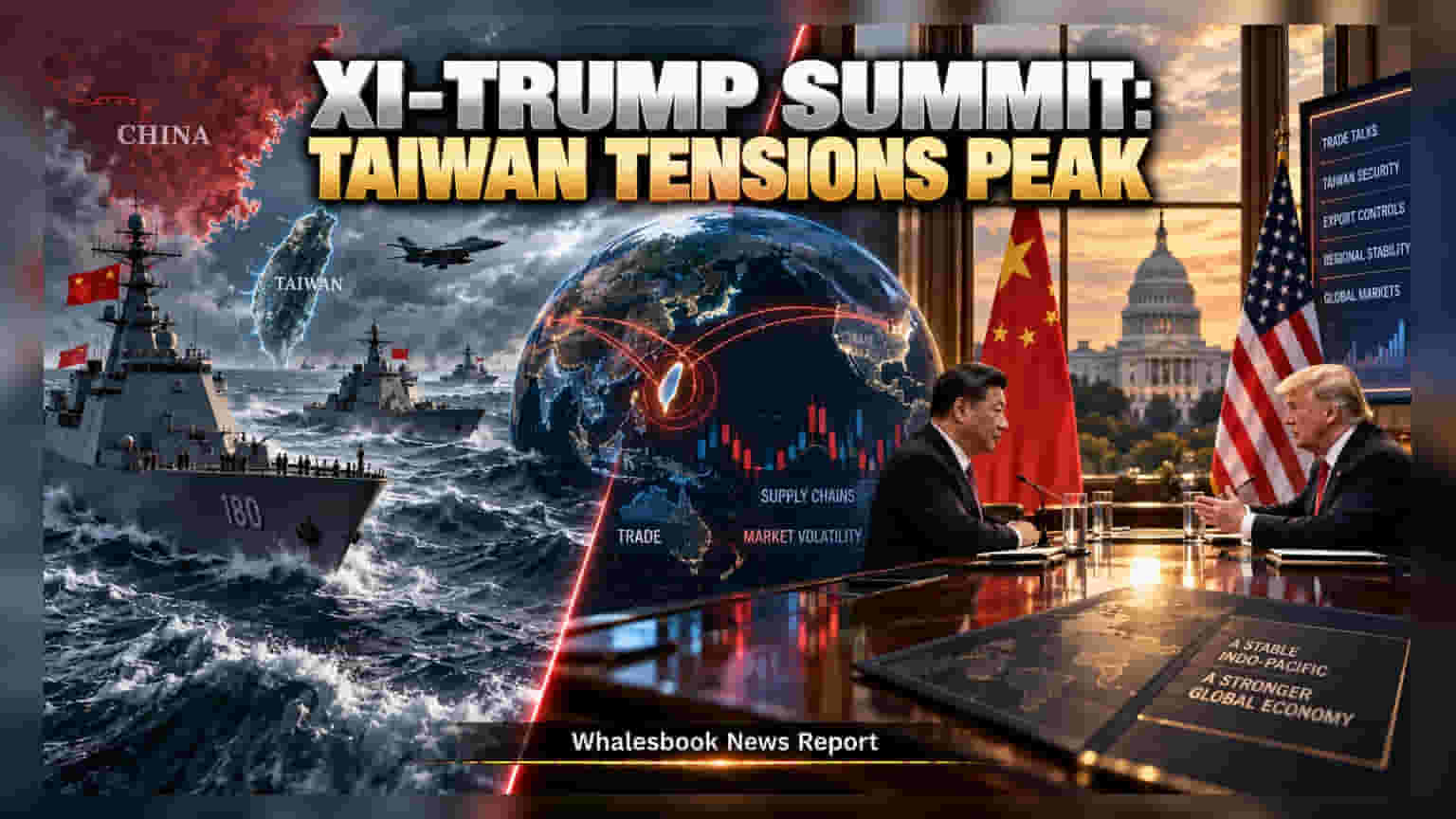
President Xi Jinping and Donald Trump are holding a high-stakes summit, with Beijing designating Taiwan a 'red line' amid an $11 billion US arms package dispute. Investors are tracking these negotiations for clues on global trade stability and supply chain policies. The meeting also covers China's export controls on fentanyl precursors, which carries implications for global chemical and pharmaceutical supply chains.
As President Xi Jinping and US President Donald Trump prepare for their second summit since May, investors are closely watching the event for its potential impact on global trade and market stability. The discussions are happening against a backdrop of hardened rhetoric from Beijing, which has labeled the Taiwan issue a non-negotiable 'red line.' This positioning comes as the US plans an $11 billion arms package for Taiwan, a move that creates diplomatic friction and potential volatility for global trade relations.
Impact on Supply Chains and Trade
A key focus for the market is the ongoing dialogue regarding supply chain management. In a potential move to ease tensions, China has announced stricter export controls on fentanyl precursors, including chemicals like medetomidine and tartaric acid. For investors, this highlights the sensitivity of global pharmaceutical and chemical supply chains to US-China relations. Changes in export policies or trade restrictions between these two major economies can have ripple effects on raw material costs and availability for global industries, including the Indian pharmaceutical and API sectors, which often monitor Chinese supply trends for potential shifts in production and pricing.
Regional Geopolitics and Security
Beyond the primary US-China dialogue, the summit context includes broader regional shifts. Japanese Prime Minister Sanae Takaichi is scheduled to meet President Trump to discuss security ties. The strengthening of US-Japan security relations, particularly given Tokyo’s concerns regarding Taiwan, adds another layer of complexity to regional stability. For global investors, increased geopolitical tension in the Indo-Pacific region is often a factor that influences capital flows and market sentiment. While these events are political, they create the backdrop for trade agreements, tariffs, and defense spending, all of which directly influence the global economic environment.
What Investors Are Tracking
The market reaction to the summit will likely depend on whether the two nations can manage their differences or if the friction over Taiwan leads to further trade complications. Investors are primarily tracking three things: the official outcome regarding trade policies, any clarity on supply chain shifts, and the general tone of the diplomatic relationship. Stability in US-China relations is generally viewed as supportive of global trade, whereas escalations can lead to increased caution among foreign institutional investors. The next important monitorable will be any official communique following the three-day visit, which may clarify whether these territorial and trade issues can be contained.